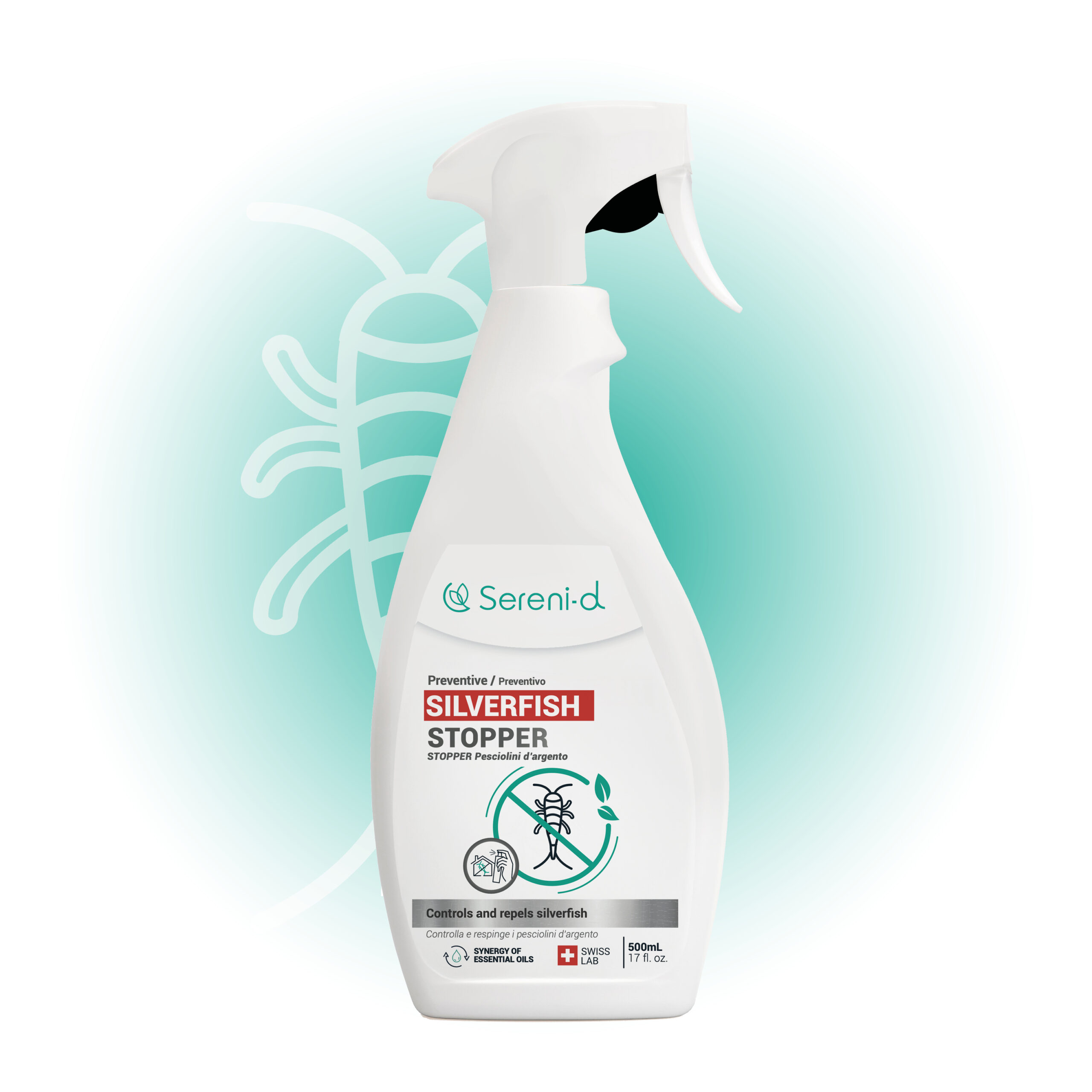
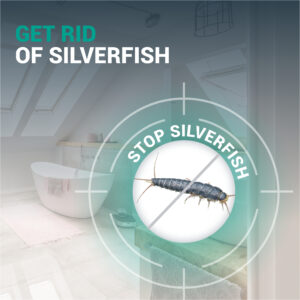
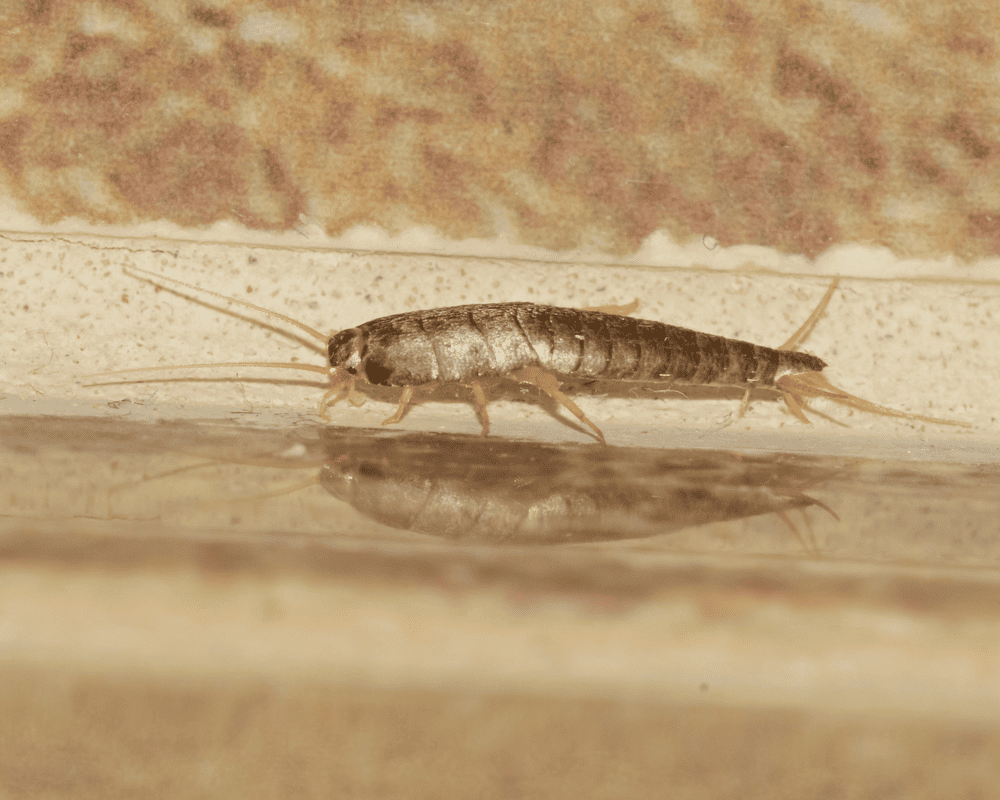
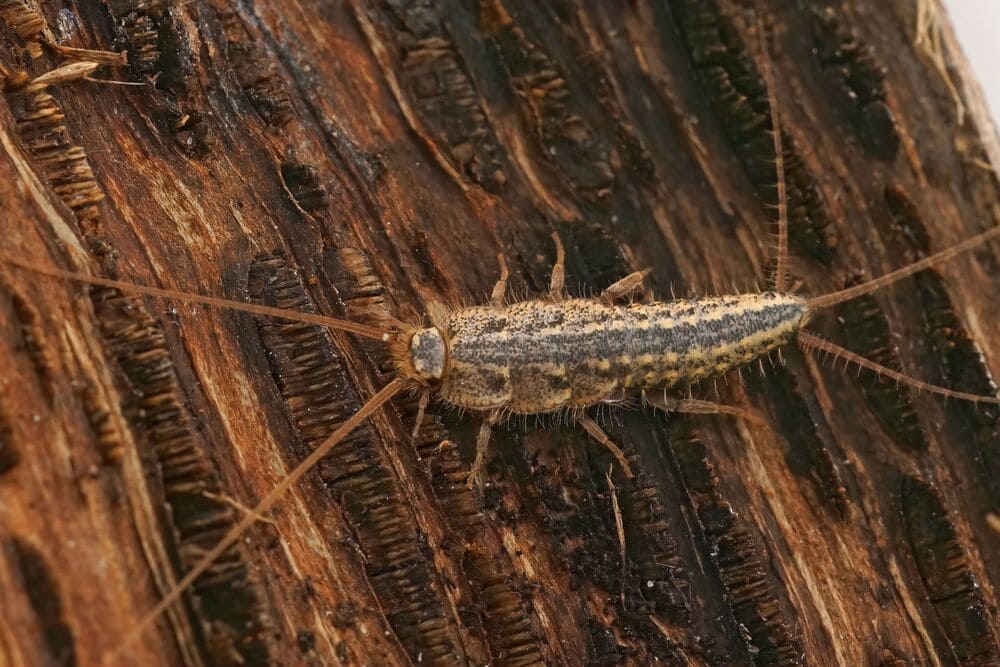
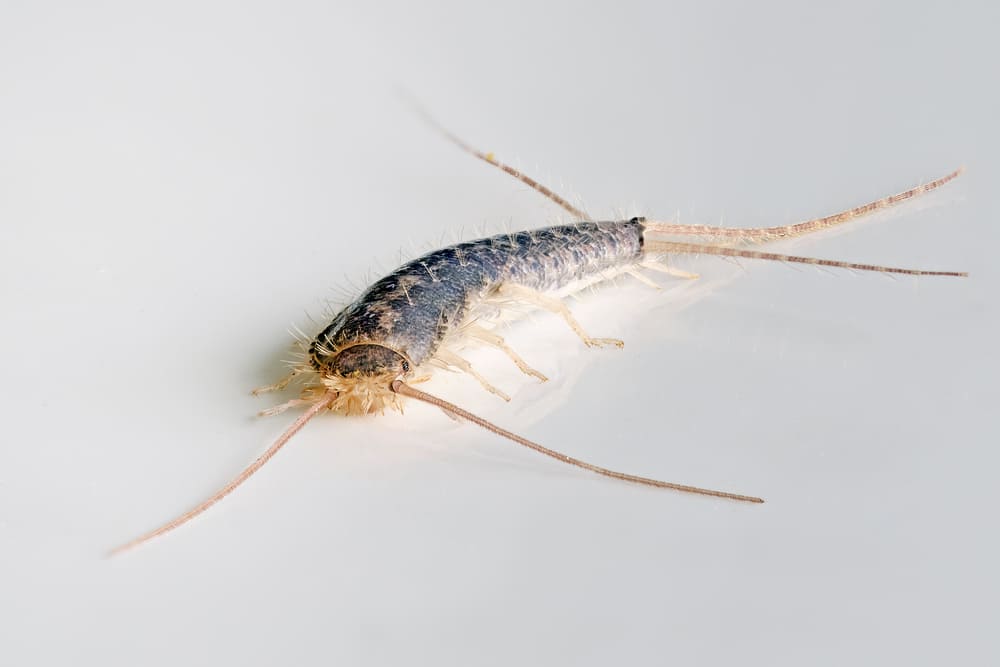
The silverfish, also known as the ‘silverfish,’ is a small insect measuring 10-15 mm with two long antennae that moves like a fish. It is often found in warm, dark corners of the home. Although harmless to humans, the presence of this small insect can be disturbing. It’s not very pleasant to see them swarming around your home! So how can you get rid of silverfish? Here are some natural solutions for effective treatment and prevention tips.
Natural methods for getting rid of silverfish
Here is a series of effective treatments against silverfish using products that are easy to find and safe for your health.
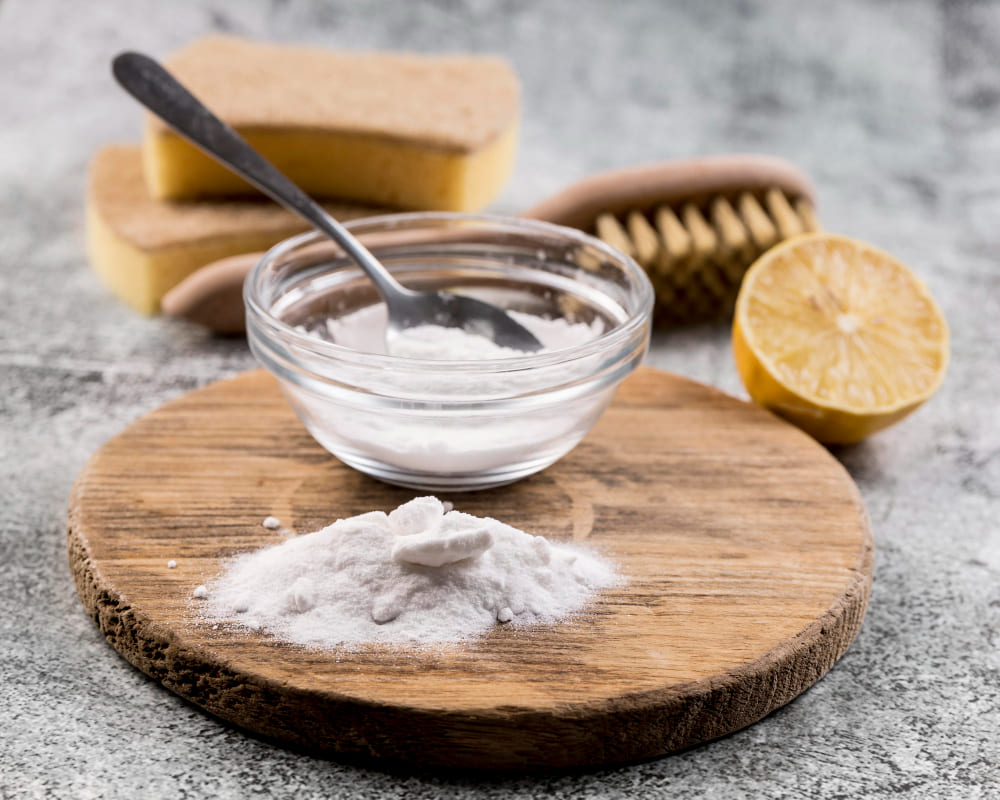
Baking soda
Easy to find, inexpensive and non-toxic to humans, baking soda is very useful for cleaning.
How does baking soda affect silverfish?
Specifically, it acts in two ways on silverfish:
- By ingestion: attracted by organic residues, silverfish ingest the bicarbonate, which disrupts their digestive system and causes their death.
- By desiccation: this powder absorbs moisture and gradually dries out the bodies of silverfish.
How to use bicarbonate of soda?
You can place it in areas where silverfish hide and circulate:
- along skirting boards,
- in dark corners,
- under sinks and near pipes,
- in storage rooms, cellars or laundry rooms,
- behind furniture and at the back of cupboards.
➡️Tip: you can mix the bicarbonate of soda with a little sugar or flour to make the trap more attractive. Place the mixture in small bowls or directly on the floor.
Please note that bicarbonate of soda does not act on silverfish eggs or on the cause of the problem (damp, cracks). It must be combined with other measures (cleaning, reducing damp, prevention) to eradicate the infestation permanently.
White vinegar
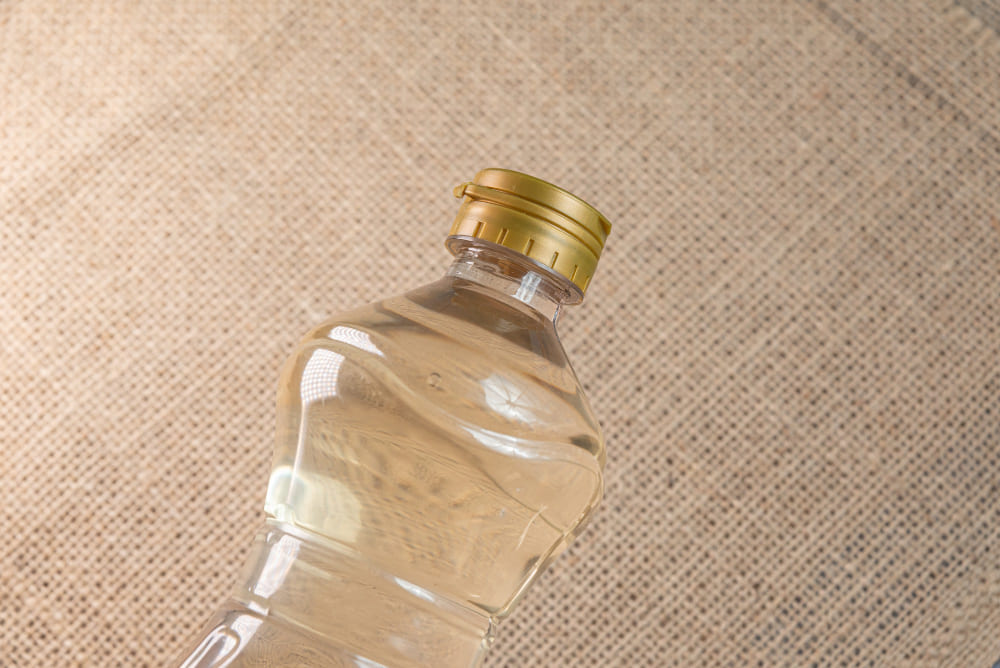
White vinegar acts as a repellent against silverfish. Feel free to spray it in areas where insects are likely to pass through and/or clean your surfaces with it.
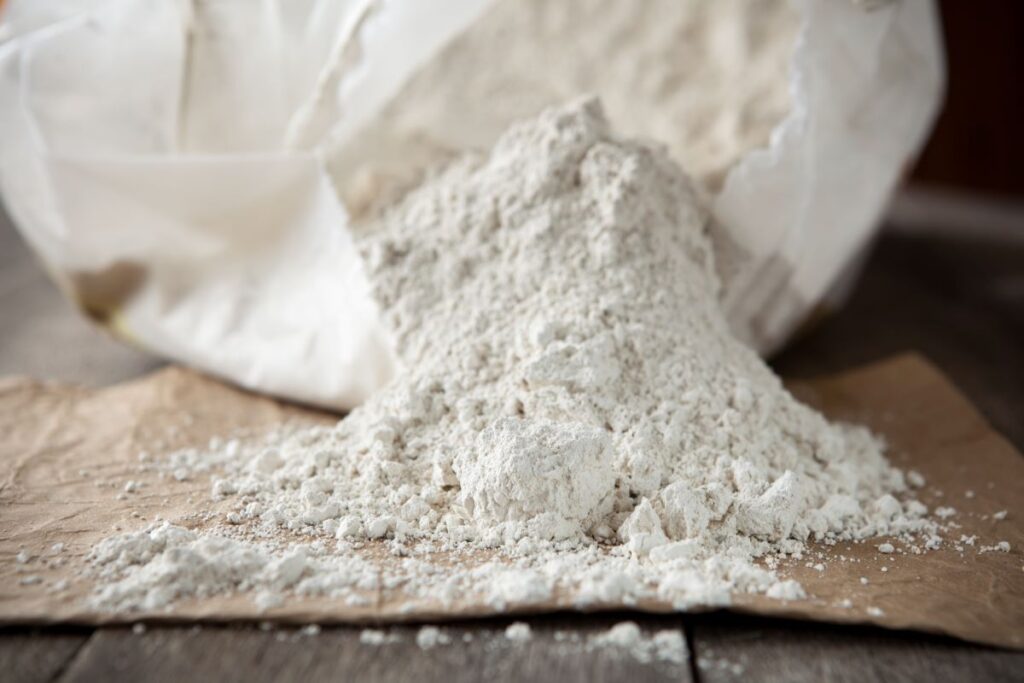
Diatomaceous earth
Diatomaceous earth is a mineral powder derived from fossilised microalgae, which is completely natural when used for food purposes (uncalcined). It is an effective treatment against many harmful insects such as silverfish and bed bugs.
How does diatomaceous earth work?
Upon contact, insects gradually dehydrate and die within a few days. Diatomaceous earth works equally well on adults and young specimens.
How can you use it effectively at home?
Sprinkle a thin layer of diatomaceous earth where silverfish tend to travel: along skirting boards, in cracks and crevices, under sinks and around pipes, etc. Avoid making visible piles; instead, try to create light barriers that the silverfish will cross.
See also: Diatomaceous earth against bed bugs.
Silverfish and bleach: avoid!
Be careful, this is a bad idea. Contrary to what you might think, bleach can actually attract silverfish. It leaves surfaces damp after rinsing (which these insects like), its smell disappears quickly and it is not a long-lasting repellent.
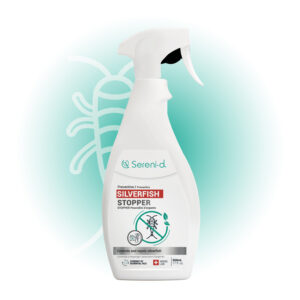
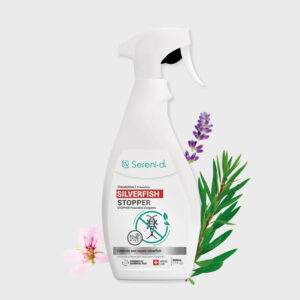

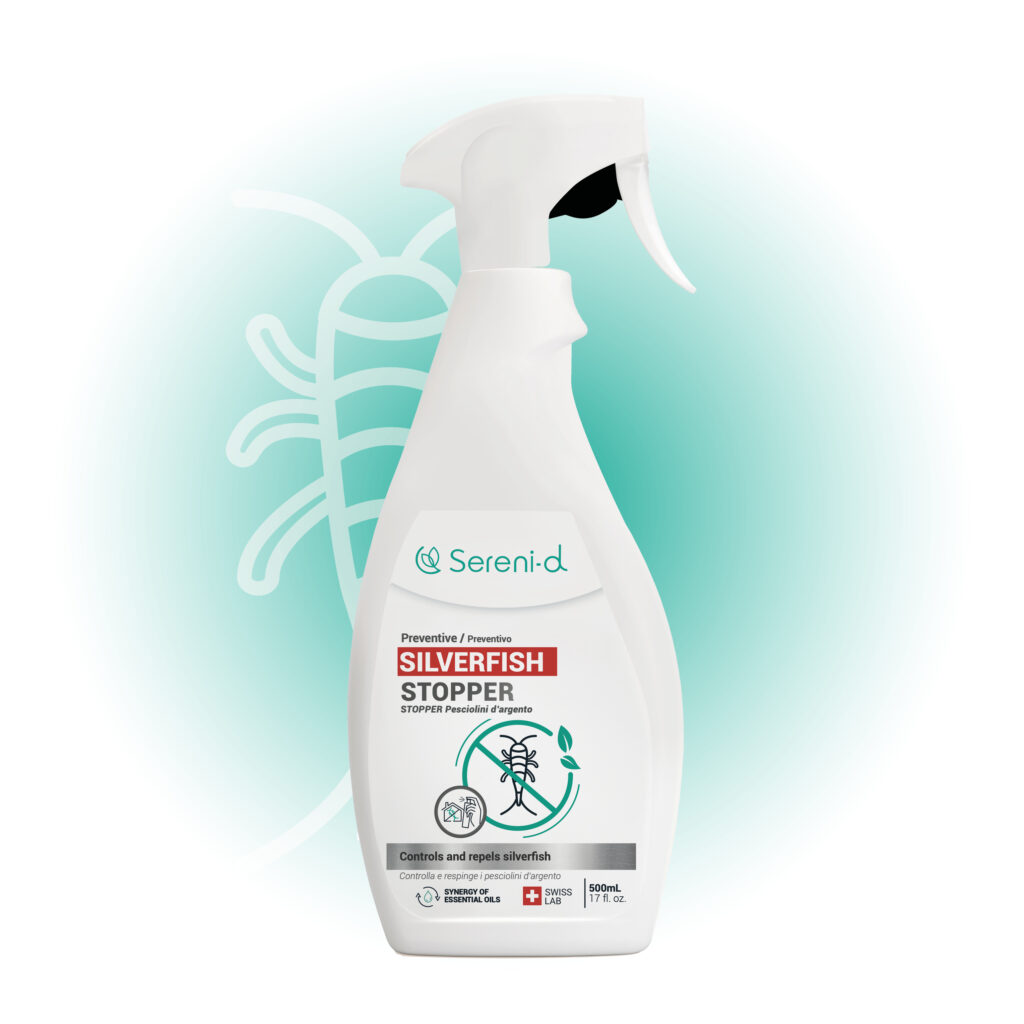
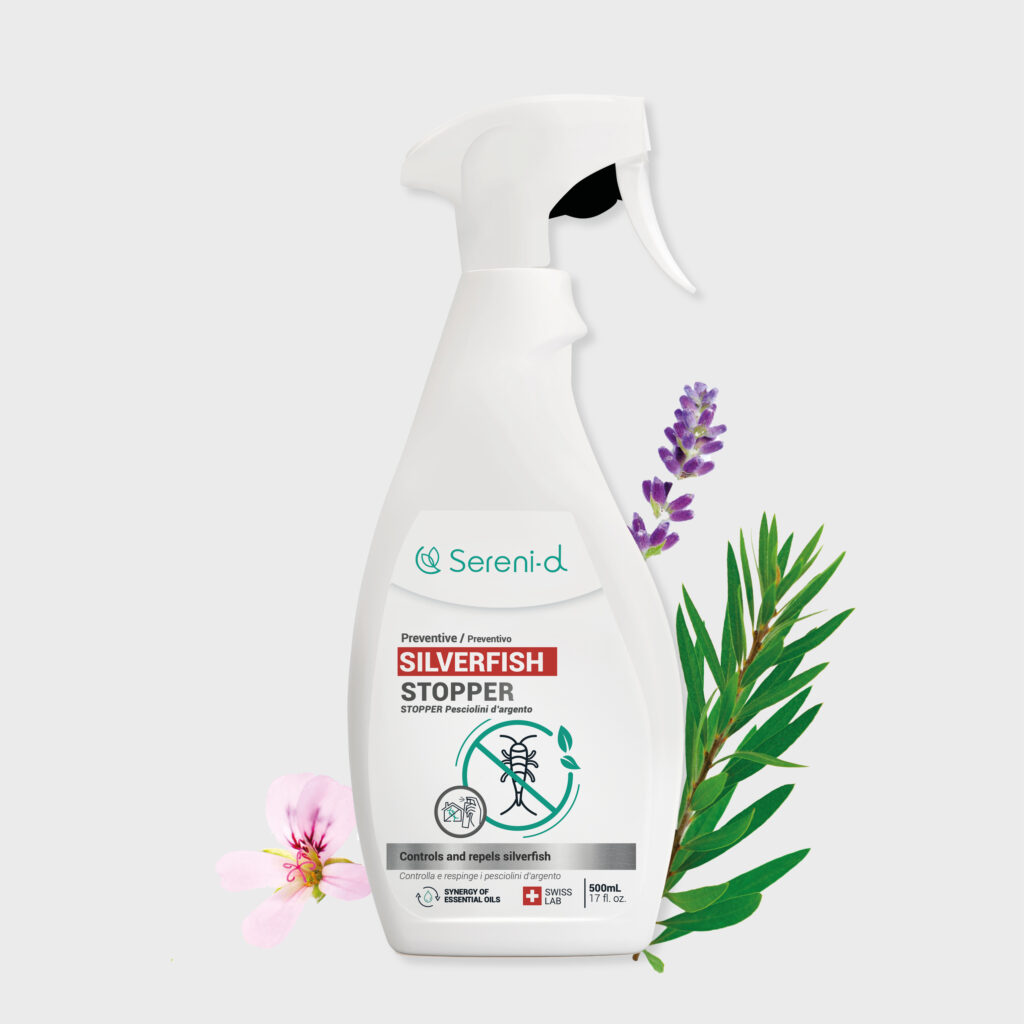

STOPPER Silverfish
• Curative spray against silverfish
• Eliminates 100% of silverfish (eggs, larvae, adults)
• Immediate, safe and long-lasting protection
• Over 250,000 satisfied Sereni-d® customers
CONCENTRATED FORMULA – MAXIMUM RESULT
In stock
Traps for silverfish
Sticky traps
Sticky traps are simple and effective for capturing silverfish during their night-time movements. You can find them in shops.
How it works:
Silverfish travel along walls, skirting boards and pipes. When they cross the adhesive surface, they become trapped.
Homemade traps
Silverfish feed on materials rich in starch and cellulose.
Here are two trap ideas you can use at home.
Damp cardboard trap:
- Take a piece of plain cardboard (without ink).
- Dampen it slightly.
- Roll it up and place it in a dark corner overnight.
- In the morning, collect the cardboard filled with silverfish and throw it into a sealed bag.
Starch trap:
- Sprinkle a little flour, cornflour or starch into a small container.
- Place it near the infested areas.
- Silverfish are attracted to it, gather there and can then be disposed of.
👉 By combining these traps with regular cleaning and reducing humidity, you greatly increase your chances of getting rid of silverfish for good.
When should chemical treatments be used?
In most cases, natural methods are sufficient to get rid of silverfish, especially when there are only a few. However, if the insects keep coming back after cleaning and there are too many of them, certain insecticide treatments in powder or gel form may be useful.
⚠️ Before use:
- read the product instructions carefully,
- ventilate the room well,
- avoid applying to surfaces that come into contact with hands or food,
- wear gloves and never mix several products.

How can you find silverfish nests?
Unlike other pests, silverfish do not build visible nests such as ant hills or swarms. However, they do gather in areas that are favourable to their development, where they feed, reproduce and lay their eggs.
Silverfish primarily seek:
- moisture,
- darkness,
- calm,
- and organic matter to consume (paper, glue, dust, food residues).
They avoid light and mainly come out at night.
What to do in the event of an infestation in a building?
When silverfish appear in an apartment, it is highly likely that the problem is not isolated. In a building, these silvery insects can easily move from one dwelling to another through pipes, service ducts, crawl spaces and cracks. This is often the case in old or very damp buildings (basements, ageing drainage systems). Rest assured, however, silverfish are not harmful to your health.
To find out if the infestation is widespread, do not hesitate to ask your neighbours.
Notify the property manager and your landlord
This is the first thing you should do. You can send an email to your property manager and landlord, specifying the areas affected by infestation (apartment, common areas). Include photos if possible.
Arrange for collective treatment
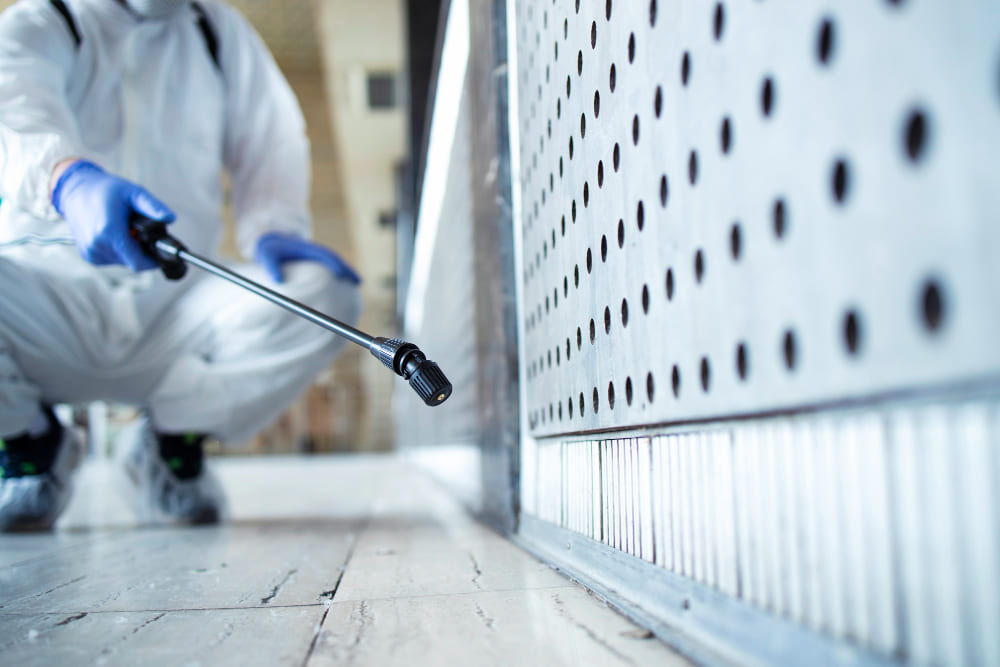
In a building, it is often necessary to call in a professional pest control company.
An exterminator will be able to:
- propose a prevention plan to avoid re-infestation.
- detect the infested areas,
- apply targeted treatments in the common areas,
- use appropriate and regulated products,

Who should pay for collective treatment against silverfish?
In principle, it is the co-owners’ association that should pay for treatment against silverfish. The property manager is responsible for ensuring the maintenance and cleanliness of the common areas.
See also: Bed bug treatment in co-owned properties.
Effective ways to prevent silverfish
Prevention is essential to stop silverfish from reappearing after treatment. Here is an effective checklist to limit the risk of infestation.
Reduce humidity
- Ventilate each room for at least 10 to 15 minutes every day.
- Use a dehumidifier in damp rooms (bathroom, cellar, laundry room).
- Repair water leaks quickly (siphons, seals, pipes).

Clean regularly
- Clean floors, skirting boards and under furniture with a household cleaner.
- Vacuum corners, cracks and dark areas where silverfish like to hide.
- Wipe up any standing water immediately.
- Place all food in sealed, watertight containers.
- Pick up any crumbs that have fallen on the floor or worktop.
Eliminate hiding places
- Declutter cellars, storage rooms and cupboards.
- Avoid accumulating cardboard boxes, paper, newspapers or damp textiles.
- Store items stored on the floor on raised shelves.

Seal entry points
- Seal cracks in walls, skirting boards and floors.
- Check the seals around pipes, baths and sinks.
- Fit fine mesh screens over ventilation openings if necessary.
Key takeaway: A dry, clean, and well-ventilated home is the best way to prevent silverfish from returning.
STOPPER Silverfish
• Curative spray against silverfish
• Eliminates 100% of silverfish (eggs, larvae, adults)
• Immediate, safe and long-lasting protection
• Over 250,000 satisfied Sereni-d® customers
CONCENTRATED FORMULA – MAXIMUM RESULT
In stock
FAQ
Where are the silver fish hiding?
They are most often found:
– behind skirting boards and under floors,
– in pipes, siphons and under sinks,
– at the bottom of rarely used furniture, drawers and cupboards,
– in bathrooms, toilets, cellars and laundry rooms,
– near washing machines, water heaters or poorly ventilated areas.
Why do I have silverfish in my home?
Once they have entered a home, they proliferate if there is:
– high humidity (wet rooms, poor ventilation),
– water leaks or condensation,
– dark, uncleaned corners,
– the presence of materials they consume: paper, cardboard, dust, glue, food residues, mould,
They can also come from your neighbours’ homes via shared pipes or ducts.
Are silverfish dangerous to your health or your home?
– they do not sting,
– they do not bite,
– they do not transmit any diseases.
However, they can be a nuisance in public buildings or homes:
– they can damage books, papers, cardboard, wallpaper,
– their repeated presence is often a sign of a damp problem that needs to be fixed.
Do silver fish leave on their own?
Without targeted treatment, the infestation will almost always return.
How long does a silverfish live?
This longevity explains why they are difficult to eradicate:
– they can survive for long periods without eating,
– they reproduce slowly but steadily,
– they can remain hidden for several months before reappearing.
What do silver fish eat?
They consume, in particular:
– paper, cardboard, books and newspapers,
– glue (wallpaper, bindings, cardboard),
– dust and organic residues,
– mould and microalgae associated with humidity,
– certain natural textiles (cotton, linen, silk),
– food residues that have fallen on the floor (flour, sugar, crumbs).