



Have food moths invaded your kitchen? These pesky little moths love to hide in our cupboards in search of food. How can you recognise a moth infestation and, more importantly, how can you get rid of them for good? Follow our advice.
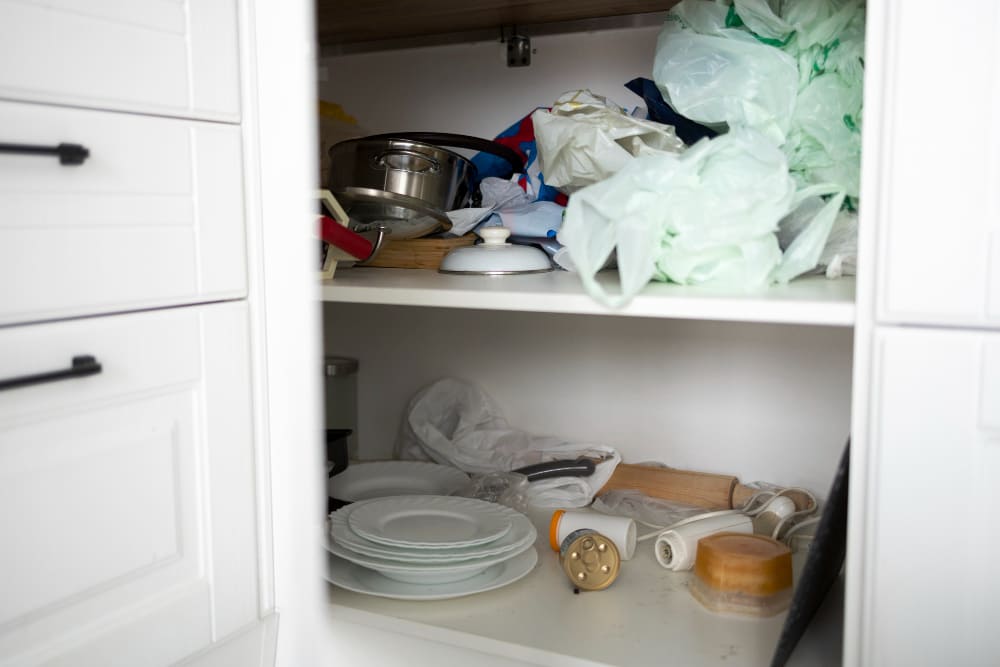
Step 1: Empty all infested cupboards and drawers
Start by emptying your cupboards and drawers completely, even if the infestation seems to be limited to a single packet. Food moths move quickly, lay their eggs in corners, and their larvae can hide in unexpected places.
Inspect each food item one by one.
Do not hesitate to throw away any suspicious food, especially dry goods that moths love:
- pasta
- rice
- flour
- cereals
- seeds and oilseeds
- dried fruit
- semolina
- breadcrumbs
- biscuits, cakes, chocolate
Good to know: even a sealed package can be infested. Packaging can be contaminated during the manufacturing process.
Before throwing away infested food, place it in a sealed bag and put it directly into the outside bin. This will prevent moths or larvae from escaping and re-colonising the kitchen.
Step 2 – Clean thoroughly
Once your cupboards are empty, it’s time to clean. The aim is to eliminate eggs, larvae, pupae and moths.
Vacuum every nook and cranny
Use the narrow nozzle of the vacuum cleaner to clean:
- hinges,
- cupboard corners,
- drawer runners,
- shelf fixing holes,
- silicone seals.
⚠️ Important:
Immediately dispose of the vacuum cleaner bag in a sealed bag and then in the outside bin to prevent re-infestation.
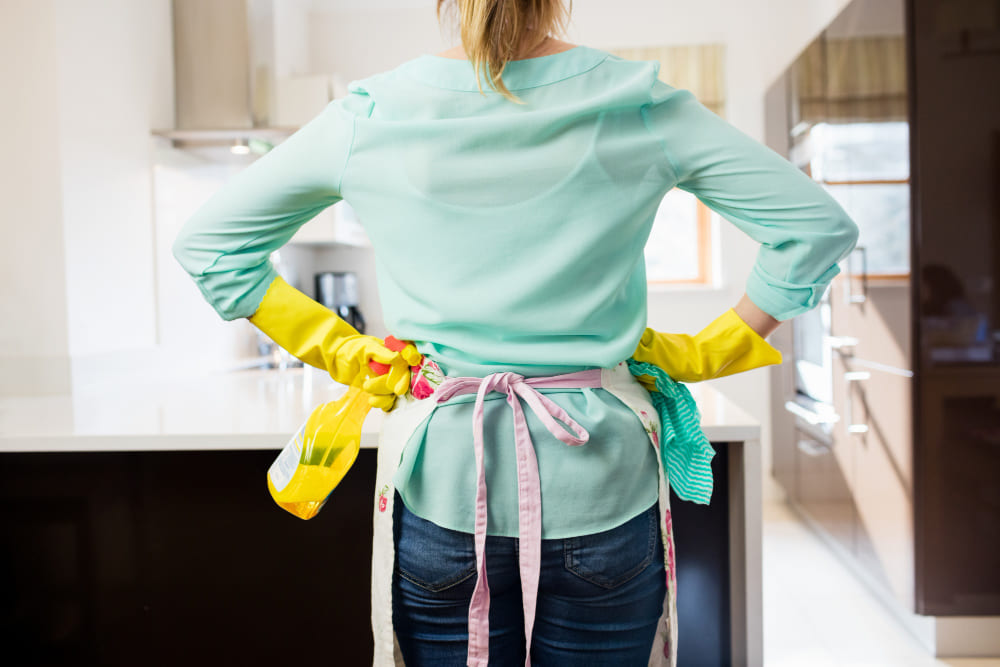

Wash surfaces with hot soapy water and then white vinegar
Use hot water + a few drops of washing-up liquid, then rinse. Leave to dry completely before applying white vinegar.
White vinegar is THE product to have in your kitchen. It cleans, eliminates odours and repels moths thanks to its acidic smell.
How to use it:
- Mix 50% hot water + 50% white vinegar.
- Soak a sponge or cloth.
- Clean all surfaces: shelves, walls, undersides and tops of boards.
Step 3 – Apply a natural repellent
Once the cupboards are dry, you can add natural repellents:
- bay leaves,
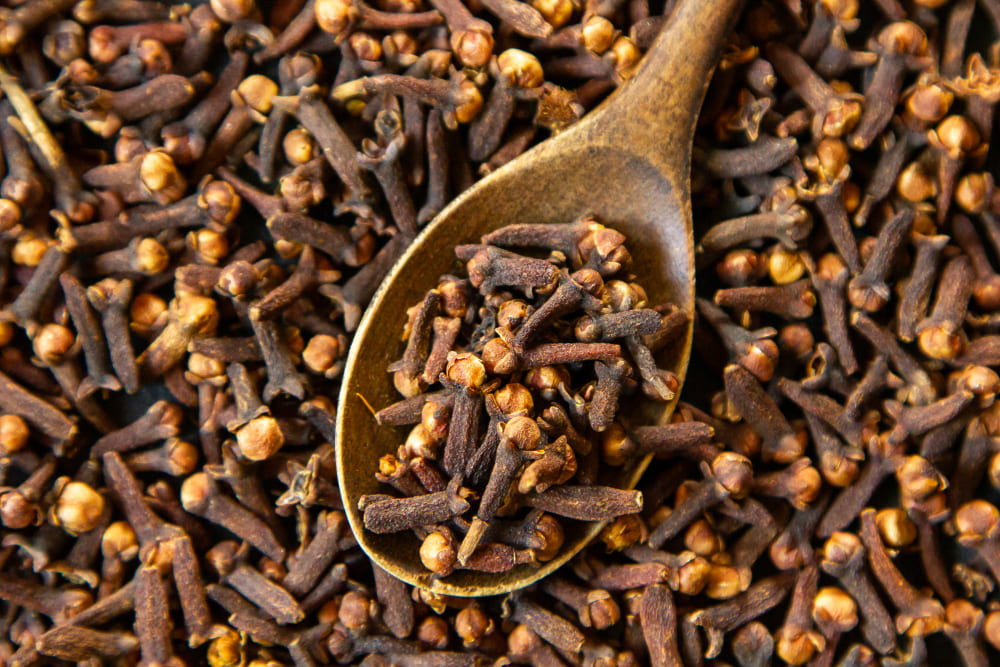
- cloves,
- lavender or mint sachets,
- a few drops of true lavender essential oil on a cotton pad (avoid direct contact with skin and eyes).
These scents are known to repel food moths.
Step 4 – Freeze certain products
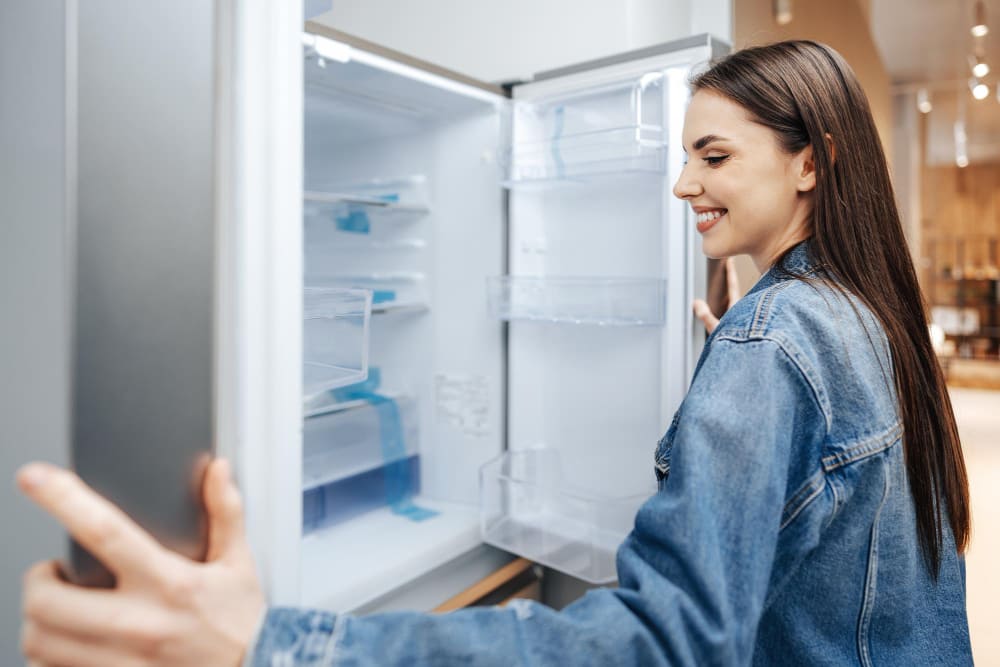
Freezing allows you to:
- kill any larvae still present,
- destroy eggs before they hatch,
- make food safe before putting it back in your cupboards.
If necessary, you can freeze all dry goods that tolerate cold temperatures well: cereals, seeds, almonds, nuts and other dried fruits, etc.
Place them in your freezer for at least 48 hours. Allow them to return to room temperature without opening the bag to prevent condensation. Then transfer the food to an airtight glass jar before storing it in your cupboards.
Step 5 – Store in airtight containers
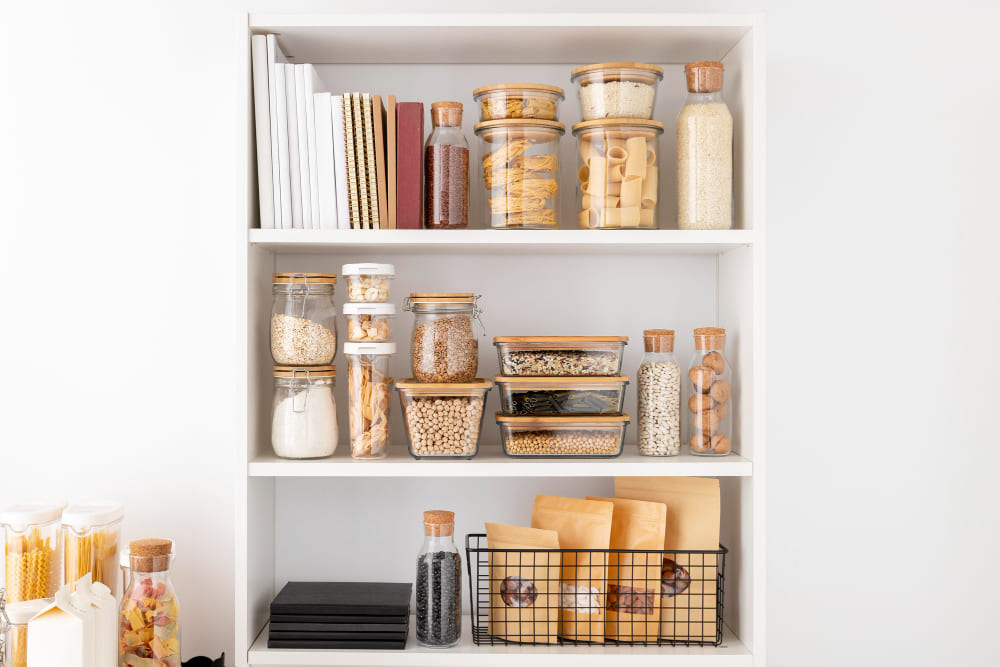
Be careful, food moths are capable of piercing certain types of packaging, infiltrating tiny nooks and crannies, and even getting into sealed packages. Therefore, nothing can replace airtight containers.
Which containers should you choose?
✅ Glass jars with mechanical closures
✅ Food-grade plastic boxes with silicone seals
✅ Airtight metal containers (tea, semolina, flour)
How can you recognise a food moth infestation?
Food moths are pests that feed on our food supplies and reproduce very quickly. An infestation often starts discreetly, then spreads to all the cupboards, drawers and kitchen cabinets.
Here’s how to identify them quickly.
Presence of larvae
It is the larvae of food moths that are responsible for contaminating food.
They can be recognised by:
- their whitish or cream colour, sometimes slightly translucent,
- their small size (10 to 15 mm),
- their slow movement in packets, jars or corners of furniture,
- the presence of silky threads (webs) in food: flour, pasta, muesli, dried fruit, rice, etc.
They love to lay their eggs in dry foods and can squeeze through even the thinnest packaging.
Good to know: you can also purchase contaminated batches directly in shops.
Grey moths in the kitchen
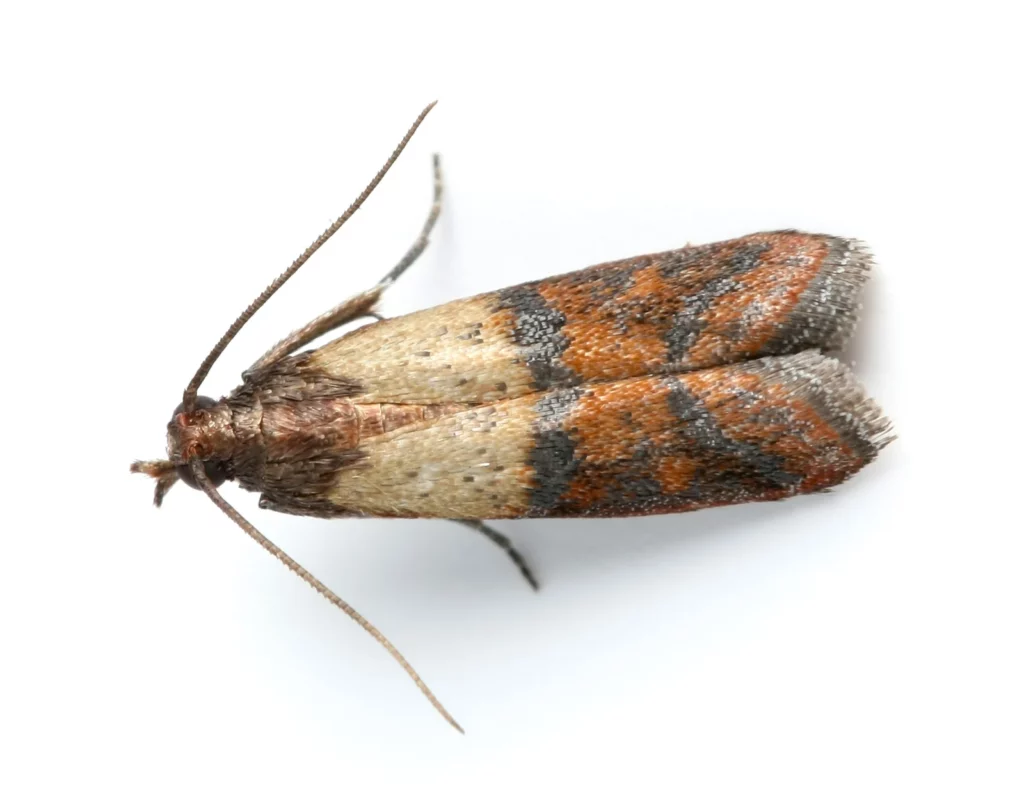
Adult moths resemble small brown-grey moths measuring approximately 1 cm.
You may see them:
- flying around lights in the evening,
- resting on cupboard walls,
- coming out of infested packages when they are moved.
They will readily enter poorly sealed jars, attracted by the smell of cereals and other starchy foods.
How long does it take to get rid of food moths?
It often takes 3 to 4 weeks to permanently solve the problem. Even after a thorough cleaning, a single egg or larva is enough to restart the cycle.
For your information, a food moth goes through four stages:
1. Egg
Deposited on foodstuffs or at the bottom of packages.
➡️ Hatching: 3 to 7 days depending on the temperature.
2. Larva
It feeds and burrows tunnels in the food.
➡️ Duration: 2 to 4 weeks on average.
3. Chrysalis
The larva hides in a corner of the ceiling, cupboard, behind a package or in a crack.
➡️Metamorphosis into a pupa: 4 to 10 days.
4. Adult moth
Males fly, females lay up to 300 eggs in a few days.
Natural solutions against moths
| Natural method | What moths dislike | How to use it |
| Repellent odours | Lavender, mint, eucalyptus, cloves, bay leaves | Place sachets, small dried bouquets or bay leaves in cupboards, drawers and corners. |
| Essential oils for moth repellent | True lavender, peppermint, eucalyptus, lemongrass | Place 2-3 drops on a cotton pad, diffuser or absorbent paper and place in cupboards or wardrobes. |
| Repellent plants and spices | Laurel, cloves | Place a few bay leaves in closed jars and cupboards; arrange cloves in a small dish. |
| White vinegar | Very unpleasant acidic odour for moths | Clean the shelves with a mixture of white vinegar and water, possibly combined with 1 drop of essential oil. |
➡️ See also: How to get rid of clothes moths?
How can you prevent moths from returning?
- Store all food in airtight containers (glass, metal, thick plastic).
- Clean cupboards once a month with white vinegar (shelves, corners, hinges).
- Regularly inspect sensitive products: flour, rice, pasta, dried fruit, seeds, cereals, biscuits.
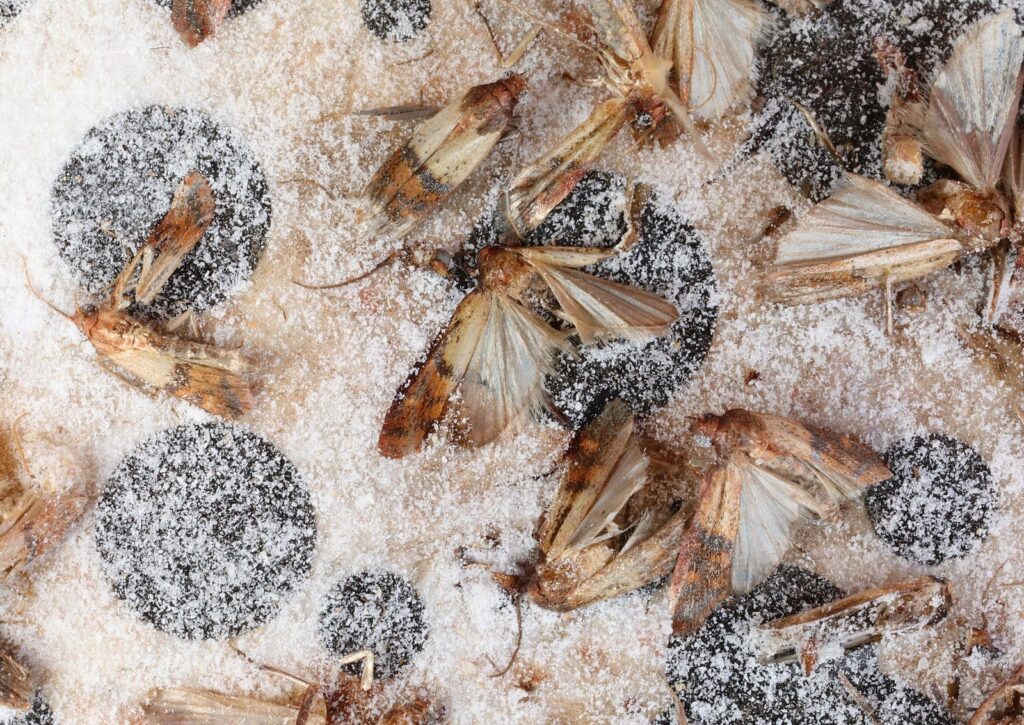
- Install pheromone traps to monitor and detect the first male moths.
- Use natural repellents (bay leaves, cloves, lavender or mint essential oils).
- Clean up crumbs immediately and avoid leaving open packets in cupboards.
FAQ
Do moths get into jars?
However:
– they can lay eggs on the lid,
– they can infest a jar that is not closed properly,
– they may already be present in the food (eggs laid in the factory or during transport).
What is the smell that moths dislike?
They particularly dislike:
– Lavender
– Peppermint
– Eucalyptus
– Cloves
– Bay leaves
These odours act as repellents, but do not eliminate an infestation.
Are food moths dangerous to health?
Is it dangerous to consume products contaminated by moths?
Gastrointestinal problems may also occur, such as nausea, abdominal pain or diarrhoea. These symptoms are generally mild and temporary.
