



Every summer, mosquito bites become a part of our daily lives. We find ourselves scratching over and over again! Although most are not dangerous, these bites are still very unpleasant and can cause allergic reactions in some people. The invasion of the tiger mosquito in France over the last few years hasn’t helped matters. How can you recognise these bites? What can you do to relieve the itching? Is there a risk of disease? Find the answers in this article.
Key information
➡️ Only female mosquitoes bite, as they need blood to develop their eggs.
➡️ A mosquito bite usually causes a small, itchy red bump, accompanied by slight swelling of the skin.
➡️ In most cases, mosquito bites are harmless and disappear within a few days.
➡️ Certain species, such as the tiger mosquito, can carry diseases (dengue, chikungunya, Zika), but these cases remain rare in France.
➡️ To avoid bites, you can minimise standing water, use repellents and install mosquito nets.
Why do mosquitoes bite?
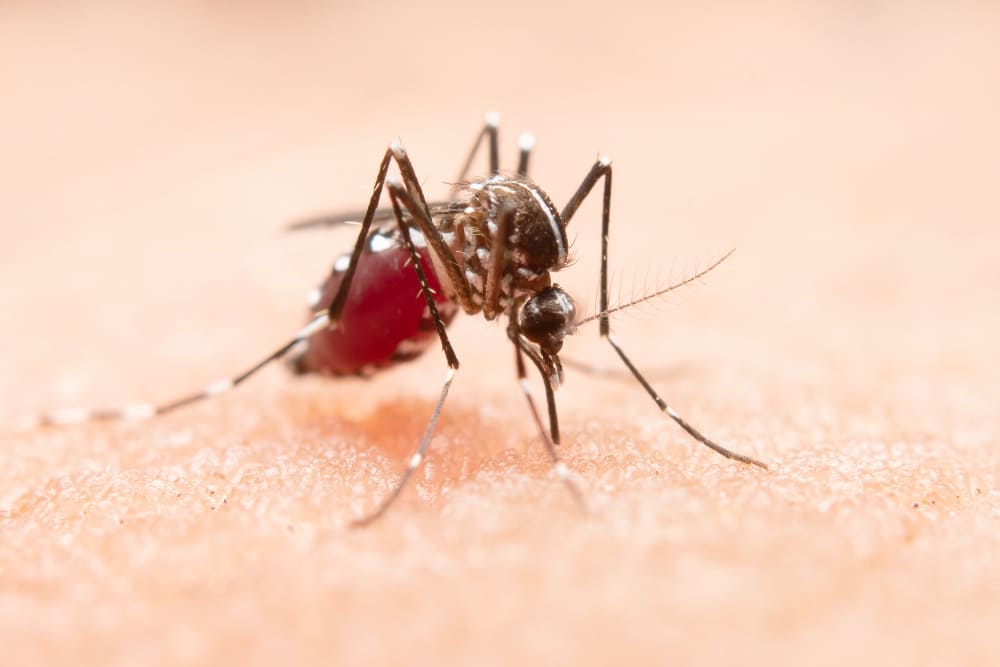
Contrary to popular belief, not all mosquitoes bite. Only female mosquitoes are responsible for bites. They need blood to ensure the development of their eggs.
The female mosquito is a biting-sucking insect, much like bed bugs. When she bites the skin, she inserts her mouthparts into the epidermis to reach a small blood vessel. She then draws a few drops of blood, which provide her with the proteins needed for her eggs to mature.
After this blood meal, the female can lay several dozen eggs in stagnant water (puddles, plant saucers, gutters, etc.).
Good to know: a single female can sting several times in her lifetime.
How can you tell if you’ve been bitten by a mosquito?
When a mosquito bites, it injects a small amount of saliva into the skin. This substance prevents the blood from clotting and makes it easier for the mosquito to suck blood.
It is precisely this saliva that triggers the skin reaction:
- local redness,
- swelling of the skin,
- the appearance of an itchy mosquito bite.
A mosquito bite is usually easy to identify. It appears a few minutes after the insect has bitten the skin and manifests as a small red bump that is very itchy.
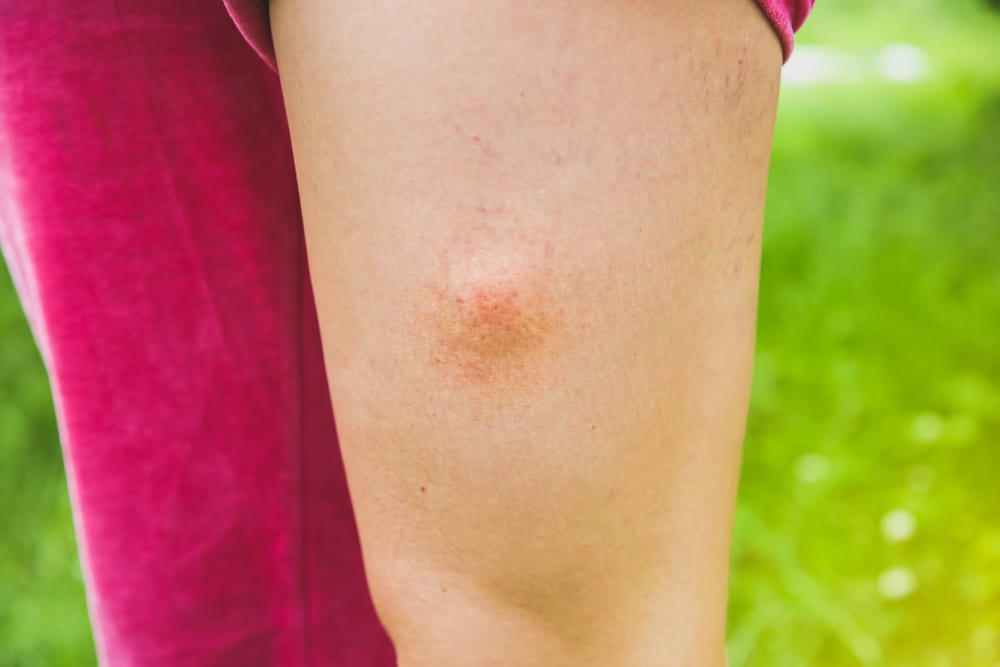
A red, itchy spot
A mosquito bite is slightly swollen, surrounded by redness, and causes intense itching.
In summary:
- This itchy spot may remain visible for a few hours to several days, depending on the person’s sensitivity.
- a warm or slightly irritated area
- a small red or pink spot on the skin
- slight swelling
- immediate itching or itching within an hour of the bite
Where do the bites appear?
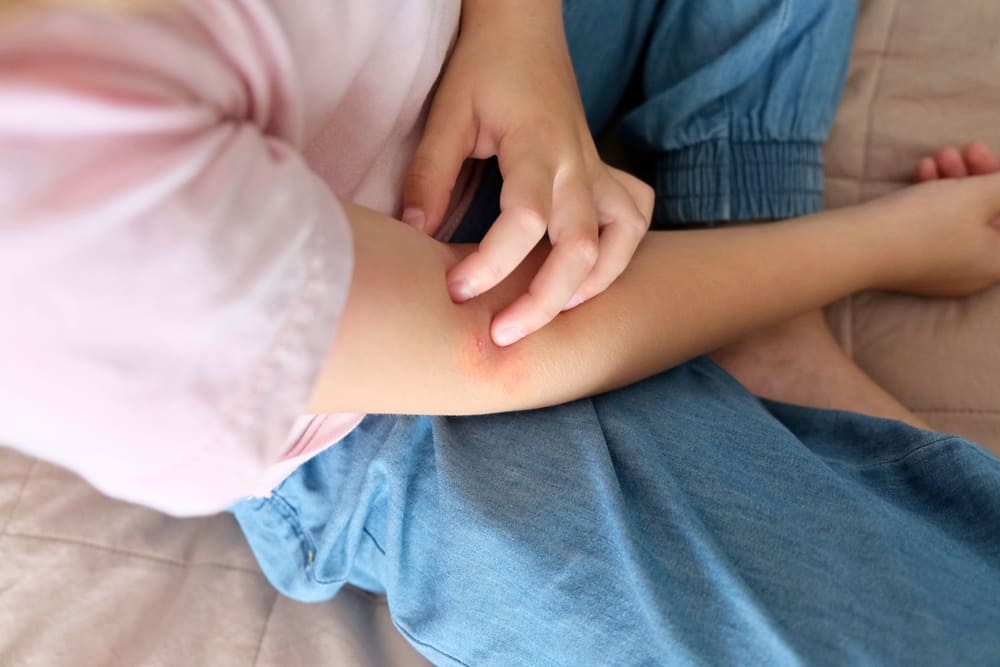
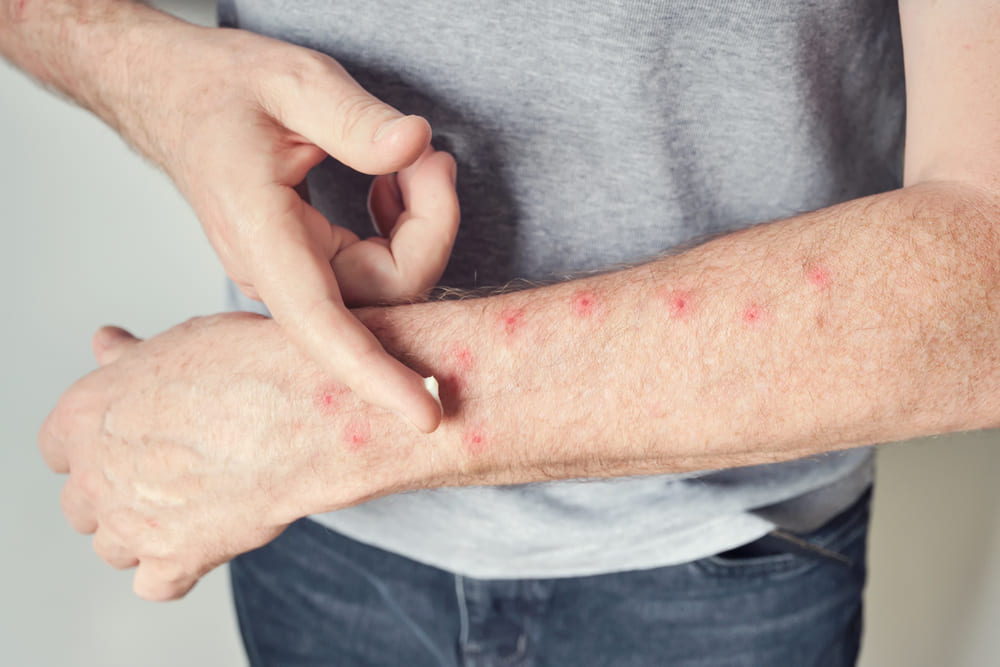
Mosquitoes mainly bite exposed areas of skin during the night or in the evening:
- sometimes the face
- the arms
- the legs
- the ankles
- the neck
What does an infected mosquito bite look like?
In most cases, a mosquito bite is harmless and clears up within a few days. However, it can sometimes become infected, mainly due to repeated scratching, which damages the skin and allows bacteria to enter.
If an infection occurs, the symptoms are as follows:
occasionally a mild fever or general malaise; in rarer cases, this may last for several days, depending on the individual’s susceptibility.
- significant redness around the bite
- more pronounced swelling than with a typical bite
- pain or a sensation of heat in the skin
- the presence of pus or a yellowish fluid
- a mosquito bite that grows larger instead of disappearing
The affected area may also become hard and very sensitive to touch. In some cases, the skin may form a small scab or show more widespread skin irritation.
Mosquito bites in babies
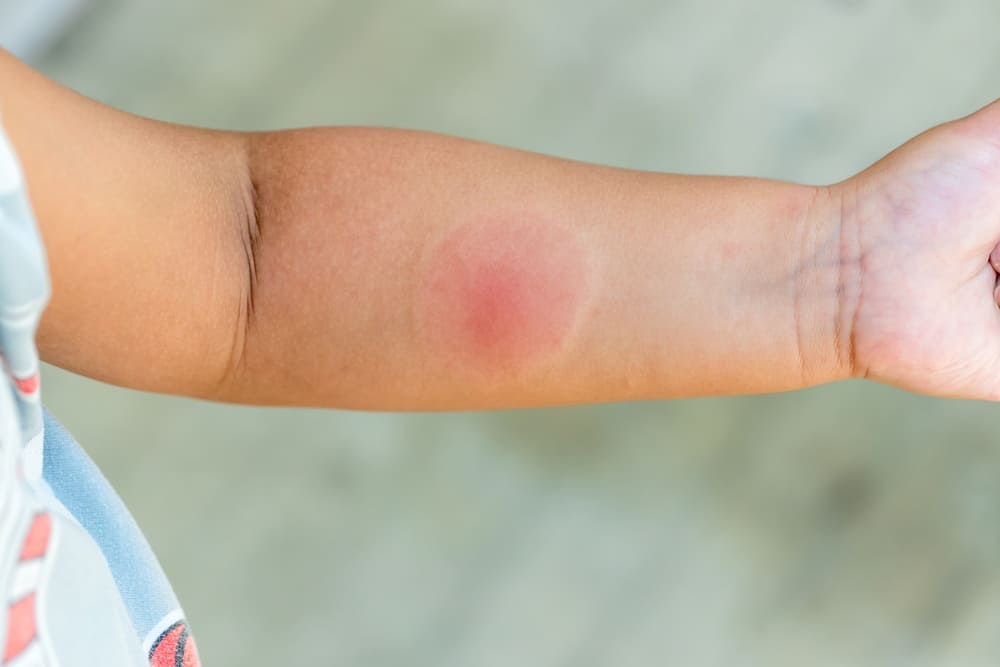
Mosquito bites are common in babies during the warmer months.
A mosquito bite on a baby can be more noticeable and more striking than on an adult.
Don’t worry, this is normal; it’s down to the baby’s immune system, which is still developing. Babies’ skin is also more delicate and reacts more strongly to the substances injected by the mosquito.
To relieve a mosquito bite in an infant, a few simple steps are all it takes:
- clean the area with water and a mild soap,
- apply a soothing ointment suitable for babies if necessary,
- use a cool compress to reduce the itching sensation,
- prevent the baby from scratching the area.
If the baby scratches a lot, remember to trim their nails regularly to minimise the risk of infection.
If the bites do not clear up within a few days and there are signs of infection or an allergic reaction (severe swelling, fever, hives, etc.), consult your doctor.
👉See also: What should I do if my baby is bitten by bed bugs?
Tiger mosquito bites
The tiger mosquito (Aedes albopictus) is a species of insect native to South-East Asia. Recognisable by its black body with white stripes, it owes its name to these characteristic stripes, which resemble those of a tiger. Highly adaptable, this mosquito has gradually spread to many parts of the world.
In France, it was first detected in 2004 in the Alpes-Maritimes and has since become widespread across the country. Today, the tiger mosquito is present across much of our territory, particularly in towns where it easily finds stagnant water to lay its eggs (plant saucers, gutters, rainwater collectors, etc.).
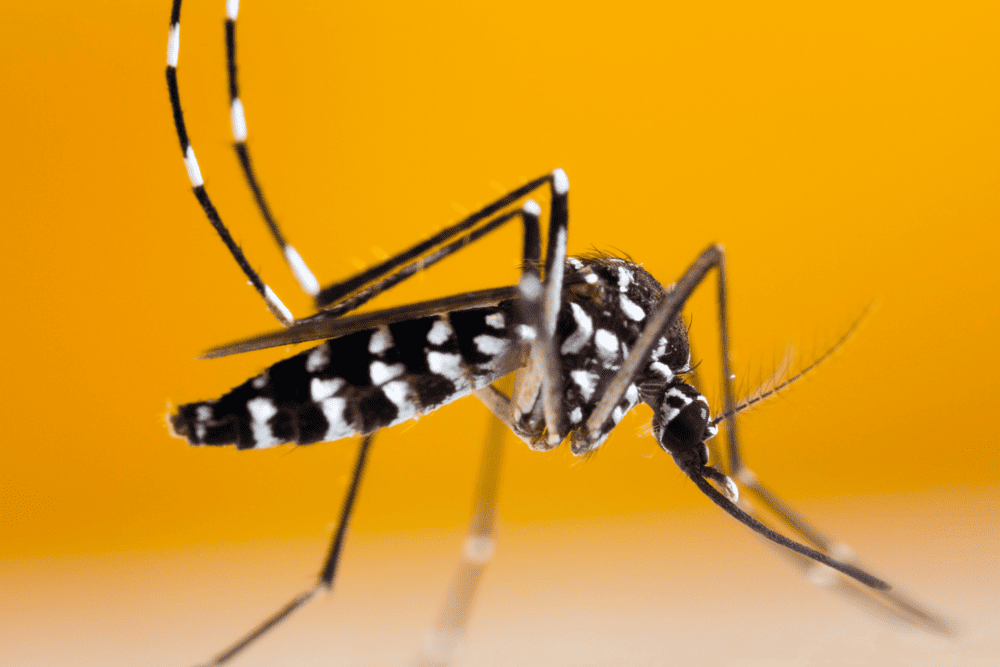
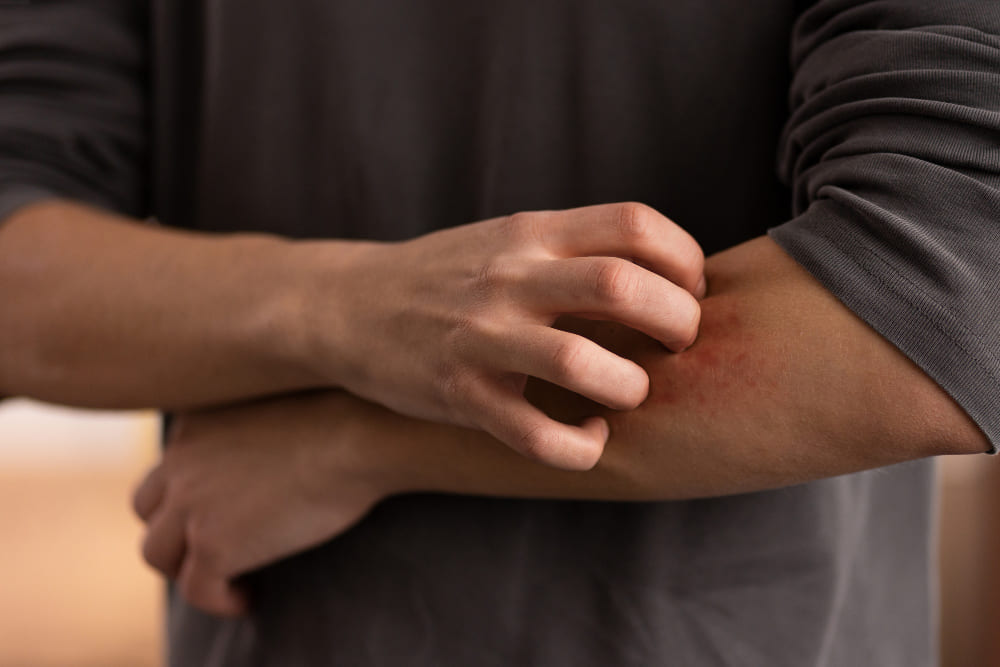
A normal mosquito bite vs a tiger mosquito bite
Tiger mosquito bites generally look similar to those of a common mosquito, but they can be more painful and cause more irritation in some people.
A tiger mosquito bite can cause a bump that is slightly more swollen and inflamed than a typical mosquito bite. The skin reaction can vary from person to person.
The main difference lies primarily in the behaviour of the tiger mosquito:
- it bites mainly during the day, unlike the common mosquito, which tends to bite at night,
- it is more aggressive and more active,
- it often lives close to human dwellings.
Can the tiger mosquito transmit diseases?
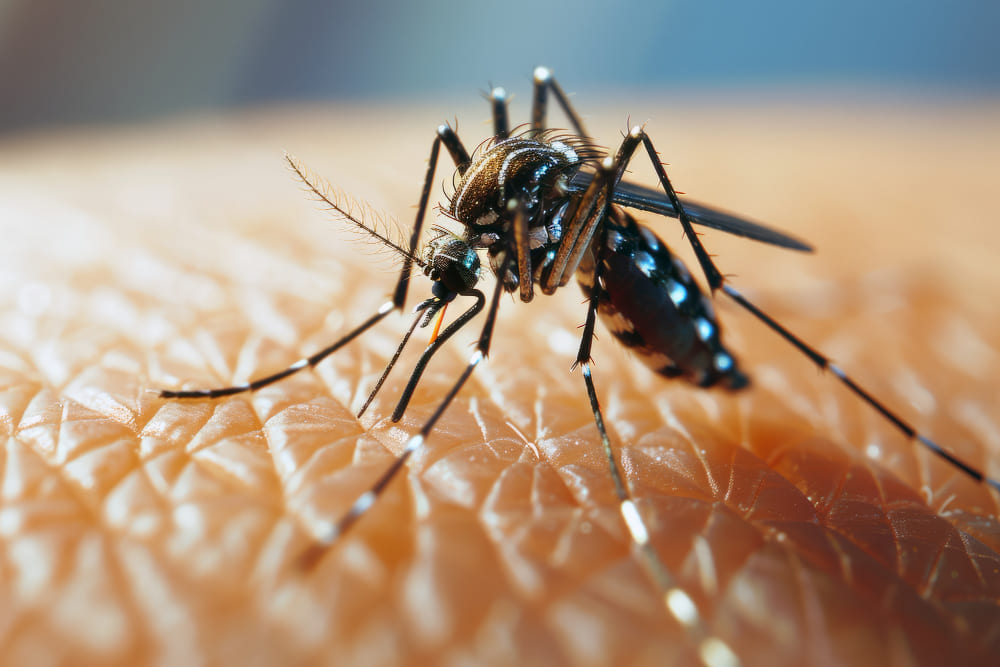
Yes. The tiger mosquito is known to be a potential vector of viral diseases. It is for this reason that health authorities are keeping a particularly close eye on its spread.
In theory, it can transmit the following diseases:
- dengue fever,
- chikungunya,
- the Zika virus.
👉 These diseases remain rare in mainland France, but isolated cases may occur when infected people return from areas where these viruses are circulating. The tiger mosquito can then become a local vector if it bites an infected person.
To limit the spread of the tiger mosquito, remember to remove any standing water in and around your home.
Comparison with other insect bites
Unlike other insect bites, such as those from fleas or bed bugs, mosquitoes usually bite individually. It is rare to see long rows of aligned welts.
| Insect | Appearance of the bite | Pain / Sensation | Severity / Risks |
| Bed bug | Stitches grouped in a line (1 to 5 buttons) | Night-time itching | No serious allergies, but significant discomfort |
| Red ant (Myrmica rubra) | A small red blister with a white centre | Immediate burning sensation, sharp pain | Mild to moderate, may last 24 to 48 hours |
| Fire ant (Solenopsis invicta) | Button in the centre of a red area | A stinging pain, like a burn | Possible allergic reactions; rare cases of anaphylactic shock |
| Electric ant (Wasmannia auropunctata) | Small clusters of red spots | A sensation like an electric shock | Risk of an allergic reaction or localised swelling |
| Bee | Rapid swelling with a visible sting | A sharp pain, a single prick | Possible severe allergic reactions (anaphylactic shock) |
| Wasp | A red, swollen spot, without a stinger | Immediate acute pain | Réactions allergiques graves possibles |
👉 See also: Recognising and treating ant bites.
Allergy to mosquito bites
Most mosquito bites simply cause a small red bump that itches for a few hours. But in some people, the body’s reaction is more intense. This is the case, for example, with young children or people with sensitive skin. This allergic reaction is linked to the immune system, which overreacts to substances present in the mosquito’s saliva.
Symptoms of a mosquito bite allergy
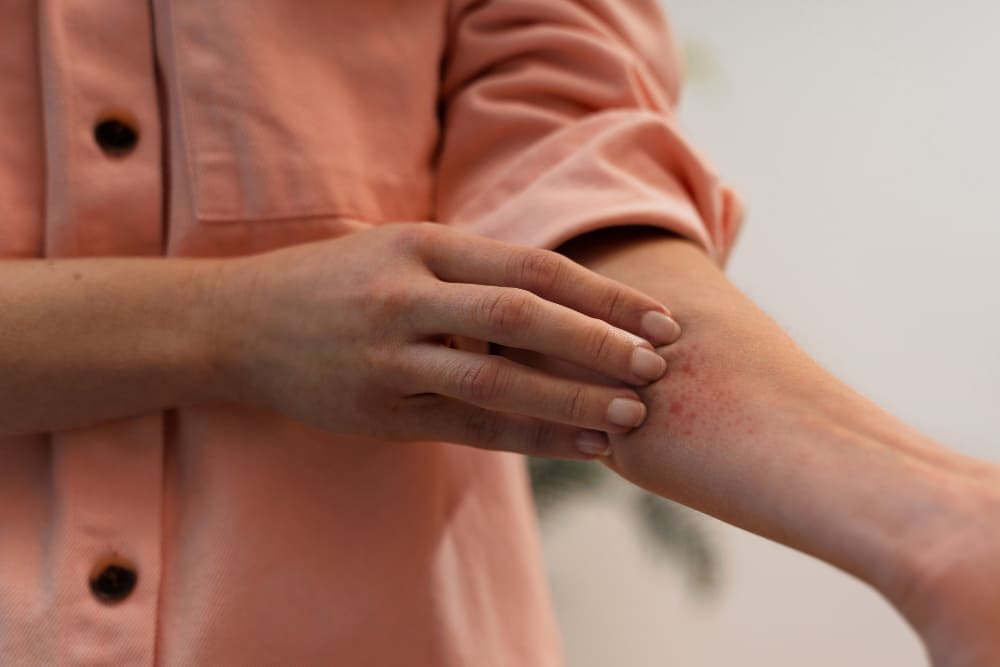
- significant swelling of the skin around the bite,
- extensive redness,
- a very large mosquito bite,
- intense itching,
- sometimes the appearance of hives around the bitten area.
How can you relieve an allergic reaction?
If you experience an allergic reaction, you can relieve it as follows:
- apply an antihistamine or soothing ointment,
- clean the area with an antiseptic,
- use a cold compress to reduce swelling,
- avoid scratching to minimise irritation and infection.
In some cases, your doctor may prescribe an oral antihistamine.
If you experience any general symptoms (fever, feeling unwell, severe fatigue), please consult your doctor.
Diseases linked to mosquito bites
Some mosquitoes can act as disease vectors, meaning they can transmit viruses or parasites when they bite an infected person and then another.
Fortunately, such cases remain rare in mainland France. However, with the arrival of the tiger mosquito, certain diseases are now subject to heightened surveillance.
In certain parts of the world (Africa, Asia, South America or the Caribbean), mosquitoes can transmit several infections:
| Disease | Symptoms | Treatment / vaccine |
| Dengue fever | High fever, headache, muscle and joint pain, and sometimes a rash. | In most cases, there is no specific treatment. Treatment is mainly symptomatic (rest, hydration, and fever-reducing medication). A vaccine is available but is reserved for specific cases in endemic areas. |
| Chikungunya | High fever, severe joint pain that can last for several weeks, and severe fatigue. | There is no specific antiviral treatment. Management involves painkillers, rest and staying well hydrated. There is no vaccine widely available to the general public. |
| Virus Zika | Symptoms are often mild: moderate fever, rash, joint pain, conjunctivitis. | No specific treatment. No vaccine is currently available. Particular risk for pregnant women. |
How can you relieve the itching caused by mosquito bites?
1) Clean the skin after the bite
By cleaning the bitten area, you reduce the risk of bacteria and infection.
How to do it:
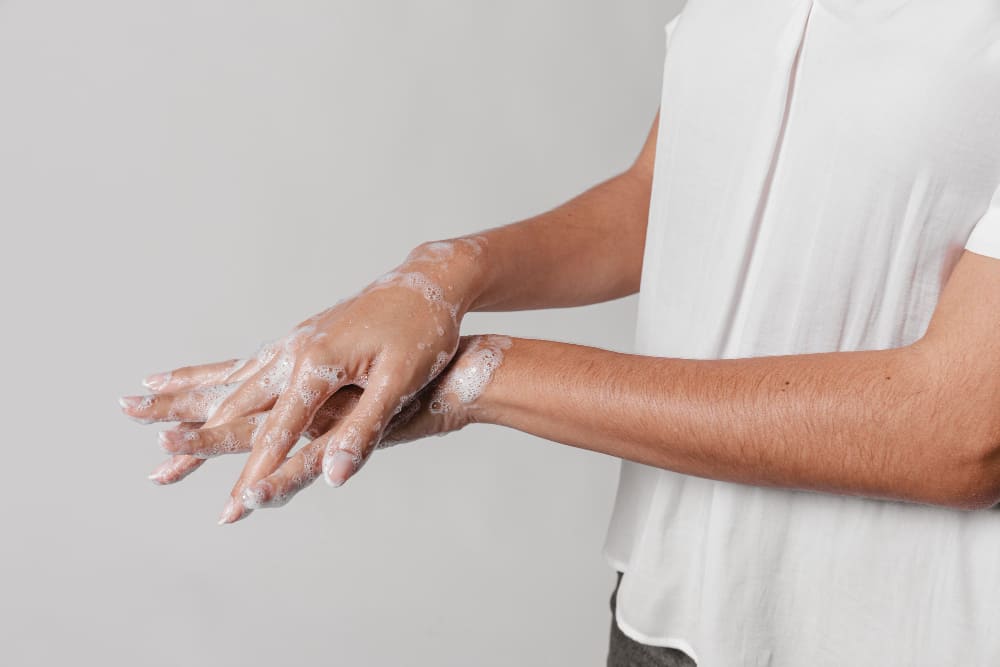
- wash the area with mild soap and water,
- then apply an antiseptic if the skin is irritated,
- gently pat dry without rubbing.
And above all, avoid scratching!

2) Apply cold
Cold is very effective at reducing inflammation and relieving itching.
You can:
- apply a cold compress for a few minutes,
- use an ice cube wrapped in a cloth,
- place a cold spoon on the bite.
3) Use a soothing ointment
An anti-itch ointment can relieve irritation. These often contain soothing ingredients or antihistamines.
Don’t hesitate to ask your pharmacist for advice.
And above all, avoid scratching!
4) Some natural remedies
There are also some natural remedies that can help relieve itching:
- apply a little diluted vinegar to the bite,
- use peppermint or lemongrass essential oil (always diluted and never on young children
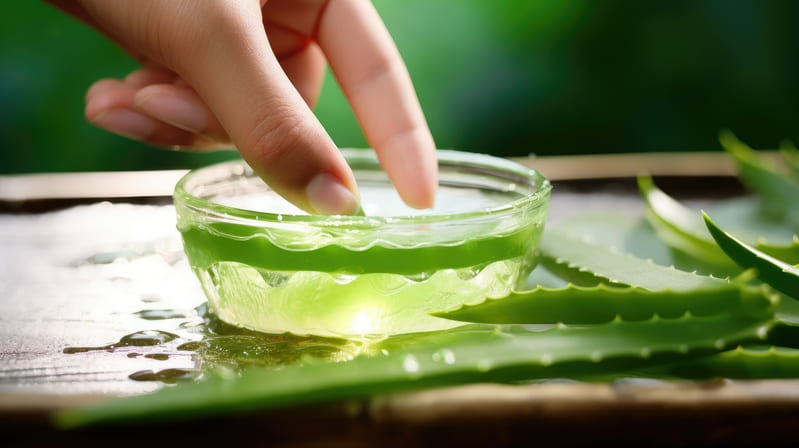
- apply a little aloe vera gel to soothe the skin.
3 tips for avoiding mosquito bites
1. Remove any standing water around your home
Mosquitoes need standing water to breed. The females lay their eggs in it, which can then hatch into larvae in just a few days.
To limit their proliferation:
- empty plant saucers regularly,
- clean gutters and drains,
- cover rainwater collectors,
- avoid leaving water in buckets, watering cans or garden toys.

2. Use mosquito repellents
There are several options available:
- apply mosquito repellent to your skin,
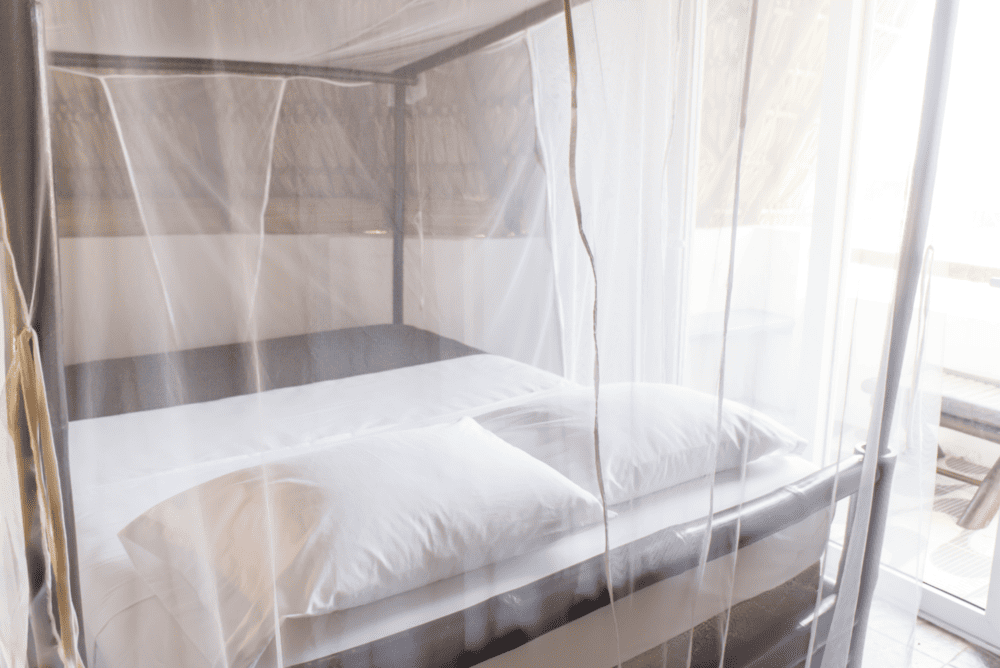
- fit mosquito nets around your bed or windows,
- use indoor mosquito repellent diffusers,
- wear long, light-coloured clothing in the evening.
3. Avoid high-risk times and areas
Mosquitoes are most active in the evening and at night, whilst the tiger mosquito can bite during the day.
To minimise the risks:
- avoid spending long periods near damp areas (marshes, ponds, heavily watered gardens),
- protect your skin when outdoors at dusk,
- use a repellent if you are staying in a heavily infested area.

FAQ
Why does a mosquito bite itch?
Tiger mosquito bites versus ordinary mosquito bites: what are the differences?
How long does a mosquito bite usually last?
In some people, the bump may remain visible for up to a week, especially if the skin is sensitive or if the bite has been scratched a lot.
The swelling usually subsides within a few hours, whilst the itching may last a little longer.
Which blood type attracts mosquitoes the most?
Other factors also play an important role:
– perspiration,
– body heat,
– exhaled carbon dioxide,
– certain natural skin odours.
Why do some people get stung more often than others?
– body heat,
– carbon dioxide exhaled during breathing (higher in pregnant women),
– certain body odours present on the skin,
– perspiration,
– alcohol consumption,
– dark clothing, which attracts insects more.
How many times does a mosquito bite?
What should you do if you get a bite from an infected mosquito?
– clean the area with soap and water
– apply a skin antiseptic
– avoid scratching to prevent the condition from worsening
– apply a soothing or antiseptic ointment if necessary
If the redness spreads, the pain increases or a fever develops, it is best to consult a doctor.
What should you do if a mosquito bite swells up?
– clean the swollen bite
– apply a cold compress, for example using an ice cube wrapped in a cloth
– use a soothing cream
– avoid scratching
When should you see a doctor after a mosquito bite?
– the swelling becomes severe,
– the bite becomes very painful or infected,
– a fever develops following multiple bites,
– signs of a severe allergic reaction occur (hives, feeling unwell, breathing difficulties).
These situations are rare, but a medical consultation will ensure that there are no complications.
