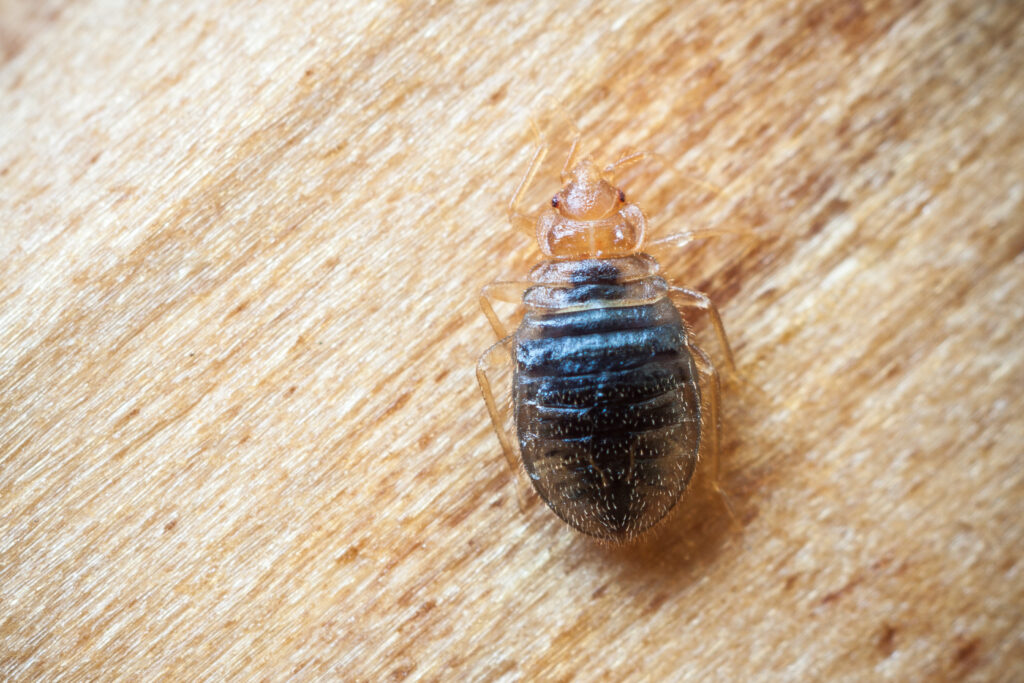
Bed bugs are very resilient pests: they can survive for several months without feeding, hide in the smallest of spaces, and their eggs are protected by an extremely strong waxy coating. But the good news is that, like all insects, they also have their weaknesses. Temperatures, smells, substances, predators, etc. Here’s what you need to know to repel them.
Key takeaways
➡️ Heat above 56°C is their greatest weakness.
➡️ Cold is only effective at -20°C for 72 hours.
➡️ Certain smells bother them (essential oils, vinegar, aromatic plants) but are never enough to eradicate an infestation.
➡️ They flee from light and dry, tidy environments.
➡️ Diatomaceous earth is a very effective natural product.
Heat: their greatest weakness
If there is one thing bed bugs deeply dislike, it is high temperatures. Unlike cold, which slows down their activity but does not kill them completely, high temperatures cause rapid and irreversible death in both adult bed bugs and their eggs. In practice, their bodies become dehydrated.
At what temperature do bed bugs die?
The recommended temperatures are based on mortality thresholds used in professional treatments (Certibiocide, INELP) and the work of entomologists such as JM Bérenger (Marseille University Hospital).
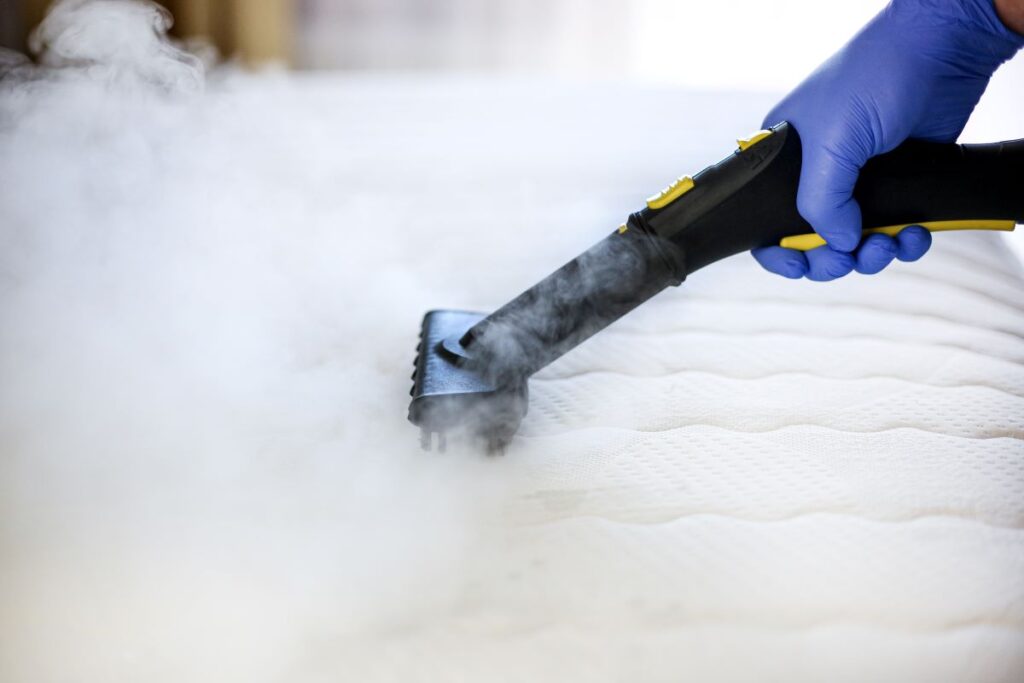
At temperatures above 56°C, adult bedbugs die within minutes; the very hot steam used in pest control instantly eliminates insects and their eggs when applied at a distance of 5-10 cm.
Good to know: Bed bug eggs are covered with a highly resistant protective wax that makes them impervious to conventional insecticides. Heat therefore remains the most reliable method of eliminating them.
How can you use heat effectively at home?
Washing machine and tumble dryer
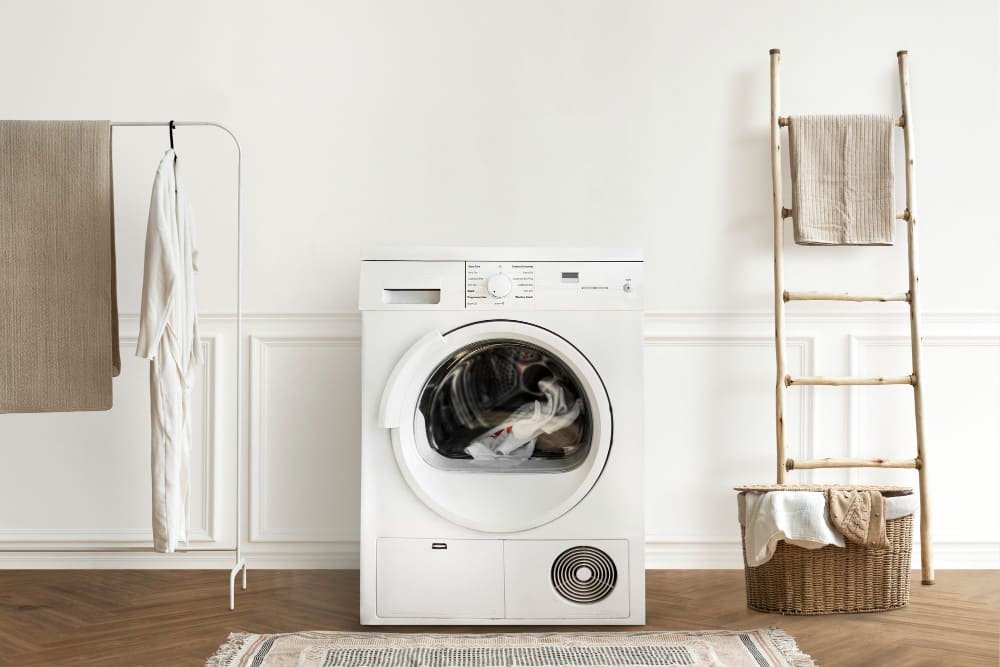
You can wash infested laundry at 60°C and then tumble dry it for 30 minutes at a high temperature to complete the treatment.
➡️ See also: How to wash your bedding and clothing for bed bugs?
Steam cleaning
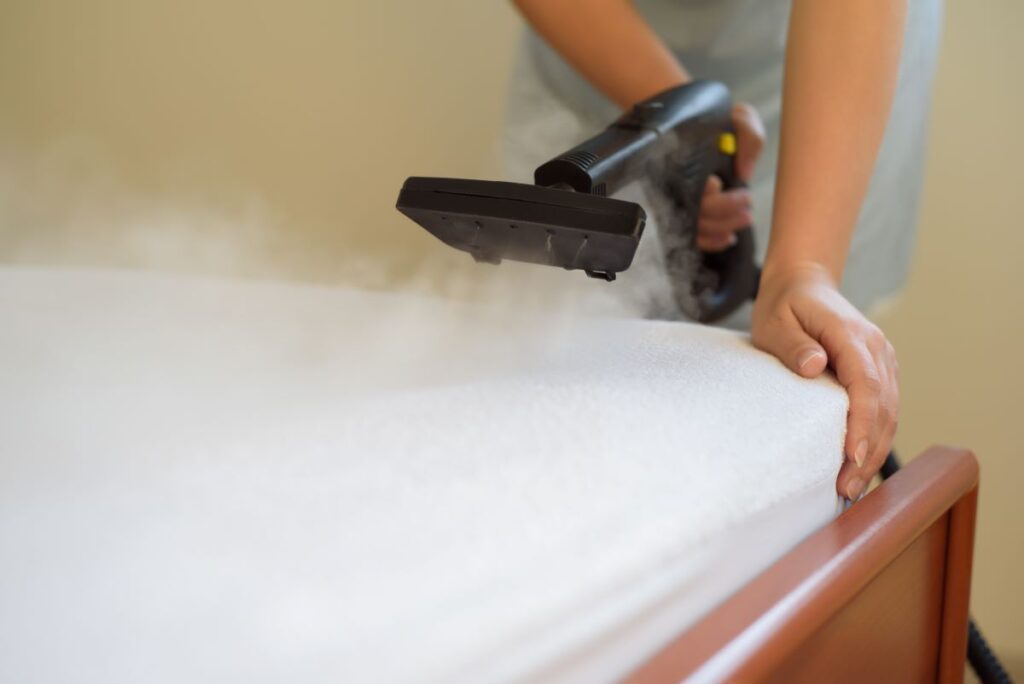
You can hire a steam cleaner from specialist DIY stores. To be effective, the nozzle should be held 5-10 cm from the surface and moved slowly (≈ 2 cm/second). You can use your cleaner on your mattress, bed base, sofa, skirting boards, curtains, etc.
In the event of an advanced infestation, do not hesitate to call in a certified professional. This type of service provider uses tailor-made heat treatments. Some companies, such as Nocibilis, have developed heat chambers.
In practical terms, this is a large 2.5 m x 3 m box called a Bugbuster, which is equipped with a heating and ventilation system. Contaminated items such as furniture, suitcases, mattresses, etc. can be placed inside, and a heat shock is then triggered to eradicate the bed bugs at all stages of their life cycle.
2. Extreme cold
Bed bugs hate the cold… but only when it is really extreme. It must be applied for a long time and at a low enough temperature to be truly effective.
In nature, these insects survive very well when temperatures drop slightly. This is why, in winter, in an unheated dwelling or in a bag left outside for a few hours, bedbugs do not die: they simply slow down their metabolism and can survive for several months without feeding.
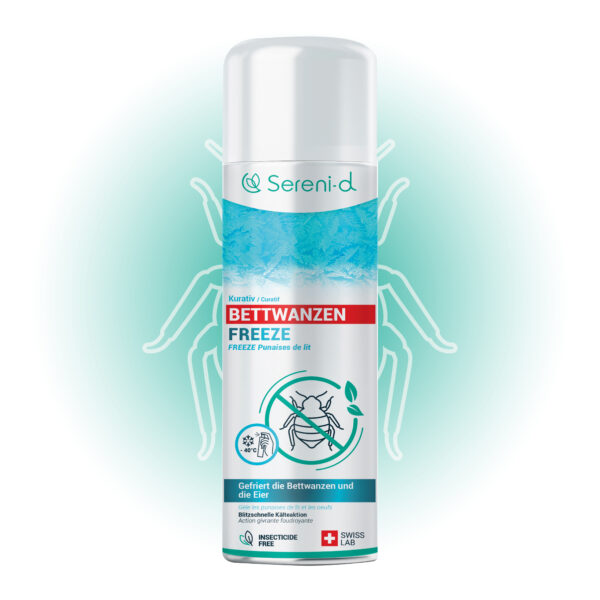
FREEZE Bedbugs
• Natural lightning-fast treatment for bed bugs
• Kills 100% of bed bugs (eggs, larvae, adults) through freezing
• Immediate protection, non-harmful to your health and your family’s health
• Over 50,000 satisfied Sereni-d® customers
FREEZING SPRAY -40°C – INSTANT RESULTS
In stock
At what temperature does cold become lethal for bed bugs?
Professional recommendations (INELP, Certibiocid practices) are now well established:
- At –20°C: it takes at least 72 hours to kill bed bugs and eggs.
- At -30°C: 48 hours are sufficient, but this level of cold can only be achieved in a commercial freezer.
- At -40°C: SHOCK action. This is the case with our Freeze Serenid
- Above -15°C: no guarantee of effectiveness, the bedbugs simply become dormant.

How can you use cold at home?
Cold can be useful for items that cannot be machine washed or cannot withstand steam:
- books
- shoes
- soft toys
- small textile items
- etc.
Instructions:
- Place the item in an airtight bag (such as a freezer bag).
- Put it in the freezer at -20°C for at least 72 hours.
- Allow it to return to room temperature in the bag to avoid condensation, which could damage the item or promote mould growth.
The limitations of cold treatment
Please note that cold does not treat the home, only objects. Also, not all domestic freezers actually reach -20°C (some fluctuate between -12 and -18°C).
3. Odours that repel bed bugs
Although bed bugs do not have as keen a sense of smell as ants or other insects, they are particularly sensitive to certain volatile molecules. Some odours bother them to the point of temporarily repelling them or disrupting their ability to move around and find a host.
⚠️ Warning:
No odour alone is sufficient to eradicate a bed bug infestation.
Odours are repellents, not curative treatments.
Essential oils
Certain essential oils give off aromatic compounds that bedbugs dislike:
- Tea tree
- True lavender
- Lemon eucalyptus
- Peppermint
- Lemongrass
They can disrupt the pheromones that bedbugs use to gather together or explore their environment.
➡️To learn more: Essential oils for bed bugs.


White vinegar and acidic odours
The pungent smell of white vinegar is unpleasant for bedbugs.
Key points to remember:
- White vinegar repels but does not kill.
- Its acidity can disorient bedbugs and disrupt their trajectories.
- It is especially useful for cleaning infested areas and removing odour traces left by insects.
The scent of aromatic plants
Certain plants give off natural repellent substances:
- Cloves
- Bay leaves
- Rosemary
- Cinnamon
They contain mild insect repellent active ingredients, but again, their effectiveness is limited in the context of an infestation..

Key points
Bed bugs are attracted to:
- the CO₂ you exhale,
- your body heat,
- natural human odours.
These signals are so powerful that even when faced with bed bug repellent odours, they eventually return.

4. Direct light
Bed bugs are lucifugous, meaning they naturally shy away from light. They prefer dark, confined and protected environments: gaps in wood, mattress seams, bed bases, skirting boards, etc.
When exposed to a strong light source, their behaviour changes: they quickly hide, become disoriented, and stop moving.
This is why they are rarely seen in daylight, except in cases of advanced infestation.
However, exposing infested items to sunlight will not be very effective.
5. Diatomaceous earth
Diatomaceous earth (biocide only, not calcined) is composed of micro-fossils of algae that act mechanically:
- it abrades their cuticle (their protective layer),
- which leads to gradual dehydration,
- the bedbugs usually die within 4 to 5 days.
It is a natural, odourless solution that is effective against bedbugs and other insects (ants, fleas).
You can sprinkle it in skirting boards, gaps, bed legs, around the bed base, but never directly on a mattress.


DIATOMACEOUS EARTH Bed Bugs
• Preventive and curative aerosol against bed bugs.
• Kills and prevents 100% of bedbugs (eggs, larvae, adults).
• Immediate protection, long-lasting (up to 3 weeks).
• More than 250,000 satisfied Sereni-d® customers.
CONCENTRATED FORMULA – MAXIMUM RESULT
In stock
6. Dry and tidy environments
| What bed bugs love | What bed bugs dislike |
| Rooms that are: – cluttered – damp – dark – full of loose textiles | Rooms that are: – tidy – uncluttered – dry and well ventilated. |
Good habits to adopt
- Air out each room for at least 10 to 20 minutes every day.
- Clear the floor, shelves and piles of clothes (bed bugs like to hide in piles of clothes).
- Move the bed away from the wall by at least 10 cm to limit access routes.
- Avoid storing items under the bed: this is a dark area that bed bugs love.
- Place your clothes in airtight bags or boxes.
- Vacuum regularly, especially along skirting boards, cracks, mattress seams and bed frames.
➡️ Find our complete protocol for dealing with bed bugs on mattress.
7. Any natural predators?
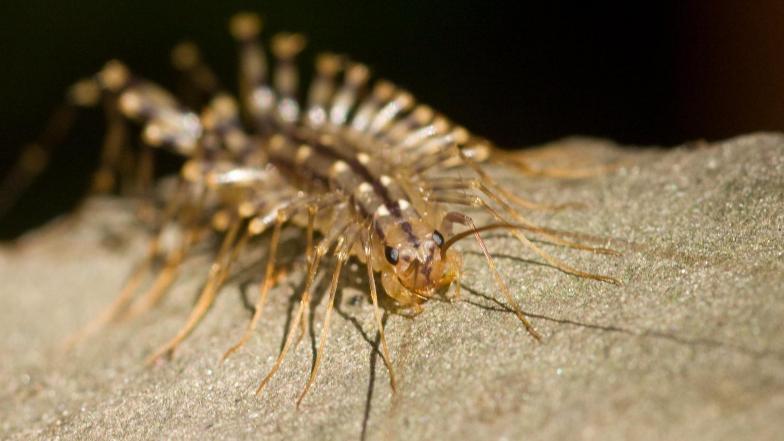
Bed bugs do have a few natural predators, such as the house centipede. However, no predator can control or eradicate an infestation in a home.
Remember that a female bed bug can lay up to 500 bed bug eggs in her lifetime.