



Have you noticed holes in your clothes and textiles? Moths have probably taken up residence in your cupboards and drawers. It is best to act quickly, as these small butterfly-like insects can lay up to 200 eggs in their lifetime! So, how can you get rid of clothes moths quickly? How can you prevent them from coming back? Follow our advice.
Key takeaways
➡️ It is not adult moths that make holes in clothes, but their larvae.
➡️ A female clothes moth can lay up to 200 eggs in her lifetime.
➡️ Clothes moths love dark, dry places that are undisturbed.
➡️ ️ The first signs of infestation are: irregular holes, small whitish larvae, cocoons, fibrous dust, or moths flying around when you open the wardrobe.
➡️ To get rid of moths, you need to treat the fabrics, clean the entire wardrobe thoroughly, and then install natural repellents or pheromone traps.
See also: How to get rid of food moths?
Clothes moths: introduction
Clothes moths, also known as textile moths (Tineola bisselliella), are small pests that attack natural fibres directly.
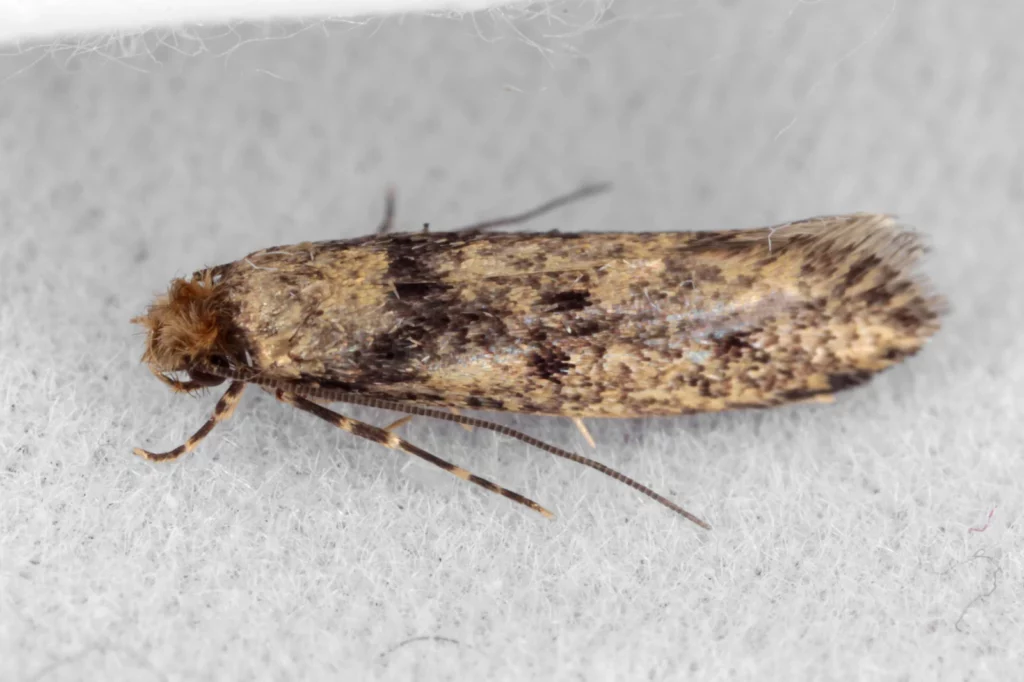
A four-stage life cycle
1. Eggs
Females lay up to 200 eggs directly on textiles or in the corners of wardrobes. The eggs are tiny and invisible to the naked eye.
2. Larvae
It is the larvae that hatch from the eggs that make holes in your clothes. They feed on keratin, a protein found in:
- wool,
- untreated cotton,
- silk,
- cashmere,
- feathers and fur.
They then dig the famous moth holes in clothes, throws, carpets or blankets. Clothes that have been stored for a long time without being washed or protected are the first to be affected.
3. Pupae
The larvae wrap themselves in a cocoon to transform. These cocoons are sometimes visible in the folds or corners of furniture. Generally, these chrysalises are found in dark places such as cupboards, drawers or under carpets.
4. Adult moths
Adult moths have a short lifespan. Their only role is to lay eggs, not to eat textiles.
Good to know: clothes moths can withstand high temperatures of up to 35°C.
Where do clothes moths hide?
Clothes moths prefer places that are:
- dry and dark,
- warm,
- undisturbed.
They are mainly found in:
- chests or trunks that are rarely opened.
- cupboards,
- drawers,
- corners of wardrobes,
- wardrobes,
- non-airtight storage boxes,
- chests or trunks that are rarely opened.
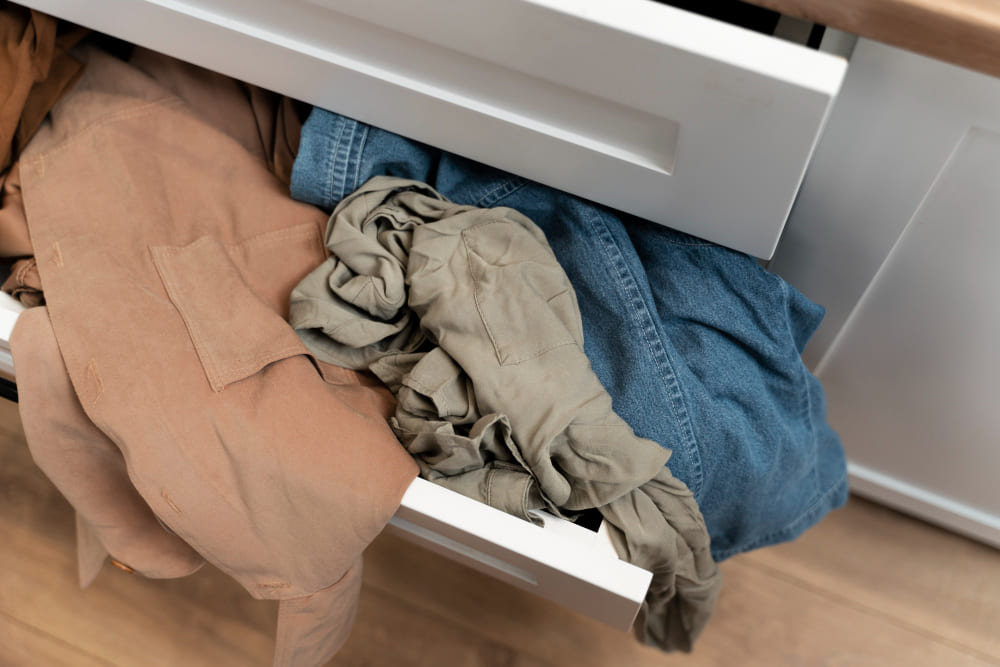
Why do clothes moths move into your home?
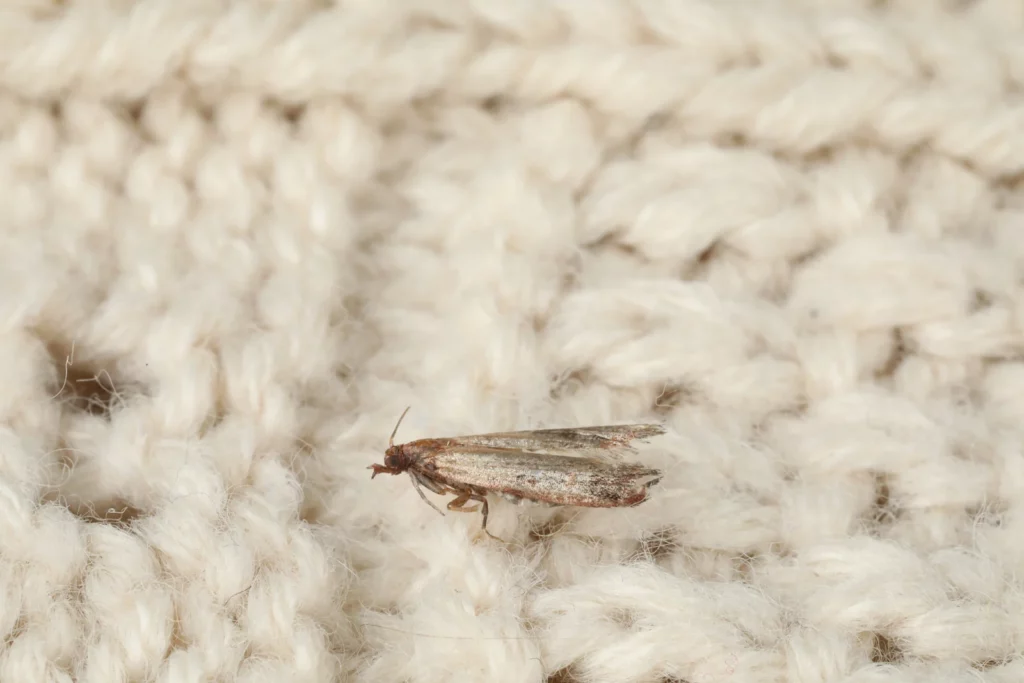
1. You bring contaminated textiles into your home
Clothes moths can easily find their way into your home via:
- Clothes bought in second-hand shops or flea markets, not washed before storage.
- Textiles that have been stored in the attic or basement for a long time.
- Rugs, throws, blankets or cushions picked up from a friend or relative.
- Textile items stored in boxes, which may harbour larvae.
➡️ In 80% of cases, it is the larvae already present in the fibres that trigger the infestation.
2. Your textiles are not being cared for properly
Poorly washed linen, dust, dirty clothes and a lack of ventilation are all factors that encourage the development of mite larvae.
Good to know: Larvae are particularly fond of textiles containing traces of perspiration, sebum, food residues and body odours.

Mistakes that encourage moth infestation
❌ Leaving dirty clothes in a basket.
❌ Keeping textiles in the dark for long periods of time.
❌ Storing fabrics in cardboard bags.
❌ Never airing out cupboards.
❌ Leaving clothes in corners or closed drawers for several months.
5 steps to permanently get rid of clothes moths
Step 1: Treat textiles
If the fabric allows it, wash your clothes in the washing machine at 60°C.
The heat will destroy the larvae, mouthparts and eggs hidden in the fibres.
Instructions:
- Wash your infested clothes at a minimum temperature of 60°C (excluding wool).
- Then dry them in the tumble dryer at a high temperature for 30 minutes to complete the treatment.
- Iron if possible: the heat from the iron helps to eliminate any remaining larvae in the folds.
👉 Ideal for: cotton, sheets, towels, non-delicate clothing.
For wool, cashmere, silk or any delicate fabrics, opt for freezing.
Instructions for use:
- Place the garment in an airtight bag.
- Freeze at -20°C for at least 72 hours.
- Allow to return to room temperature without opening the bag to prevent condensation in the fibres.
Step 2: Clean the wardrobe
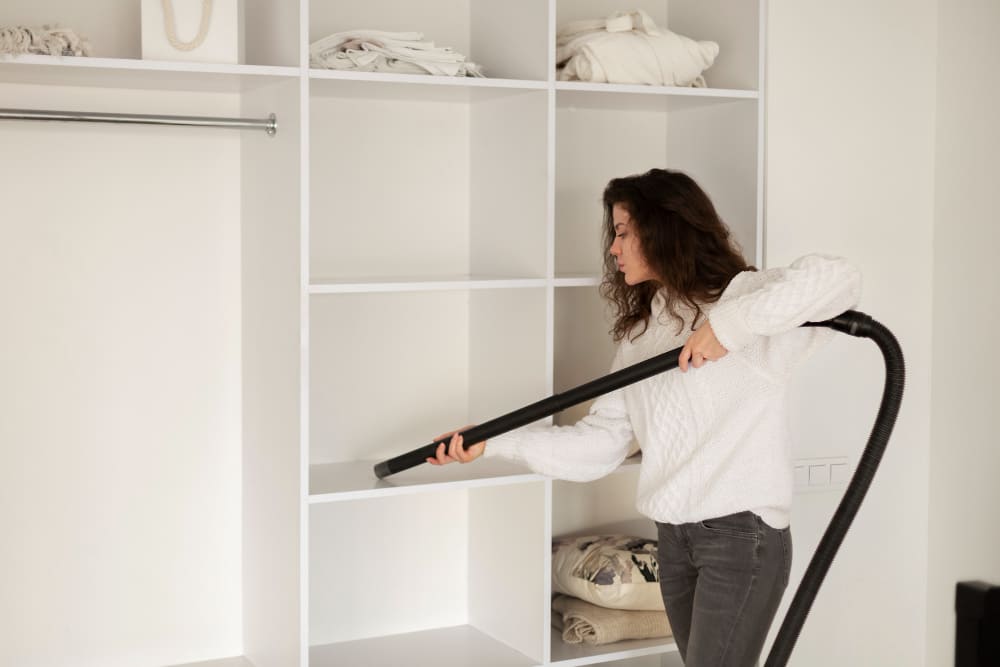
After treating your clothes, you need to clean cupboards, wardrobes and drawers, as clothes moths like to hide in corners to lay their eggs and pupate. Without this step, the infestation may return.
Using the nozzle attachment on your vacuum cleaner, start by thoroughly vacuuming every nook and cranny: drawer corners, hinges, under shelves, cracks in the wood, etc.
Then throw the bag away in an outside bin.
Final step: clean with white vinegar.
- Mix 50% hot water + 50% white vinegar.
- Clean all surfaces of the wardrobe: walls, shelves, drawers, uprights, hinges.
- Pay particular attention to corners and areas where dust accumulates.
Good to know: vinegar removes odours and pheromones that attract moths.
Step 3: Use natural repellents
Once your clothes have been treated and your cupboards cleaned, the next step is to prevent clothes moths from returning.
Here are some natural “old wives” remedies’ that work.

1. Cloves
The strong smell of cloves repels moths.
How to use them:
- Place a small handful of cloves in a piece of gauze, a cotton bag or muslin.
- Place several of these in your cupboards, drawers, suitcases and dark corners.
⚠️ Avoid direct contact with delicate fabrics, as the cloves can leave a lingering odour.
2. Red cedar balls
Red cedar gives off a woody scent that moths hate.
How to use them:
Lightly sand the surface of the wood every 2–3 months to reactivate its scent.
How to use them:
- Place a few drops on a cotton ball, porous pebble, or small wooden disc.
- Place them in cupboards or drawers, without direct contact with your textiles.
- Repeat every 2 to 3 weeks.
⚠️ Never apply essential oil directly to your clothes, as the stains are irreversible!


3. Repellent essential oils
Certain essential oils are very effective as natural repellents:
- True lavender
- Peppermint
- Eucalyptus radiata
How to use them:
- Place a few drops on a cotton pad, porous pebble or small wooden disc.
- Place them in cupboards or drawers, without direct contact with your fabrics.
- Repeat every 2 to 3 weeks.
⚠️ Never apply essential oil directly to your clothes, as the stains are irreversible!
4. Lavender and thyme sachets
Dried lavender and thyme give off a scent that moths do not like.
How to use them:
- Place lavender or thyme sachets in drawers, between stacks of laundry or on shelves.
- Replace them every 2 to 3 months to maintain the scent.

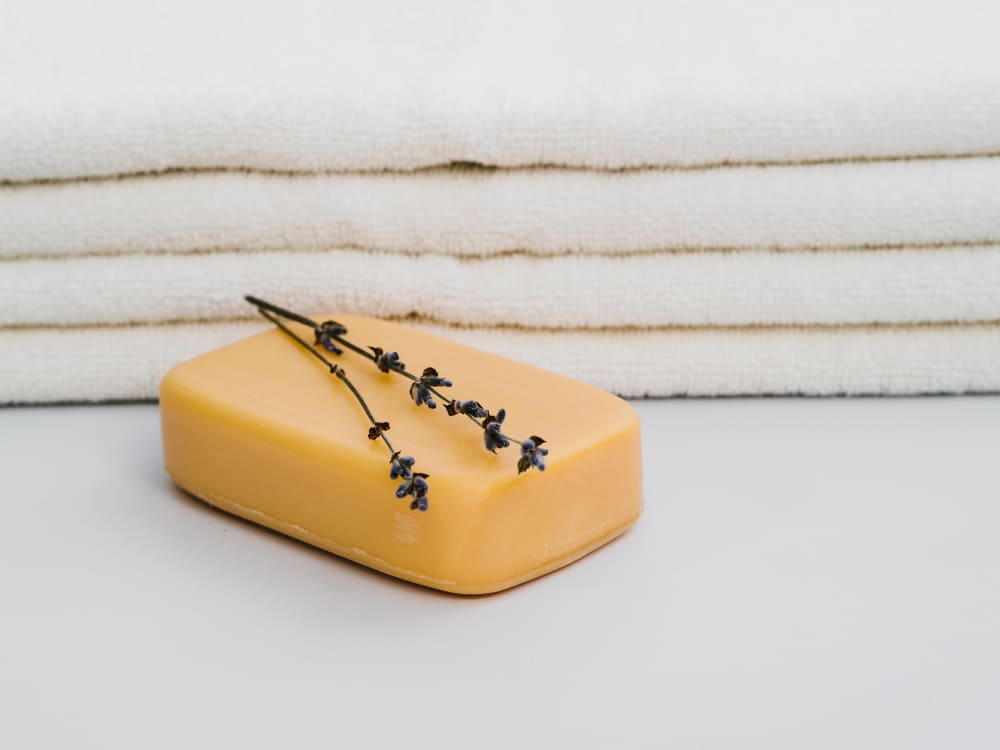
5. Pieces of Marseille soap
Marseille soap is a traditional repellent that is very effective against clothes moths.
How to do it:
- Cut a few pieces of dry soap.
- Place them in your wardrobes and drawers.
- Avoid direct contact with wool or silk to prevent the scent from becoming too strong.
Step 4: Use pheromone traps and trichogramma wasps
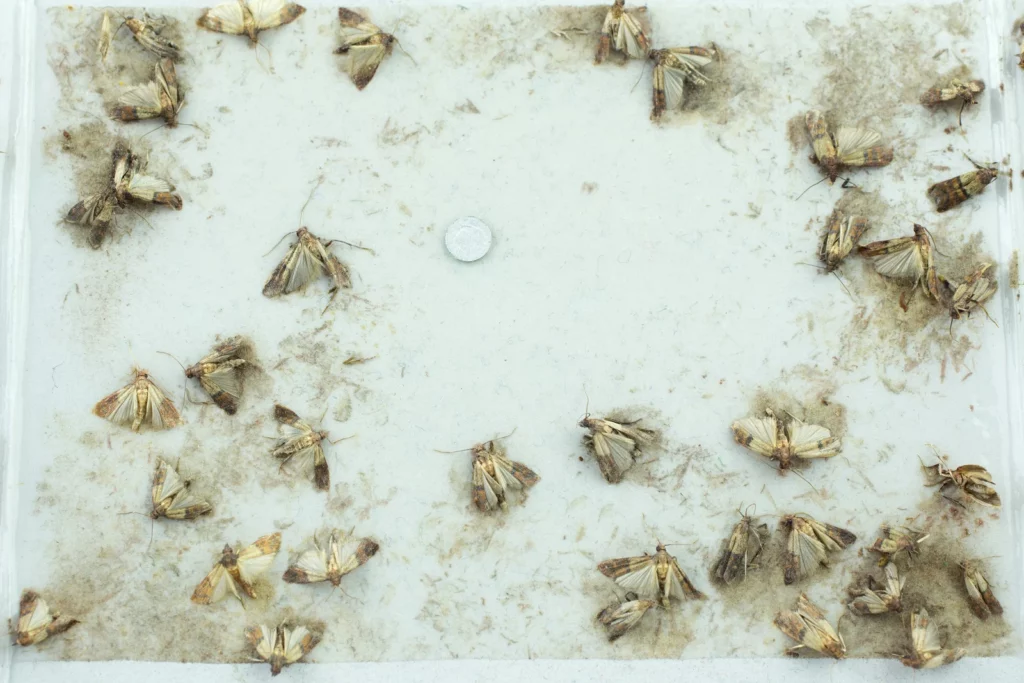
Pheromone traps
Pheromone moth traps attract male moths with a synthetic scent that mimics the sex pheromones of females. The male sticks to the adhesive surface and cannot fly away.
This method has the advantage of being insecticide-free and effectively regulates moth reproduction.
Trichogramma wasps
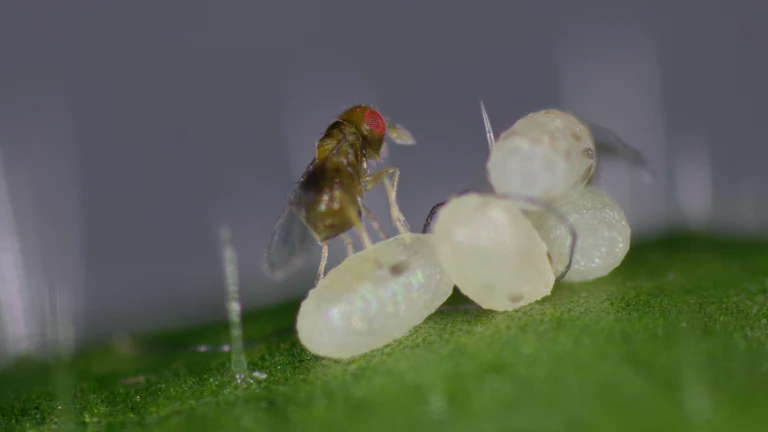
Trichogramma wasps are tiny microscopic insects, completely harmless to humans, which parasitise moth eggs.
They prevent the larvae, which are responsible for holes in clothing, from hatching.
They disappear naturally after about ten days once the eggs have been consumed.
Trichogramma wasps are often sold in the form of small cards to hang up, which should be replaced every 2 to 3 weeks. You can place them near areas where moths lay their eggs: seams, corners, under shelves.
This 100% natural, insecticide-free method is highly effective in stopping an infestation at an early stage.
Step 5: Store your clothes properly
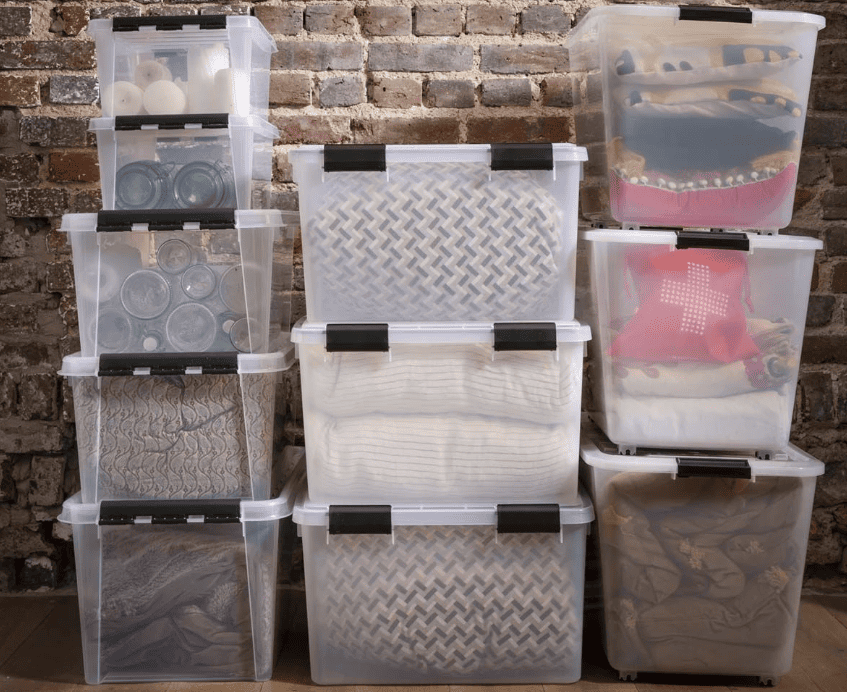
Clothes moths love cupboards and drawers, but they cannot get into a truly airtight container.
Here are the most effective solutions:
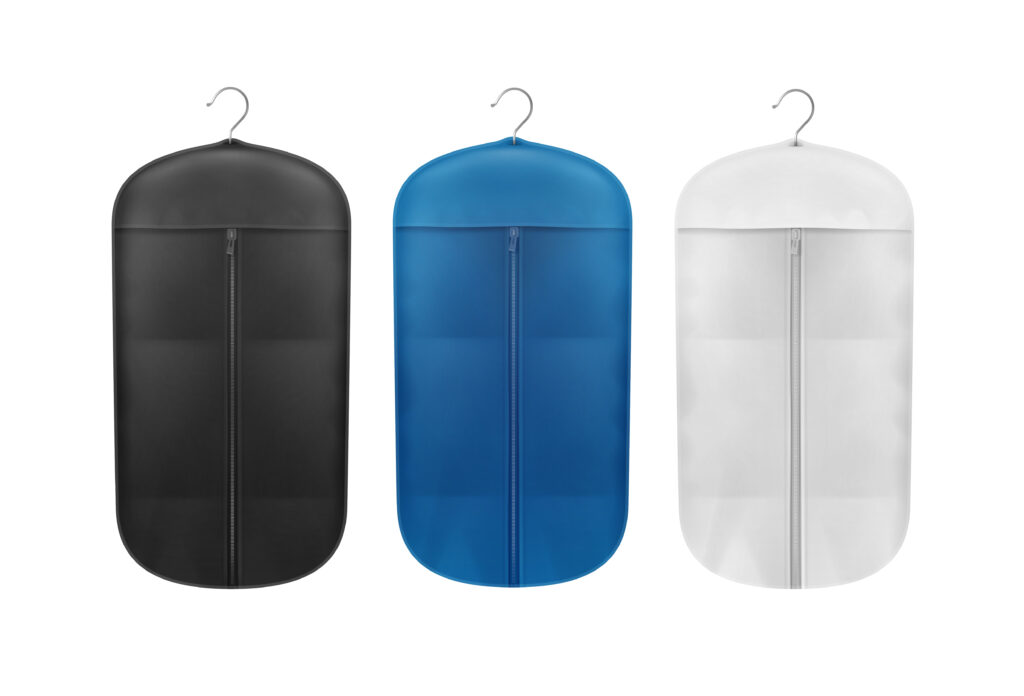
Mothproof zippered covers
These covers are ideal for protecting delicate or rarely used garments: woollen coats, cashmere jumpers, suits, winter clothes, etc.
They prevent moths and their larvae from accessing the fabric fibres while also protecting against dust and moisture.
➡️ Practical tip: Place a lavender sachet or a small cedar ball inside, ensuring it does not come into direct contact with the garment.
Airtight boxes
These are perfect for long-term storage or delicate fabrics (wool, silk, alpaca, cashmere). Choose thick plastic boxes with silicone seals.
Tips for preventing clothes moth infestation
✅ Air out your wardrobes once a week.
✅ Wash clothes before storing them.
✅ Place natural repellents in cupboards.
✅ Store clothes in covers.
✅ Avoid stagnant humidity.
✅ Regularly inspect textiles that are rarely worn.
FAQ
Are clothes moths dangerous?
The real problem is their larvae, which feed on natural fibres (wool, silk, cashmere, feathers, etc.) and can cause significant damage to your wardrobes.
They are therefore harmful to your clothes, but not to your health.
How can I tell if the holes in my clothes are caused by moths?
– Irregular holes in clothing, often clustered in an inconspicuous area.
– Fibrous dust left behind by larvae as they nibble on fabric.
How long does a clothes moth live?
Do moths attack clean clothes?
– they contain tiny traces of perspiration,
– perfume residues, sebum or dead skin cells,
– or if they are made of animal fibres (wool, silk, alpaca, cashmere, etc.).
