Food moths are insects that feed on our food and reproduce very quickly. An infestation can go unnoticed for several days, as the eggs and larvae hide in corners, drawers or directly in your dry food. The sooner you identify the problem, the easier it is to get rid of it.
To help you, here are our tips for quickly recognising food moths at every stage of their life cycle.
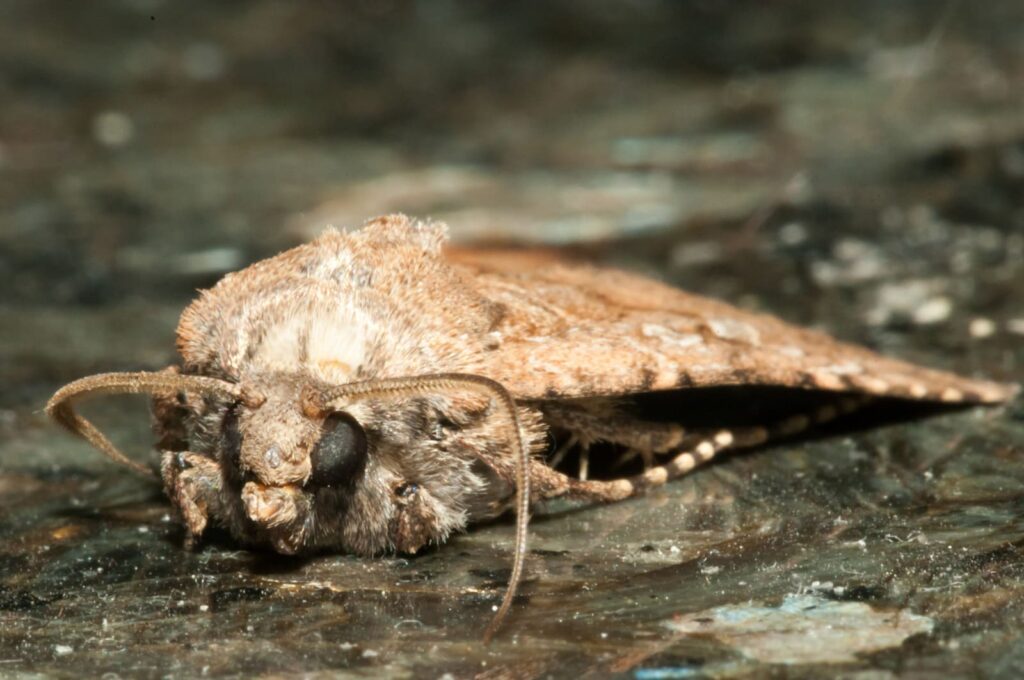
Where do food moths come from?
Contrary to popular belief, food moths (sometimes called moths) do not necessarily come from poor hygiene. They most often arrive with the food itself.
Here’s how they get into your home:
- Products already infested in the shop: microscopic eggs can be found in a packet of flour, rice or cereal.
- Eggs present in packaging: even if unopened, a packet may contain eggs laid during packaging.
- Originating from another home: adult moths can move from one flat to another, especially in buildings with windows.
Once settled, female moths immediately look for a place to lay their eggs: they prefer dry foods (pasta, rice, flour, dried fruit, etc.), especially when stored in soft packaging that is easy to pierce.
Where do they hide?
Food moths like dry, dark places with little movement.
They are often found in:
- poorly sealed jars,
- cardboard or plastic packaging,
- drawers,
- corners and nooks of shelves,
- under or behind food bags.
Do food moths build nests?
Unlike other insects, food moths do not build “nests” in the traditional sense. They do not construct organised structures, but simply lay their eggs in suitable locations.
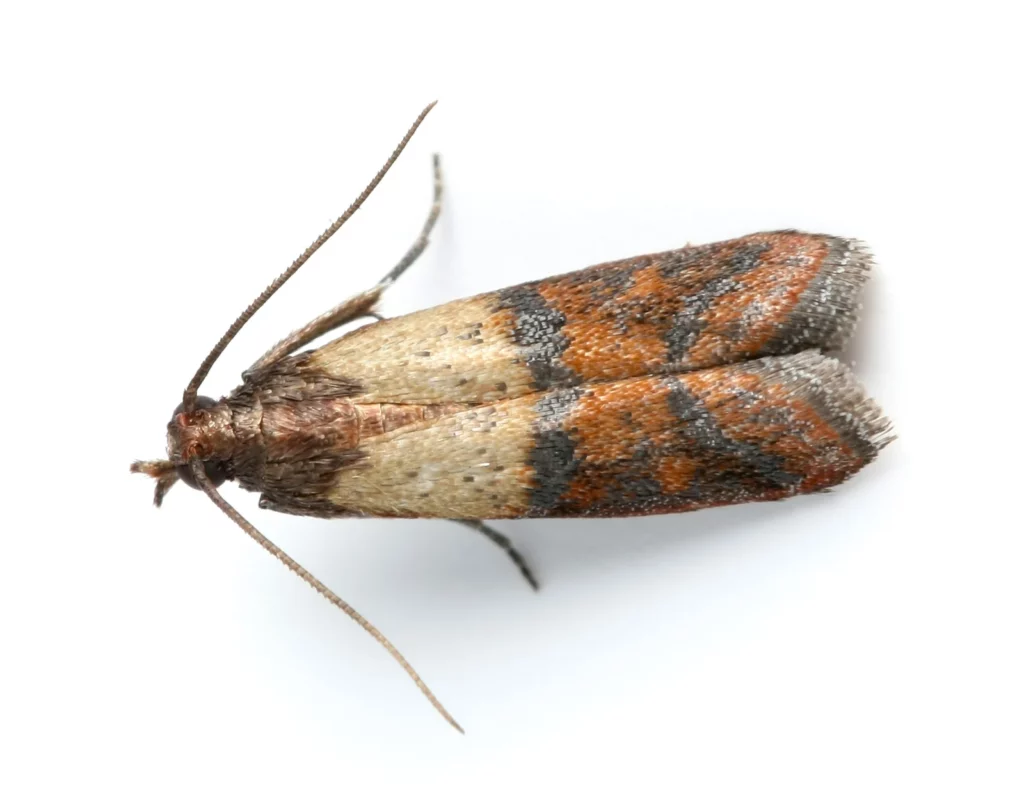
Food moths or clothes moths?
| Criteria | Food moths | Clothes moths |
| Where can they be found? | Kitchen cupboards, jars, packets, drawers, nooks and crannies | Cupboards, wardrobes, carpets, woollen textiles |
| What they eat | Dry foodstuffs: flour, pasta, rice, cereals, dried fruit | Natural textile fibres: wool, silk, feathers, fur |
| Appearance of the adult butterfly | Small brown or grey butterfly measuring 1 to 1.5 cm | Small golden yellow or beige butterfly measuring 0.8 to 1 cm |
| Appearance of larvae | Whitish, approximately 1 cm in size, present in food | White or cream, in fabrics or carpets |
| Signs of infestation | Silky threads in packages, moths in the kitchen, larvae in foodstuffs | Holes in clothing, fibrous dust, small cocoons on fabrics |
| Spawning area | Directly in foodstuffs or packaging | In textiles, seams, wool |
| Health hazard | Low (potential allergy risks) | No immediate danger |
| Risk of rapid infestation | Very high (females lay up to 300 eggs) | Medium to high (slower growth) |
See also: Our tips for getting rid of clothes moths
Recognising an infestation according to the 4 stages of development
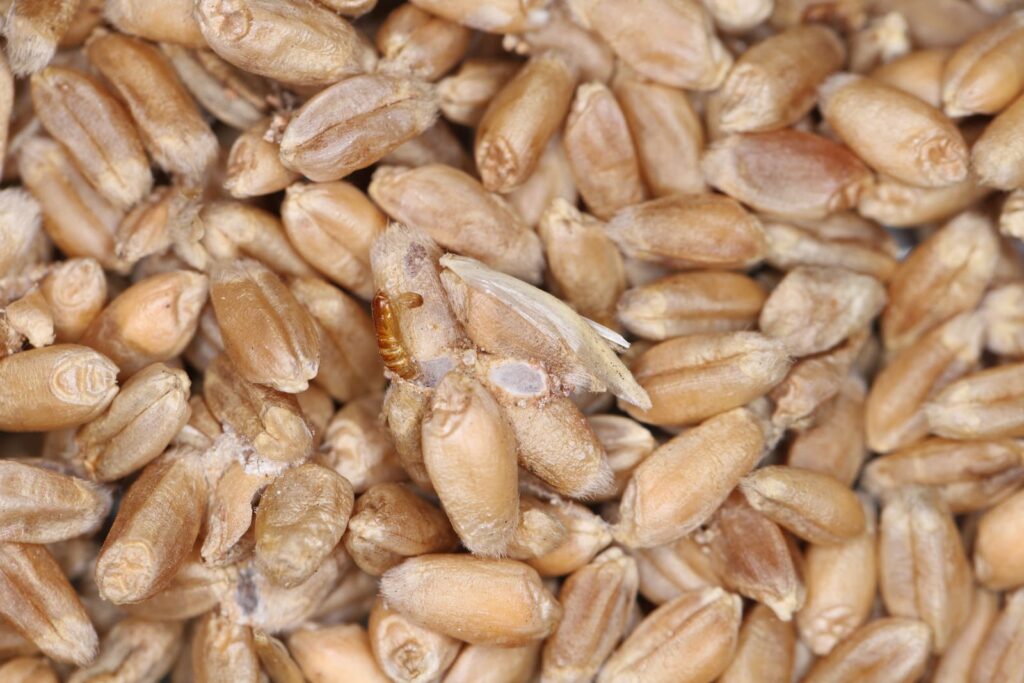
Stage 1 – Food moth eggs
Food moth eggs are very difficult to spot, even when you know there is an infestation.
What do these eggs look like?
- Size: approximately 0.3 to 0.5 mm, invisible to the naked eye.
- Colour: off-white to pale yellow.
- Location: always deposited in contact with food, as the larvae feed immediately after hatching.
- Hatching time: 4 to 7 days: heat (between 20 and 30°C) promotes faster hatching.
Most infestations are caused by eggs already present in food at the time of purchase. This is why moths can be found even in perfectly clean cupboards..
Good to know: a female butterfly can lay 200 to 300 eggs in a single batch.
Stage 2 – Food moth larvae
Food moth larvae are the most problematic stage for several reasons:
- they devour your food, cereals and dried fruit
- they spin webs that contaminate the entire food supply
- they move out of the packets to pupate in cupboards
What do the larvae look like?
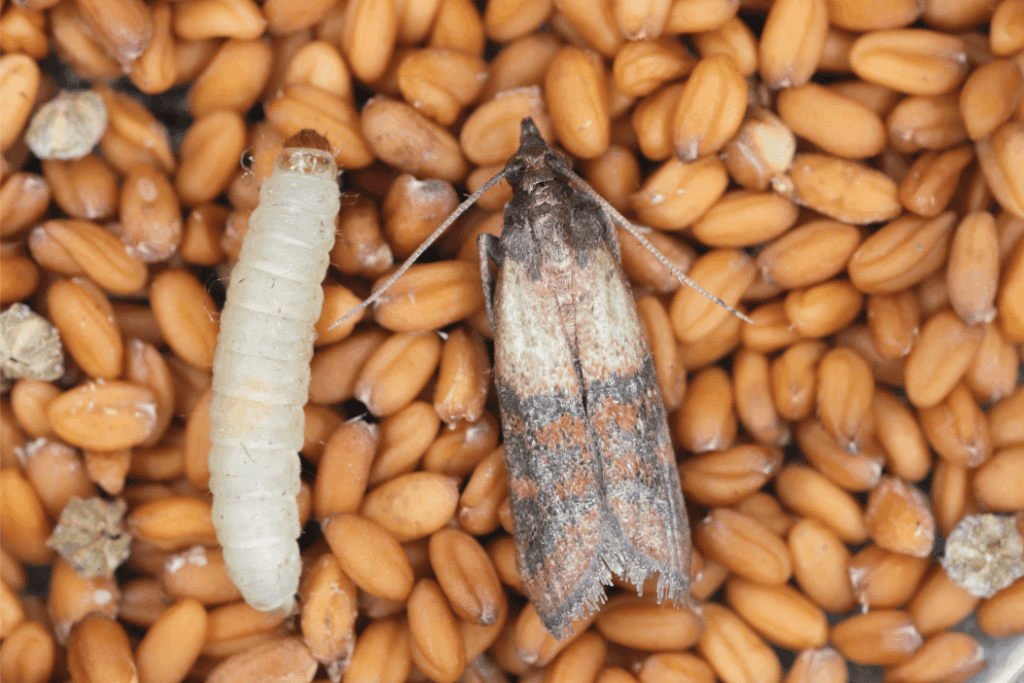
- Colour: whitish to cream, sometimes slightly translucent
- Size: 5 to 15 mm depending on age
- Shape: elongated body, darker head
- Mobility: they move slowly and squeeze into corners, folds in packages or even under poorly closed lids
- Duration in larval form: 2 to 4 weeks
How can you spot them?
As they move around, the larvae leave silky threads in dry food (like small spider webs).
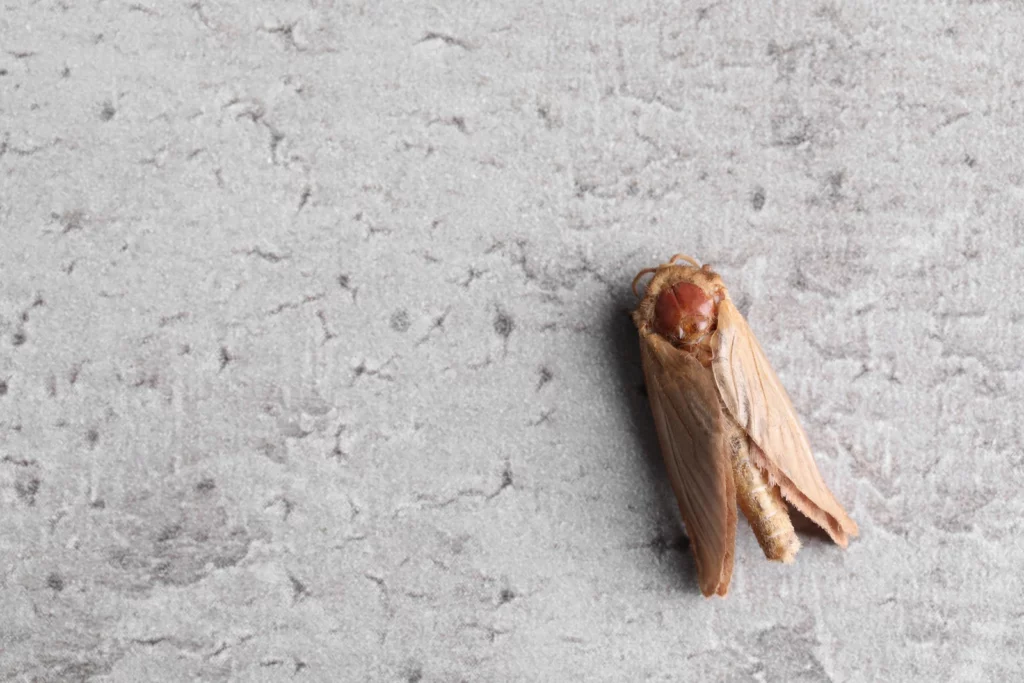
Stage 3 – The moth chrysalis
After the larval stage, the food moth transforms into a chrysalis. At this stage, the infestation in your kitchen is well established.
Moth larvae seek out dry, dark and undisturbed places to pupate.
They often settle in:
- The corners of cupboards and shelves
- The corners of drawers
- Under or behind infested packages
- Hinges and hard-to-reach areas
- Along skirting boards or on the ceiling of the cupboard
These cocoons can remain in place for several days before the moth emerges to take its adult form..
Stage 4 – Adult food moth butterflies
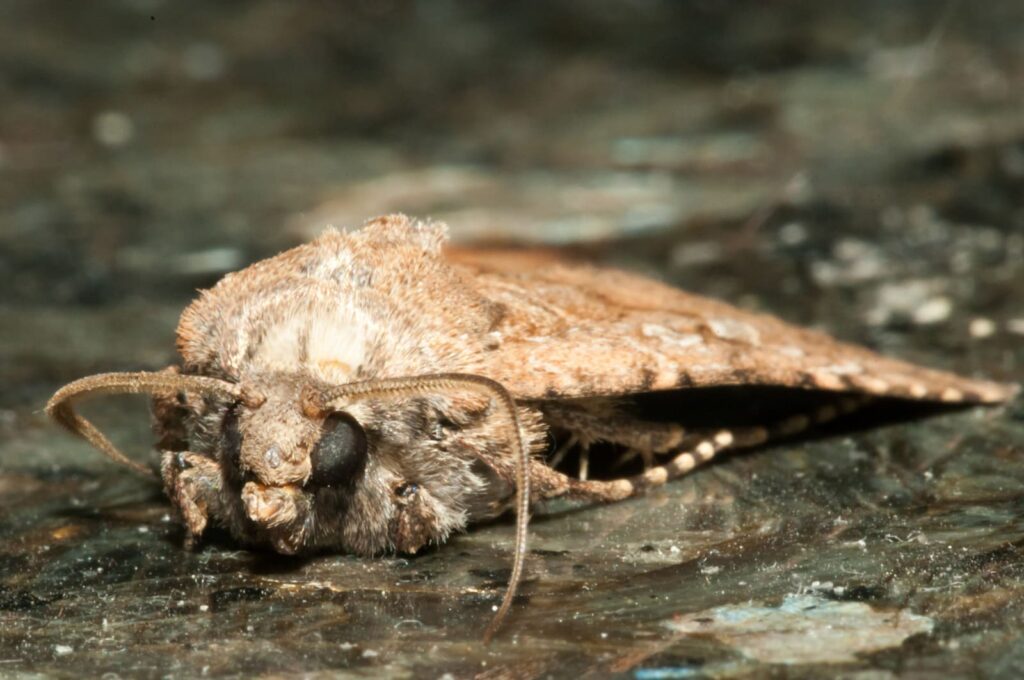
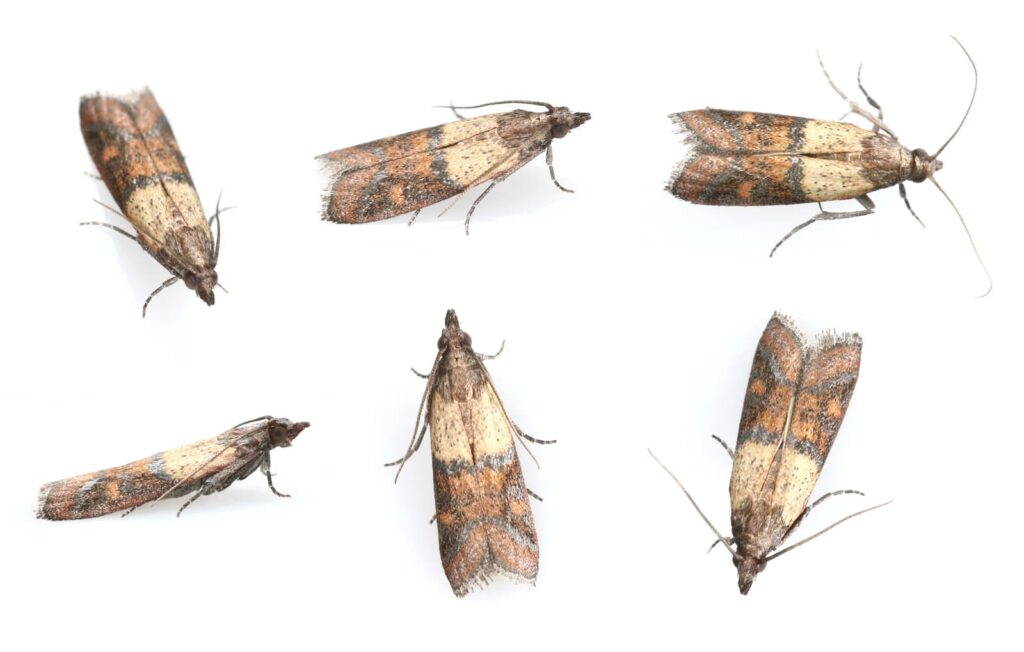
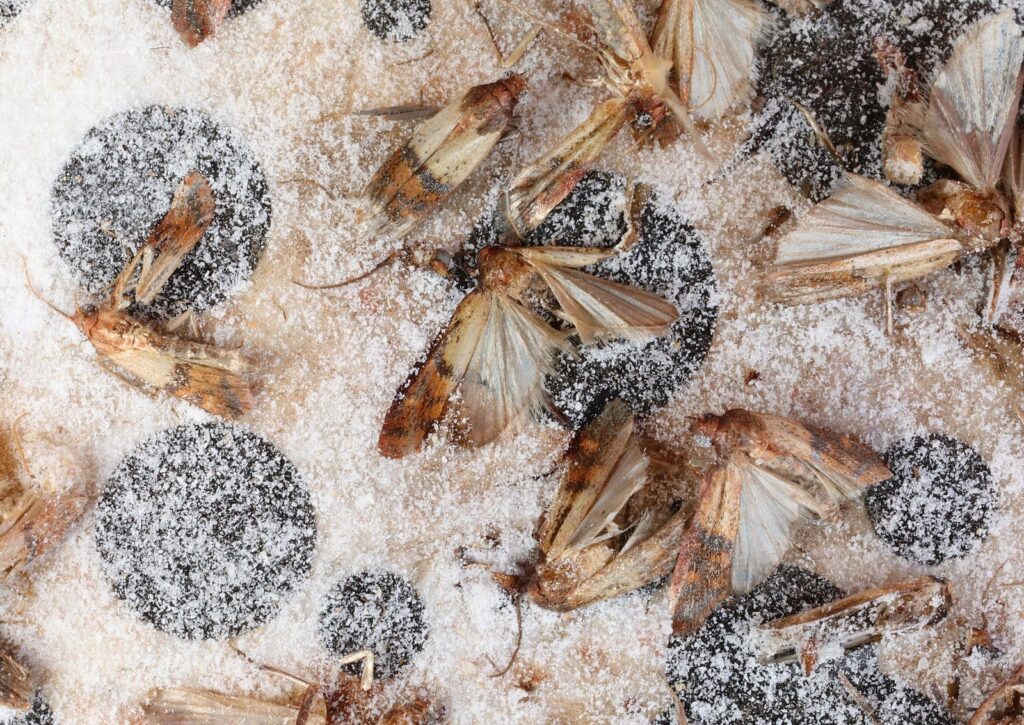
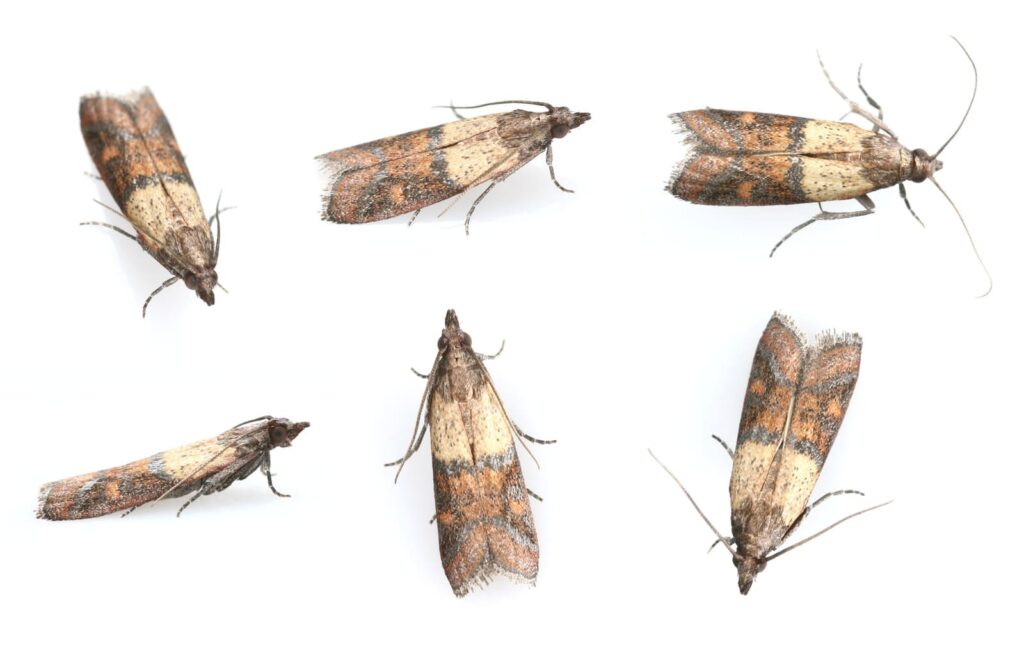
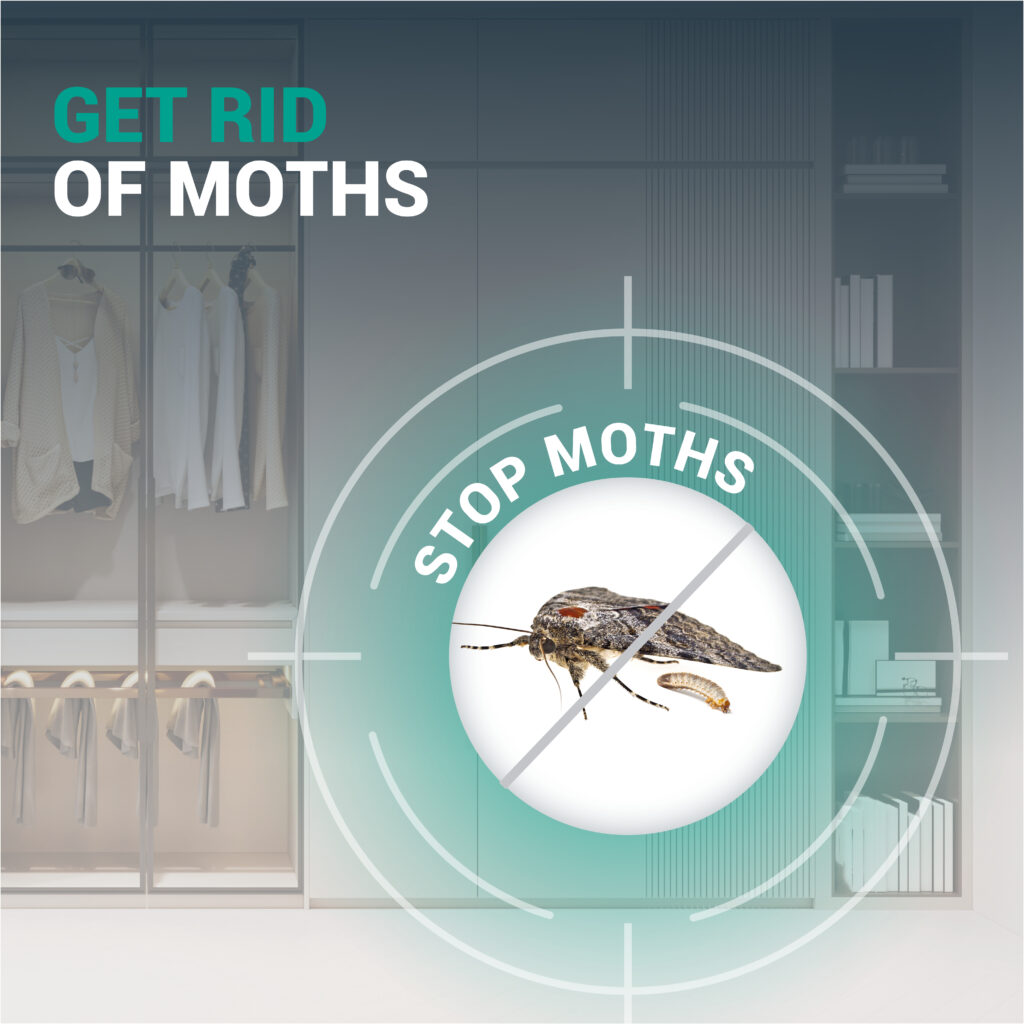
The adult food moth is a brown-grey butterfly measuring approximately 1 cm. It is an insect that flies slowly and erratically. These butterflies do not eat your food, but they reproduce by laying eggs. You can usually see them around kitchen lights, window sills, open cupboards or when you lift up an infested packet.
When you see one or more adult moths, it’s time to give your kitchen a thorough clean.
What to do in case of a food moth infestation?
If you spot larvae, silky threads, moths or cocoons in your cupboards, you need to act quickly: a food moth infestation will never disappear on its own.
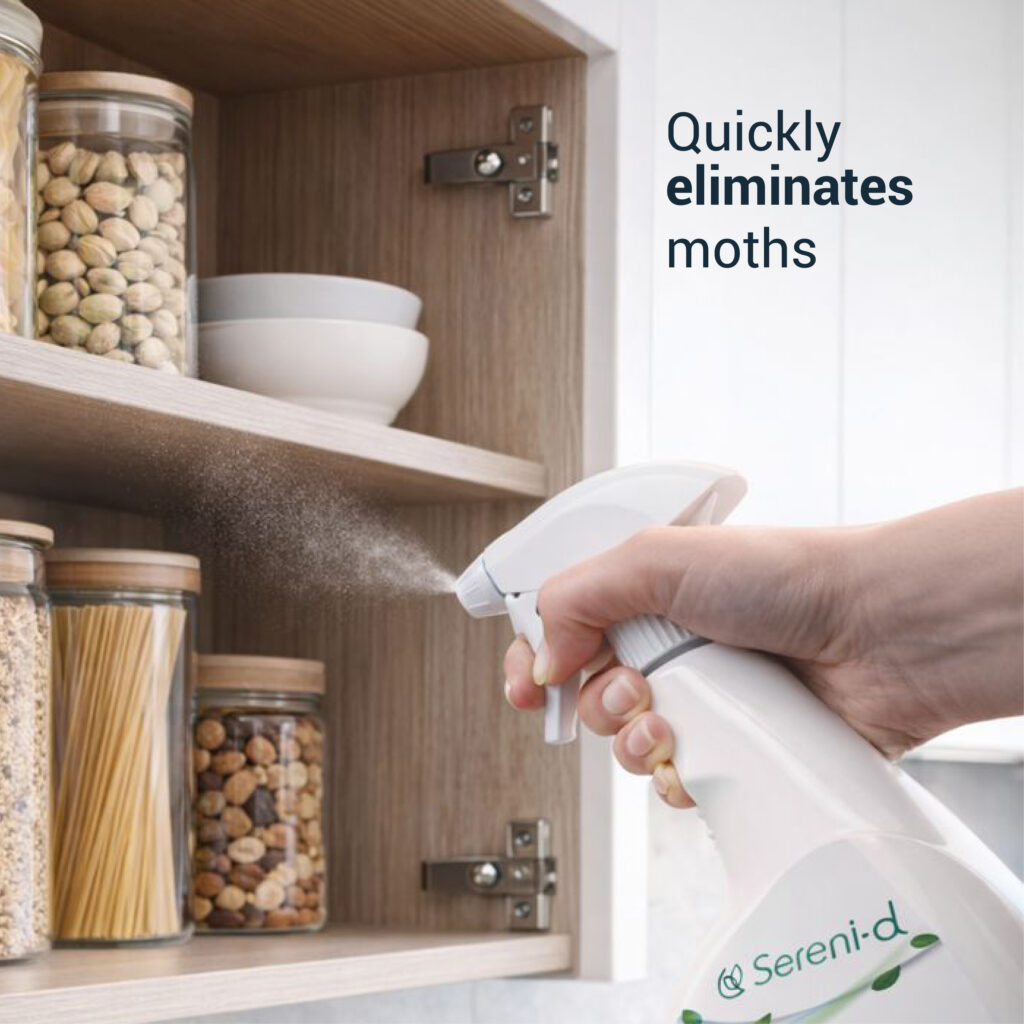
The priority is to remove any contaminated food, give the area a thorough clean using a moth repellent spray, and then store your food in airtight containers. And to prevent a clothes moth infestation, you can place a clothes moth repellent in your cupboards.
We have detailed all the steps in our comprehensive article:
➡️ How to get rid of food moths for good?
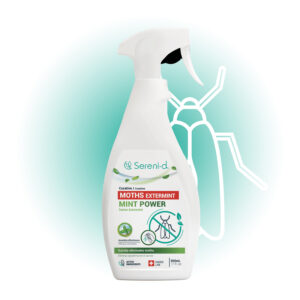
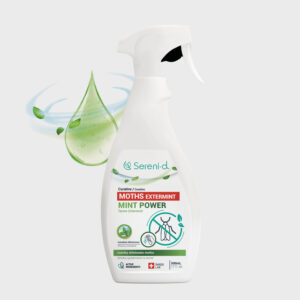
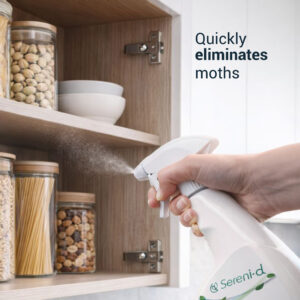
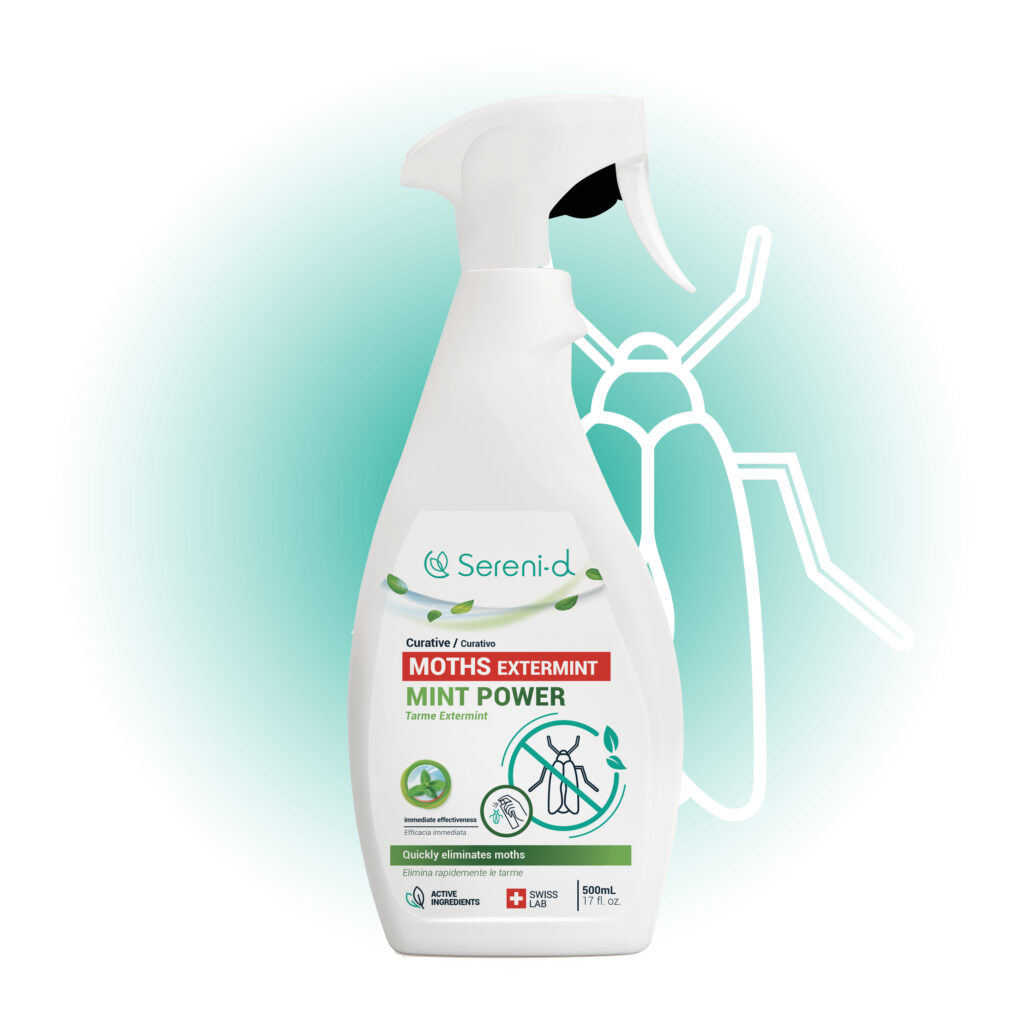
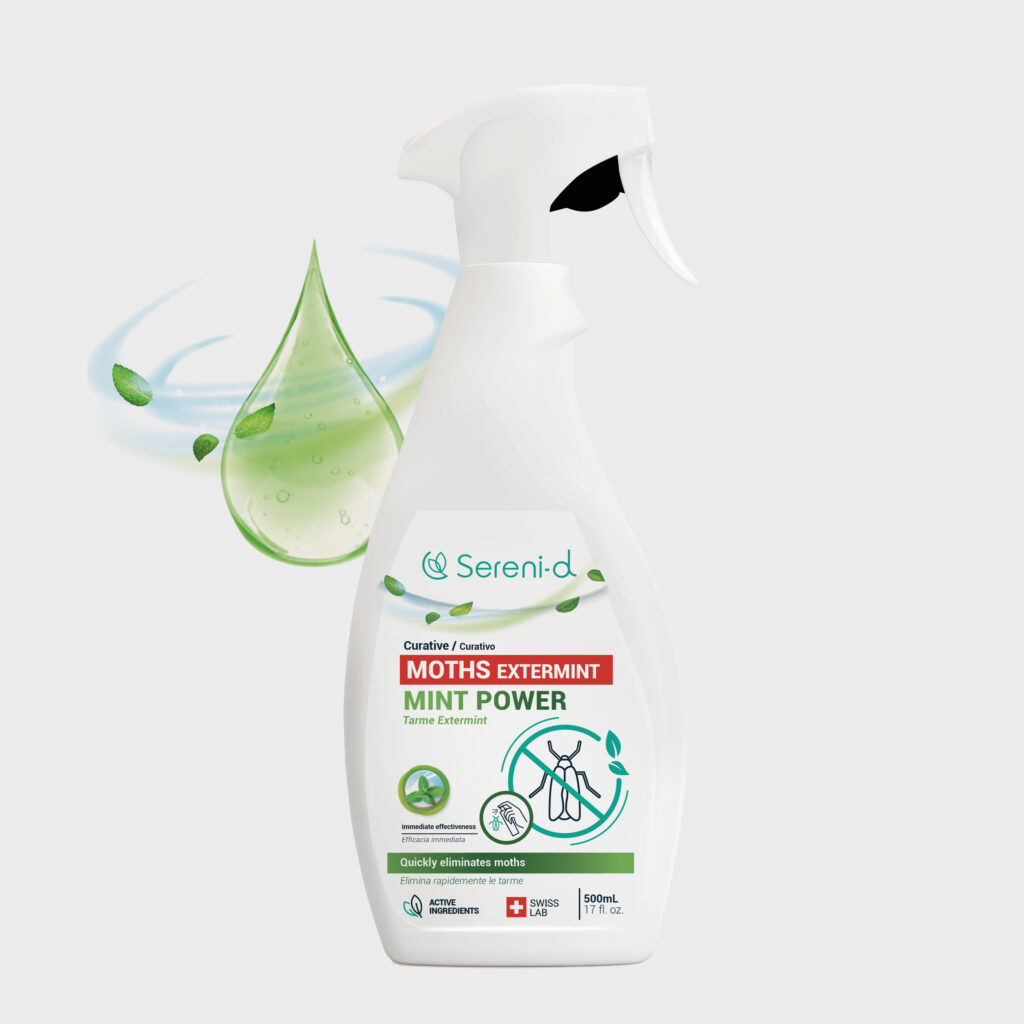
EXTERMINT Food & Clothes Moths
• Curative spray against food & clothing moths
• Eliminates 100% of moths (eggs, larvae, adults)
• Immediate and long-lasting protection
• More than 250,000 satisfied Sereni-d® customers
CONCENTRATED FORMULA – MAXIMUM RESULT
In stock
Photos of food moths