Female mosquitoes lay their eggs in stagnant water. Larvae then develop before becoming adults. To prevent them from multiplying around your home, you need to take action in good time. Here’s how to spot these larvae and the most effective ways to get rid of them.
The aim: to enjoy your garden, your swimming pool and your home without getting bitten.
Key information
➡️ A mosquito larva looks like a tadpole and can only survive in water.
➡️ The mosquito life cycle consists of four stages: eggs, larvae, pupae and adult insects.
➡️ In summer, a larva can develop into a mosquito in just one week.
➡️ Use a chlorine shock treatment to eliminate mosquito larvae in a swimming pool.
➡️ Removing standing water is the most effective way to prevent mosquitoes
The life cycle of mosquitoes
Mosquitoes go through four stages of development, taking between one and two weeks for the insect to reach adulthood.
1) Mosquito eggs
After feeding on blood, the female mosquito lays her eggs quickly, usually within 48 hours of feeding. The eggs are very small, measuring less than 1 mm.
Good to know: A female mosquito is fertilised only once in her lifetime, but can lay up to 1,000 eggs in just two months. An infestation can therefore spread very quickly.
Where are the eggs laid?
The laying site depends on the species of mosquito.
The tiger mosquito prefers very small areas of stagnant water such as saucers under flower pots, swimming pool covers, etc.
The common mosquito (Culex pipiens) lays its eggs directly on the surface of the water, often grouped together in small floating rafts.
Good to know: tiger mosquito eggs can remain dormant for several years or months, waiting for the right conditions to develop.
2) Mosquito larvae
One to two days after the eggs are laid, they hatch.
The mosquitoes then enter the larval stage. These larvae live entirely in water and feed on microorganisms, organic particles and algae found in their environment.
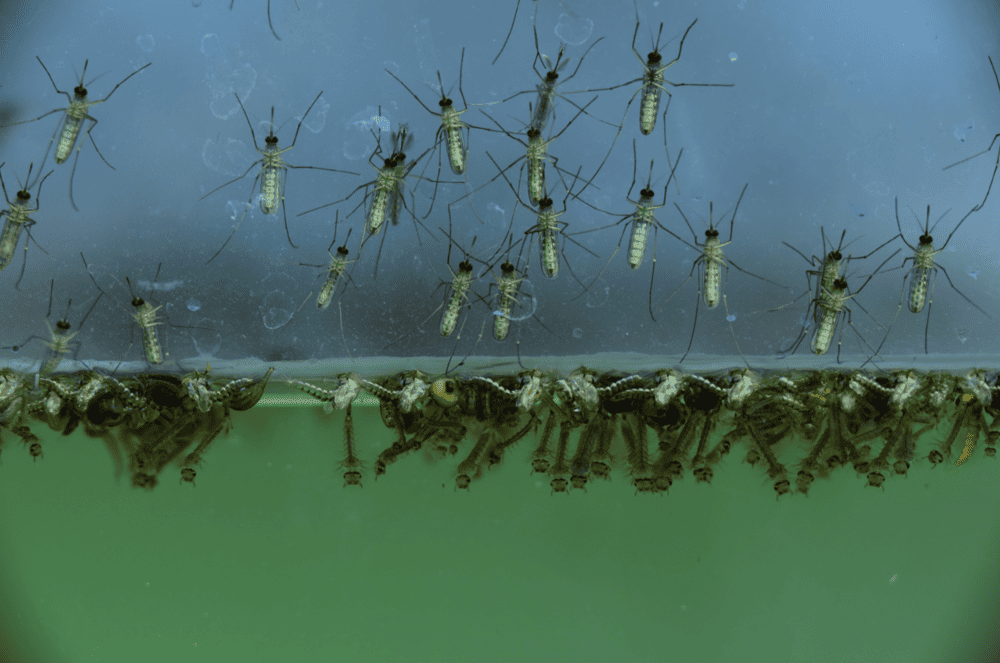
They regularly rise to the surface to breathe using a small breathing tube.
There are 4 larval stages:
- Stage 1: 2 to 5 mm
- Stage 2: 4 to 8 mm
- Stage 3: 6 to 10 mm
- Stage 4: 10 to 12 mm
Larval development depends heavily on the ambient temperature.
| Temperature | Development of mosquito larvae |
| Around 20 °C | Mosquito larvae develop very quickly and can turn into adult mosquitoes in just one week. |
| Around 15 °C | The larvae’s development slows down significantly. It takes them longer to develop into adult mosquitoes. |
| Below 15 °C | The larvae’s development is generally halted. They do not continue to develop whilst the temperature remains low. |
Good to know: in summer, it takes about a week for the larvae to develop, compared with several months in winter.
3) Nymphs
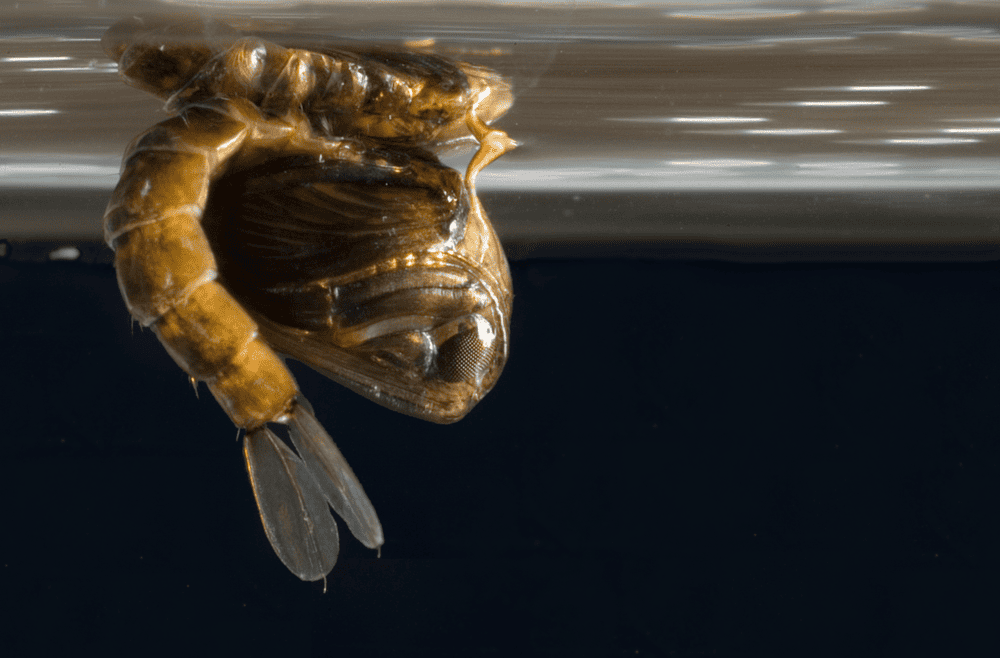
After the larval stage, mosquitoes enter the nymph stage. This phase is a period of transformation during which the insect undergoes metamorphosis. In particular, the respiratory tube develops into a respiratory proboscis.
The nymph still lives in the water but no longer feeds. It remains mobile and can dive when disturbed.
This phase generally lasts between 1 and 2 days, depending on the temperature.
4) Adult mosquitoes
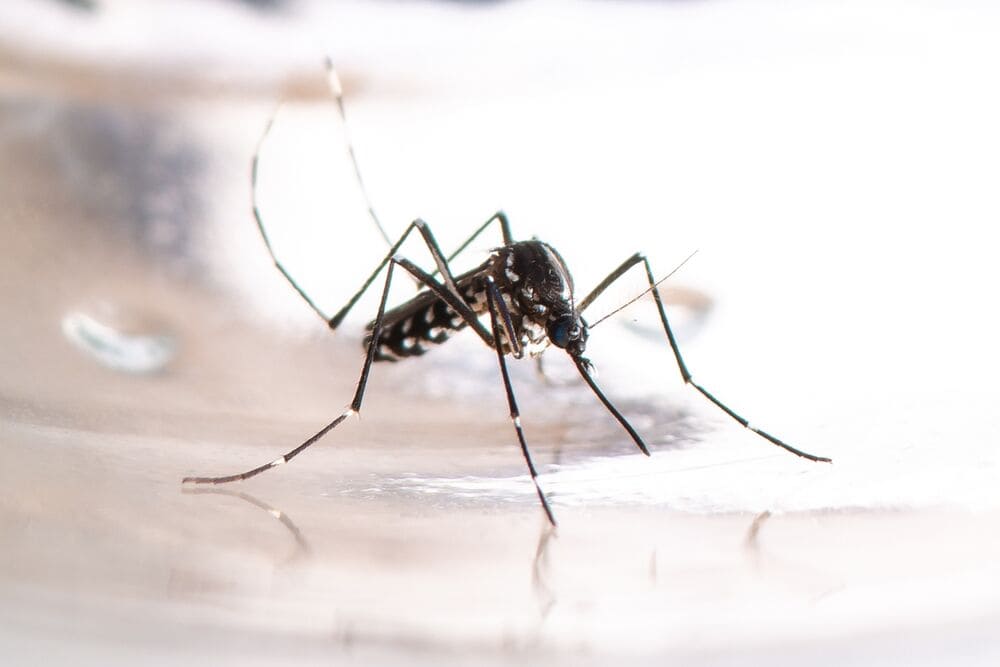
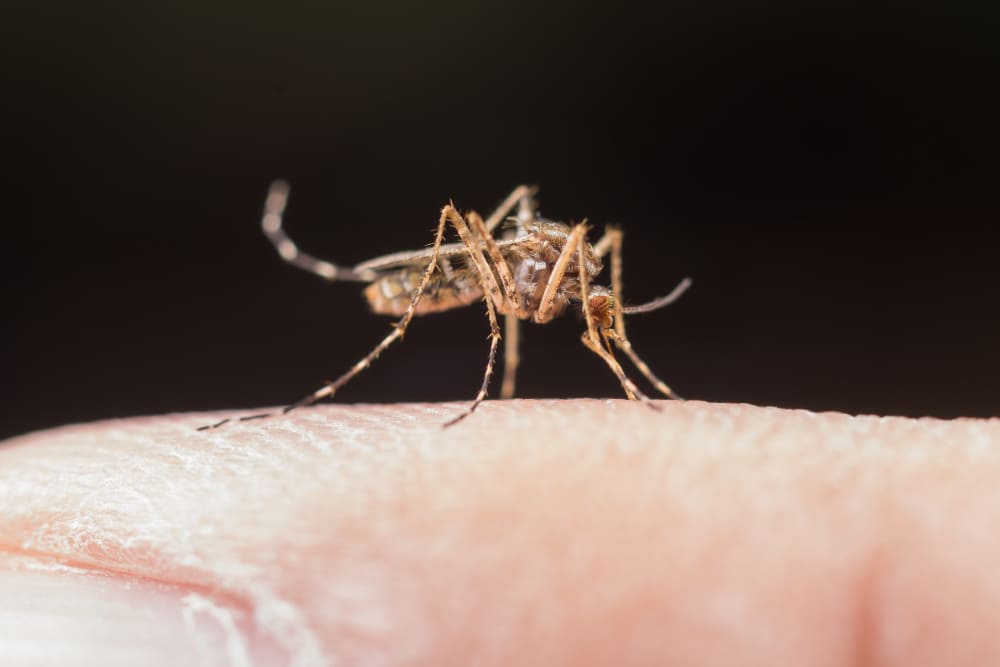
Once the transformation is complete, the adult mosquito sheds its skin, emerges from the water and takes flight.
It is at this point that the insect becomes capable of reproducing. The females will then seek a blood meal so they can lay new eggs and start the cycle again.
👉 See also: Everything you need to know about mosquito bites.
How do you kill mosquito larvae?
Removing standing water is the first step in getting rid of mosquito larvae. It is the most effective way to prevent mosquitoes from breeding.
In practice, you can:
- empty plant saucers regularly
- clean gutters and drains
- cover rainwater collectors
- turn over buckets, watering cans or any objects that can collect water
- check tarpaulins, swimming pools or garden ponds
Here are some other solutions.

Natural solutions
If you’ve already spotted larvae in a water source, there are some natural methods that can help kill mosquito larvae naturally.
White vinegar
The acidity of white vinegar can disrupt the development of the larvae.
Some people, for example, use a mixture of water and white vinegar to kill mosquito larvae in small amounts of water.
⚠️ Warning: this is only a temporary solution and does not replace the removal of stagnant water or the use of professional products.
Fish that eat larvae
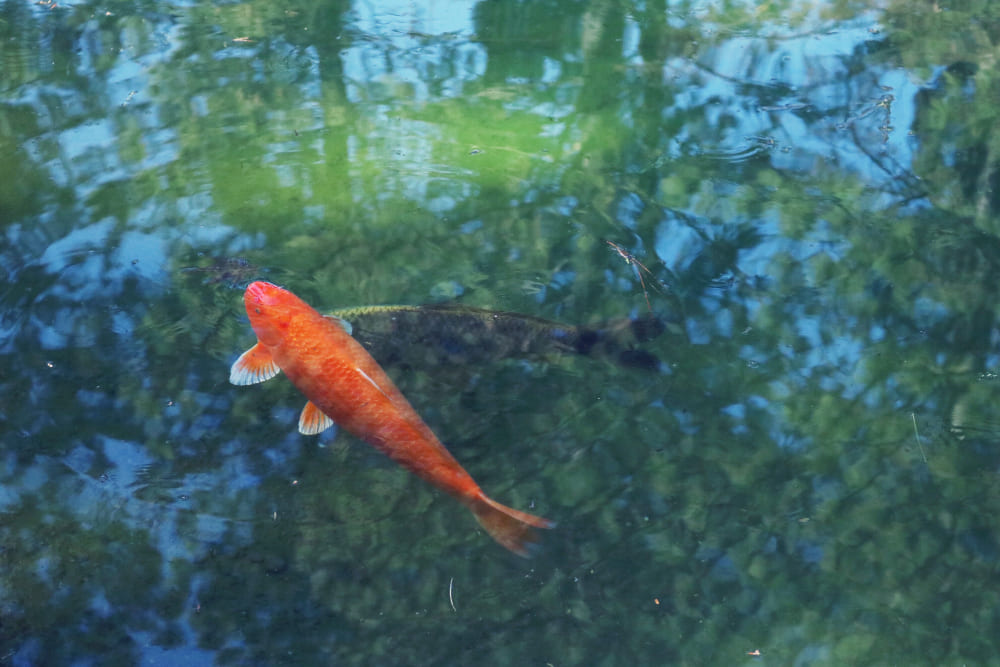
Some fish feed on mosquito larvae in the water, which helps to reduce their population naturally. This is a great solution for garden ponds, pools or fountains, where the water cannot be drained regularly.
Here are the species of larvivorous fish:
- The mosquitofish (Gambusia affinis)
This small fish can eat several dozen a day.
- The goldfish
Goldfish can also eat mosquito larvae found in garden ponds.
👉 See also: All the solutions to get rid of mosquitoes
Swimming pool water treatment
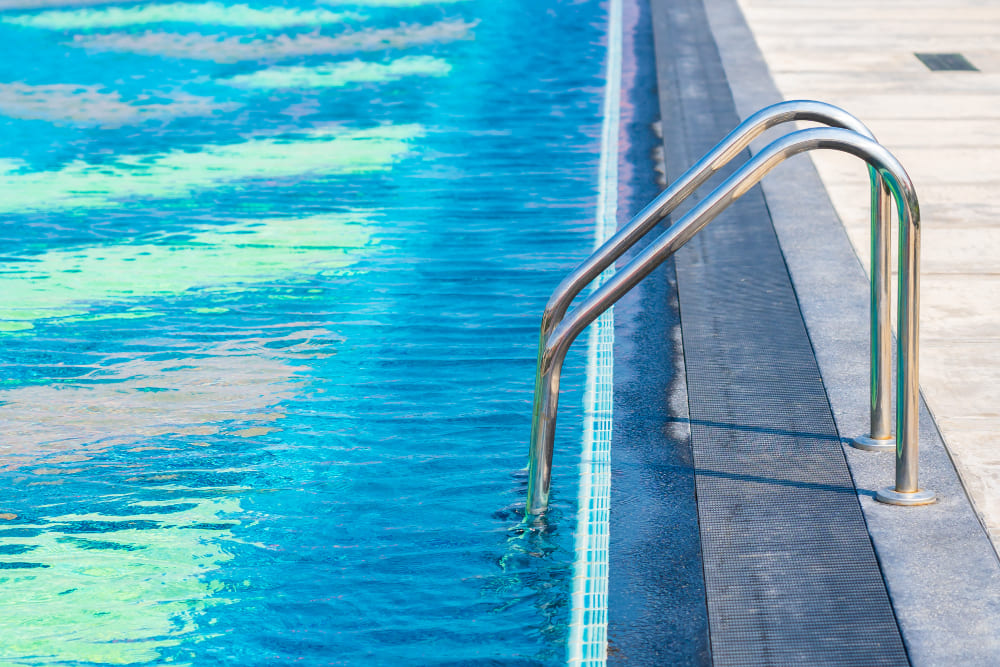
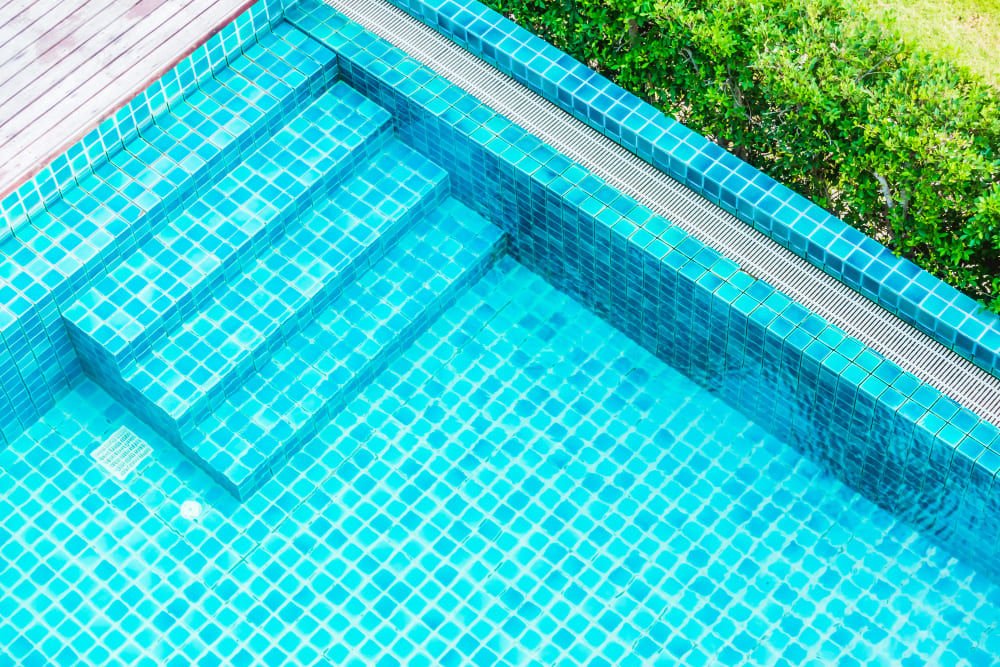
A well-maintained swimming pool prevents mosquitoes from breeding, as the water is circulating and treated.
Shock chlorination
If larvae appear in a swimming pool, one of the most effective solutions is to carry out a shock chlorination treatment. This involves temporarily increasing the chlorine concentration in the water in order to quickly eliminate microorganisms, including mosquito larvae.
The principle is simple:
- add a large dose of chlorine to the water,
- leave it to work for several hours,
- then restart the filtration system.
Shock chlorination generally destroys mosquito larvae in the swimming pool quickly.
Pool maintenance
To prevent larvae from reappearing, regular pool maintenance is essential.
Here are the best practices:
- run the filtration system every day to prevent stagnant water,
- regularly check the chlorine level and the water’s pH,
- remove leaves and organic debris,
- clean the walls and bottom of the pool,
- use a tightly stretched tarpaulin or cover to prevent the accumulation of stagnant water.
How can you tell a mosquito larva apart?
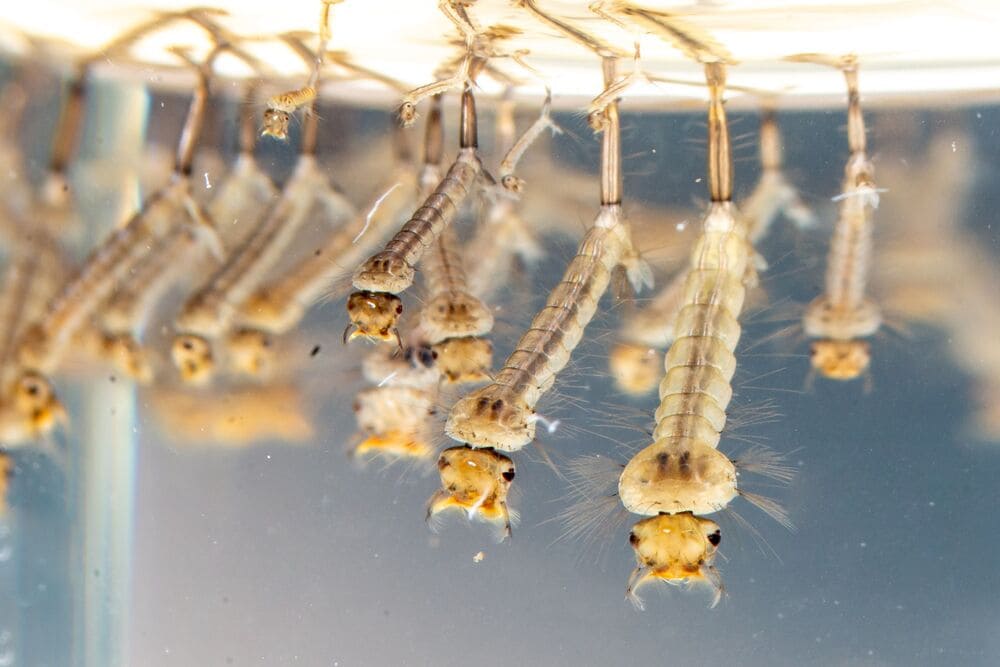
A mosquito larva resembles a tadpole. It is a small, elongated organism that usually floats just below the surface. It is on average between a few millimetres and 1 cm long, depending on its stage of development.
A mosquito larva can be recognised by several characteristics:
- shape: a small, slender, segmented body, resembling a tiny worm;
- colour: usually greyish, light brown or translucent;
- a clearly visible head, often darker than the rest of the body;
- the rear end pointing towards the surface to breathe.
The larvae live exclusively in stagnant water: buckets, plant saucers, rainwater collection tanks or, occasionally, in a swimming pool if it is not properly maintained.
A very characteristic movement
When disturbed or when a shadow passes over the water, the larvae make a rapid zigzag movement.
They dive briefly towards the bottom and then rise to the surface to breathe. This jerky movement is typical and makes it easy to distinguish mosquito larvae from other small aquatic organisms.
How long does a mosquito live?
On average, an adult mosquito lives between two weeks and two months.
- Male mosquitoes generally live between 5 and 10 days. They do not bite and feed solely on nectar and sugars found in plants.
- Female mosquitoes, which are responsible for bites, live much longer. Their lifespan can reach 2 months, or even longer when conditions are favourable.
During this period, the female mosquito can complete several egg-laying cycles. After each blood meal, she can lay a new batch of eggs in stagnant water. In total, a female can produce up to 1,000 eggs in a few weeks, which explains why a small pondsence de moustiques peut rapidement se transformer en infestation.
Where can you find mosquito larvae in your home?
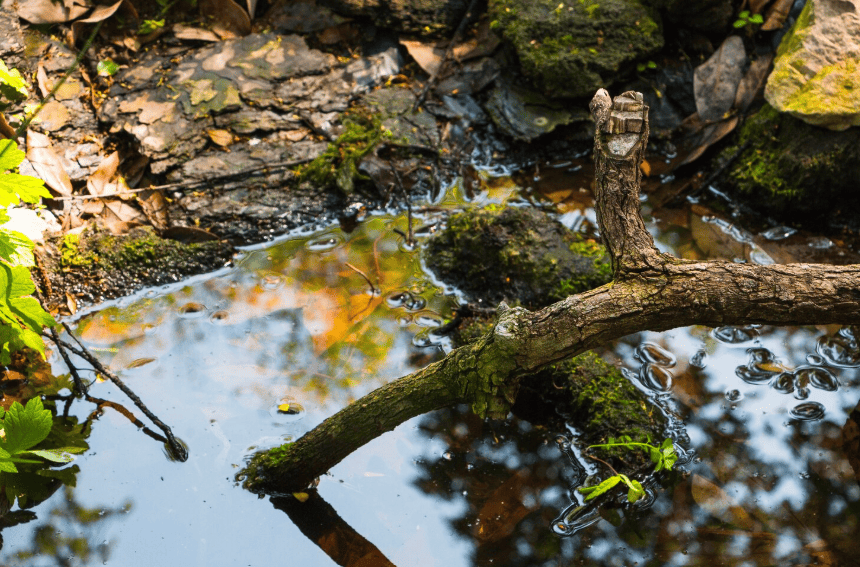
Mosquito larvae in stagnant water
The larvae mainly develop in stagnant water found around the house.
They can be found in the garden, on the patio or in various outdoor items containing water:
- gutters
- plant saucers
- rainwater collectors
- buckets
Mosquito larvae in the swimming pool
There may be mosquito larvae in your swimming pool if it is poorly maintained, if the filtration system is not working properly, or if the water becomes stagnant.
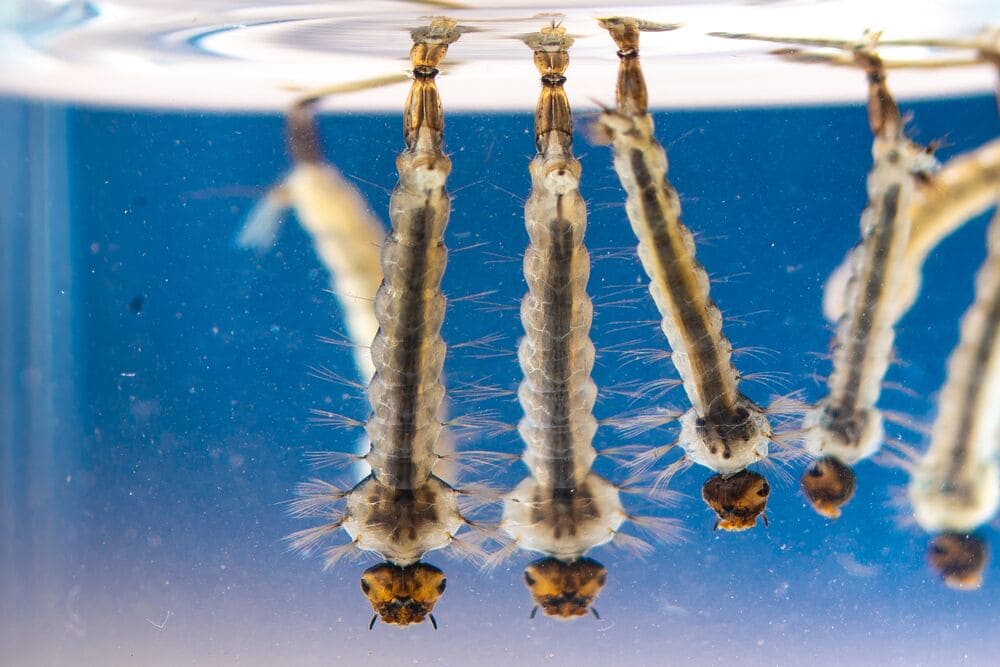
Tiger mosquito larvae
Tiger mosquito larvae are unique in that they can develop in very small amounts of water. A simple saucer, a drop of rainwater, a bottle cap or a small container can be enough for them to develop.
How can you prevent mosquito larvae from appearing?
Maintain your garden
Mosquitoes love poorly maintained gardens. The more vegetation there is, the more hiding places and potential breeding sites they have. So remember to mow your lawn, trim your shrubs and plants, and above all, avoid letting things pile up.
Monitor water sources
Mosquitoes can lay their eggs in very small amounts of water.
Be particularly vigilant about:
- rainwater collectors,
- garden ponds,
- fountains,
- poorly maintained swimming pools
Prevention against tiger mosquitoes
Tiger mosquito larvae have the distinctive feature of developing in very small volumes of water.
To limit their proliferation:
- eliminate all small areas of stagnant water,
- regularly check items on your balcony or terrace,
- keep an eye on tarpaulins, gutters and rainwater collectors.
FAQ
How long do mosquito larvae live?
When the temperature exceeds 20 °C, the larvae develop very quickly and can become adult mosquitoes in just one week. At lower temperatures, their development is slower.
What does a mosquito larva eat?
– microscopic algae
– bacteria
– decomposing organic matter
– small particles found in stagnant water
This is why water rich in organic matter encourages their development.
Can mosquito larvae be found in a swimming pool?
Mosquitoes can lay their eggs in a swimming pool if:
– the water remains stagnant for several days,
– the filtration system is not working properly,
– the chlorine level is too low.
Can mosquito larvae survive out of water?
A mosquito larva in the water breathes through a small breathing tube at the tip of its body. It must regularly rise to the surface to take in air. If it finds itself out of the water, it dries out quickly and dies within a short time.