Although ticks primarily target animals, they can also feed on human blood and sometimes transmit diseases such as Lyme disease. If you are bitten by this parasitic insect, it is important to take the right action quickly. Don’t panic – here are the steps to follow and our advice on how to treat the bite.
N.B.: this article is not a substitute for the advice of a healthcare professional, which should always be sought first.
Key information
➡️ Ticks that affect humans are parasitic mites that feed on blood and can remain attached to the skin for several days.
➡️ Most tick bites are harmless, but some can transmit diseases such as Lyme disease, which is caused by bacteria.
➡️ It is important to remove the tick quickly using a tick remover, without using alcohol or pulling it out abruptly with your fingers.
➡️ After a bite, watch out for any unusual redness, tiredness or fever, and consult a healthcare professional if necessary.
➡️ To avoid bites, wear long-sleeved clothing, use a suitable repellent and check your skin after walking in high-risk areas.
Tick bites in humans
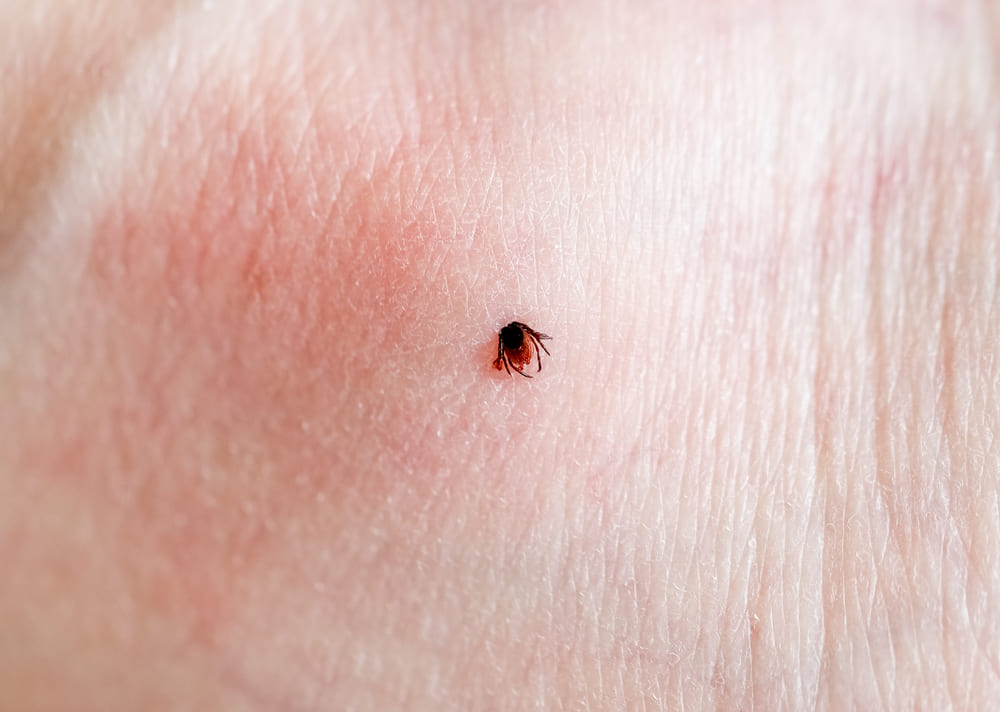
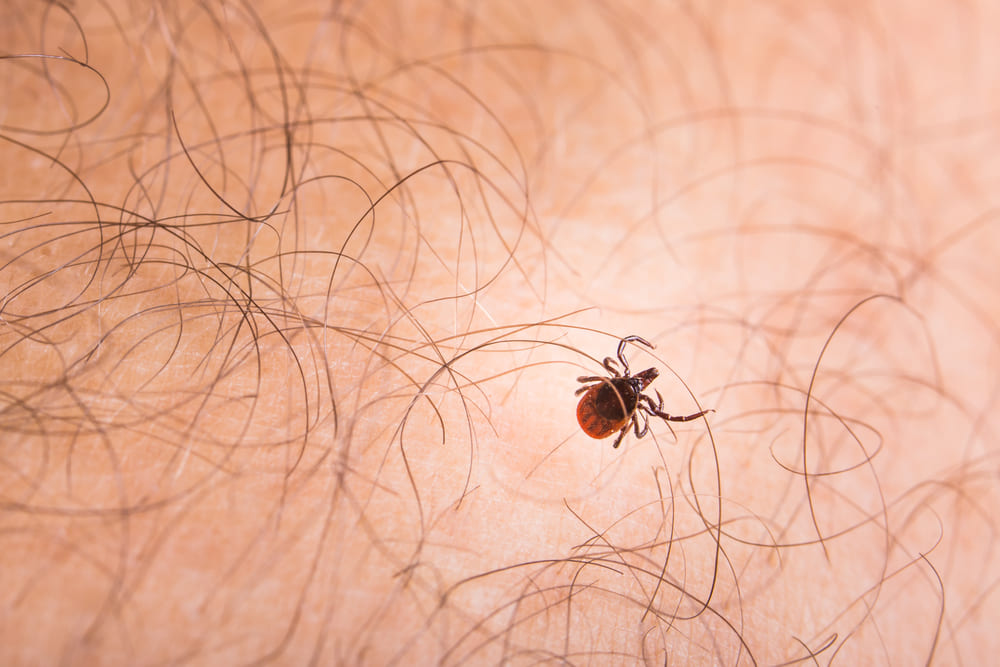
A human tick bite looks like a small dark lump attached to the skin. Its size varies depending on its stage of development and the amount of blood it has ingested.
Before feeding, the tick is very small (only a few millimetres). After feeding, it gradually swells and can grow to the size of a pea.
The parts of the body most commonly affected are:
- the head and scalp
- the neck
- the armpits
- the backs of the knees
- the legs
- the back
- around the waist or skin folds
👉 Ticks prefer these areas because the skin is thinner or warmer there. This makes it easier for them to bite.
How does a tick bite a human?
A tick bite is generally painless, as the tick injects an anaesthetic substance when it bites. Most of the time, you won’t notice a thing.
Once attached:
- the tick inserts its head into the skin
- it attaches itself firmly using its mouthparts
- it slowly feeds on the human’s blood
👉 Le repas sanguin peut durer de 24 heures à plusieurs jours. Pendant ce temps, la tique grossit progressivement.
After the bite, a skin reaction may occur:
- a small red patch around the bite site
- mild swelling
- occasionally itching
- more rarely, a more severe reaction depending on the individual’s sensitivity
See also: Ticks in dogs and cats.
Tick bites in babies

Finding a tick on a baby can be particularly worrying for parents, but don’t worry – the situation is usually harmless if the tick is removed quickly. As with adults, the tick attaches itself to the skin to feed on blood, but as babies’ skin is thinner and more sensitive, the bite can sometimes cause a more noticeable skin reaction.
In infants and young children, ticks often attach themselves to warm, hard-to-see areas:
- the scalp
- behind the ears
- the neck
- skin folds
- under the arms
- the backs of the knees
A small red patch may appear after removal, which is normal in most cases.
To protect your baby’s health:
- remove the tick as soon as possible using a suitable tick remover
- disinfect the area with a mild antiseptic
- watch out for any spreading redness or a fever in the following days
- consult a healthcare professional if in doubt
As a preventive measure, you can dress your child in long-sleeved and long-legged clothing when walking in high-risk areas and check their skin carefully after every outing.
The different colours of ticks
A tick’s colour depends mainly on:
- its species
- its stage of development (larva, nymph, adult)
- whether it is engorged with blood or not
Black or dark brown tick
This is the most common colour. Many ticks are brown to black when they have not yet fed.
Example: Ixodes ricinus, the main tick vector for Lyme disease in Europe.
Red or reddish-brown tick
Some ticks have a reddish-brown hue, particularly in certain adult species. This colouration may also appear when the tick begins to feed on blood.
Light grey or whitish tick (engorged tick)
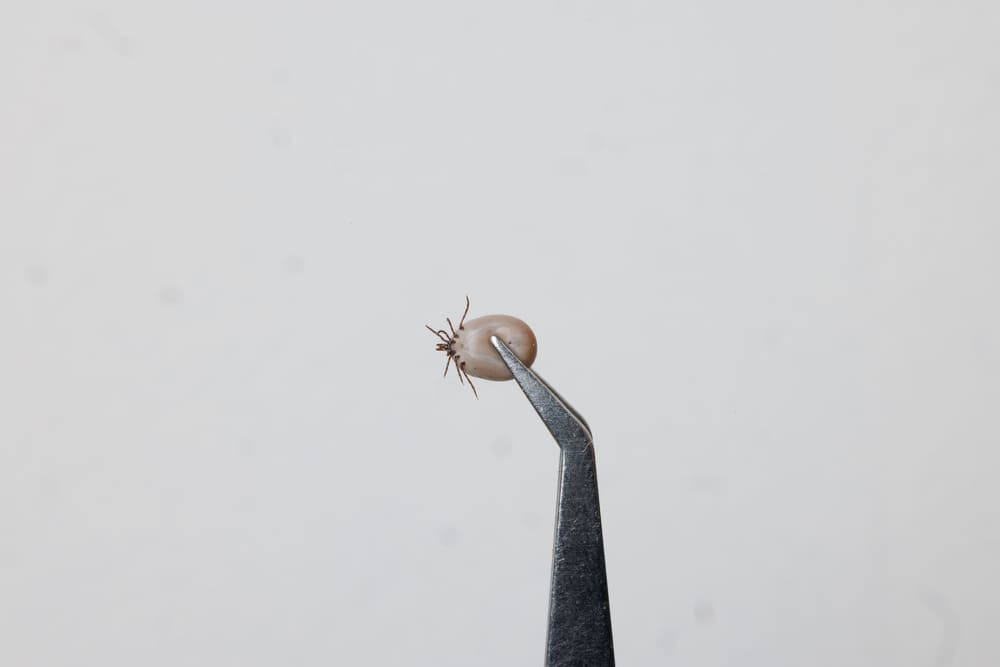
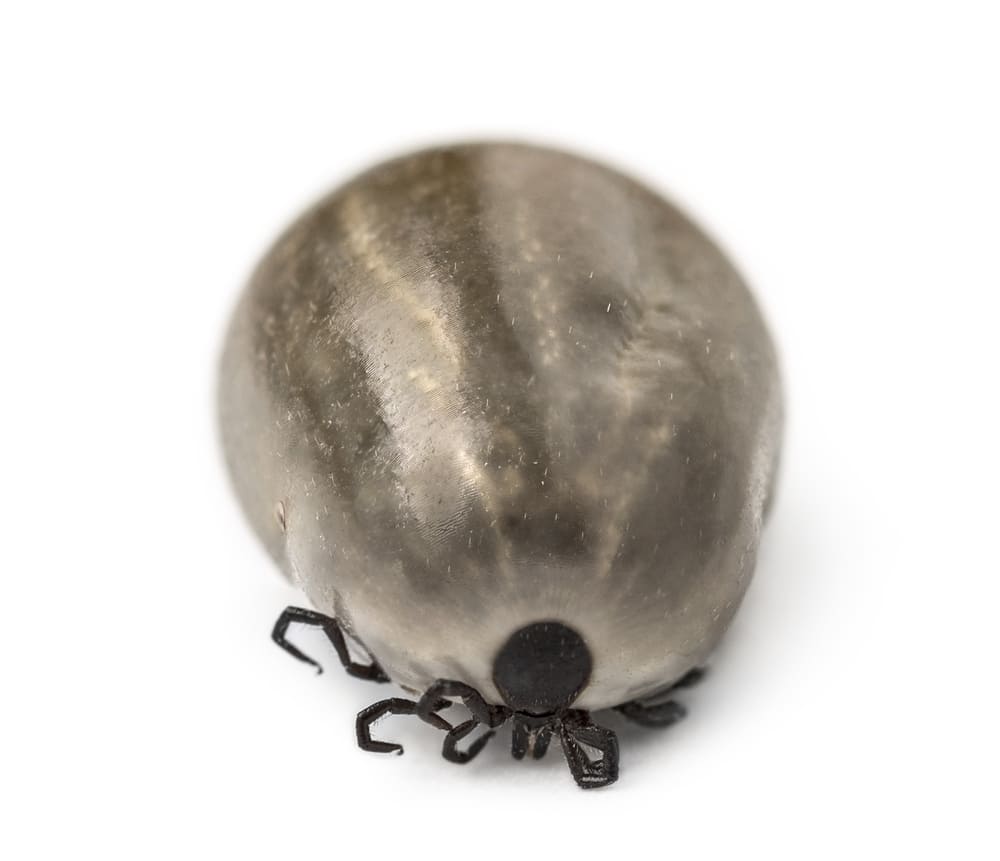
After feeding, the tick swells and may turn light grey, beige or whitish.
It may then resemble a small, soft lump attached to the skin.
Green tick: rare
Truly green ticks are very rare in Europe. Some tropical species may have a greenish sheen, but this is uncommon in temperate zones.
Areas and times of risk
Ticks are mainly found in:
- forests and wooded areas
- neglected gardens
- wetlands
- parks and hiking trails
- certain so-called endemic regions in Europe, Africa or the Americas
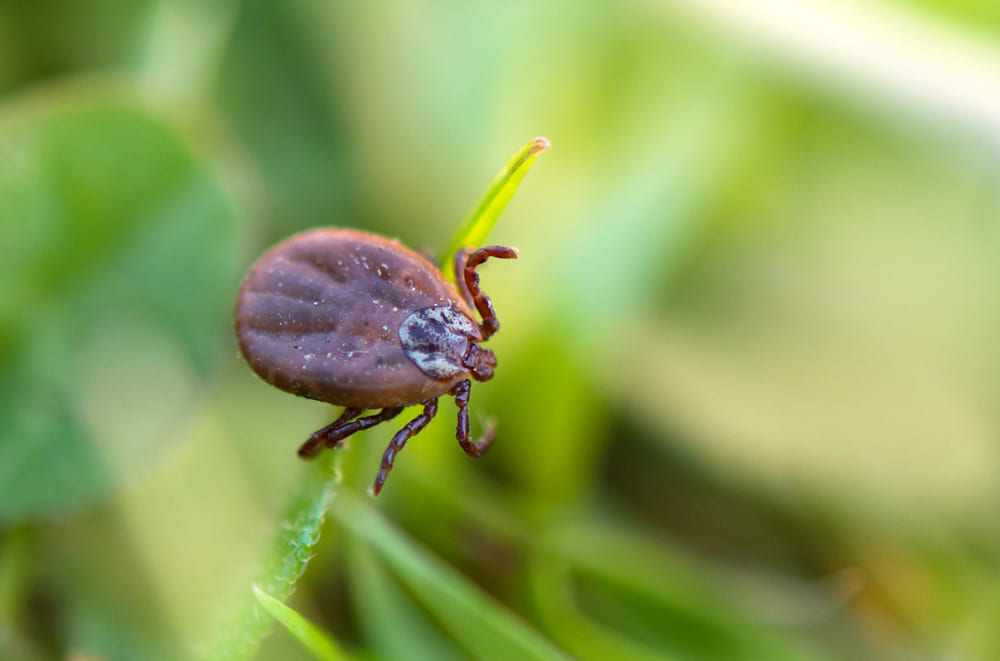
They usually position themselves at the tips of plants and latch on when a human or animal passes by. You can therefore pick them up whilst out walking, hiking, picnicking or engaging in other outdoor activities air.
Good to know: the risk is higher if you live near a natural area or one frequented by wild animals.
Ticks can bite all year round, especially when the weather is mild. However, they are most active from spring to autumn, and between April and September.
Risks and diseases transmitted by ticks in humans
A tick bite in humans is usually harmless, but in some cases it can transmit pathogens that cause disease. These insects can indeed carry bacteria, viruses or parasites.
Lyme disease
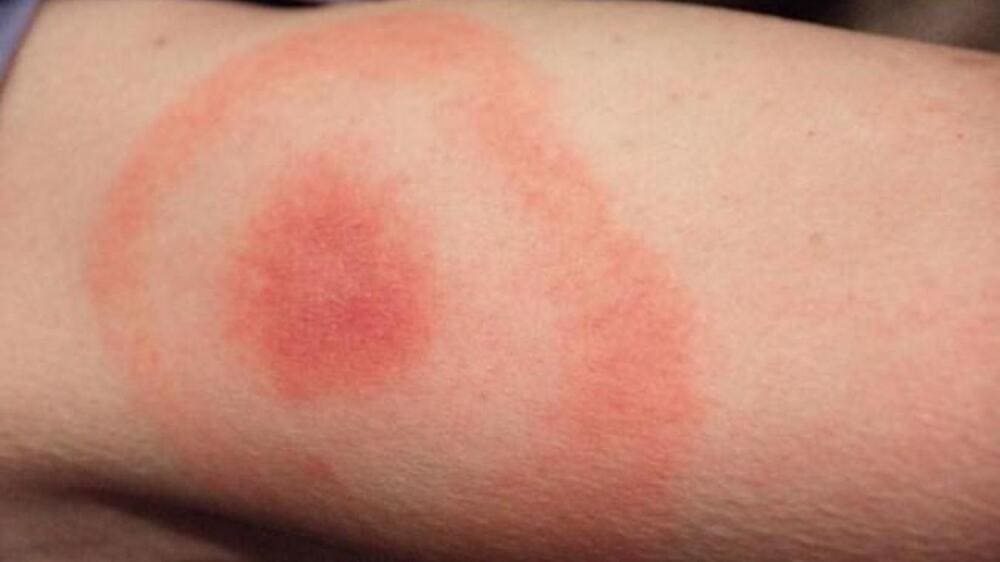
Lyme disease is the best-known tick-borne illness in humans. It is caused by a bacterium called Borrelia burgdorferi. After a bite, the bacterium can enter the body and cause various symptoms, which usually appear a few days to a few weeks later.
The main sign is the appearance of a ring-shaped red rash around the bite site, known as erythema migrans. This rash may gradually spread around the bite.
Other possible symptoms include:
- unusual tiredness
- mild fever
- headaches
- muscle or joint pain
- a general feeling of being unwell
How long does it take for Lyme disease to be transmitted?
The transmission of Lyme disease following a tick bite is not immediate.
The bacterium responsible for the disease is usually transmitted when the tick remains attached long enough to feed on blood.
👉 The risk of transmission increases significantly after 24 to 48 hours of the tick being attached.
In many cases:
- before 24 hours, the risk of transmission is considered low
- between 24 and 48 hours, the risk increases gradually
- after 48 hours, the likelihood of transmission becomes higher
Good to know: The percentage of infected ticks in France varies from 0 to 20% depending on the region and the season (source: INRAE).
Possible complications
Without medical treatment, the progression of the disease can lead to complications affecting:
- the joints
- the nervous system
- more rarely, the heart
👉 Early medical diagnosis enables effective management through appropriate antibiotic treatment.
Key point: Lyme disease remains relatively rare, and not all tick bites transmit the bacteria. However, it is still essential to monitor the bite site.
Should antibiotics be given?

Taking antibiotics after a tick bite is not routine. In most cases, it is not necessary, as not all ticks carry the bacteria responsible for diseases such as Lyme disease.
A course of antibiotics may be prescribed by a doctor when:
- a migratory erythema appears (a circular redness spreading around the bite)
- symptoms suggestive of Lyme disease develop (fever, unusual fatigue, joint pain, etc.)
- the healthcare professional considers the risk to be high (endemic area, tick that has remained attached for a long time)
Other possible diseases
| Illness | Possible symptoms | Risk level |
| Tick-borne encephalitis | Fever, fatigue, headaches, and neurological symptoms in severe cases. | Rare in France, but more common in Central and Eastern Europe. |
| Chickenpox | Fever, rash, tiredness, headache. | Found in certain warm regions, particularly in the Mediterranean region. |
| Other bacterial infections | Symptoms may vary: fever, muscle pain, fatigue, skin rash. | The risk varies depending on the region and exposure. |
How do you remove a tick from a person?
The tick should be removed as soon as possible.
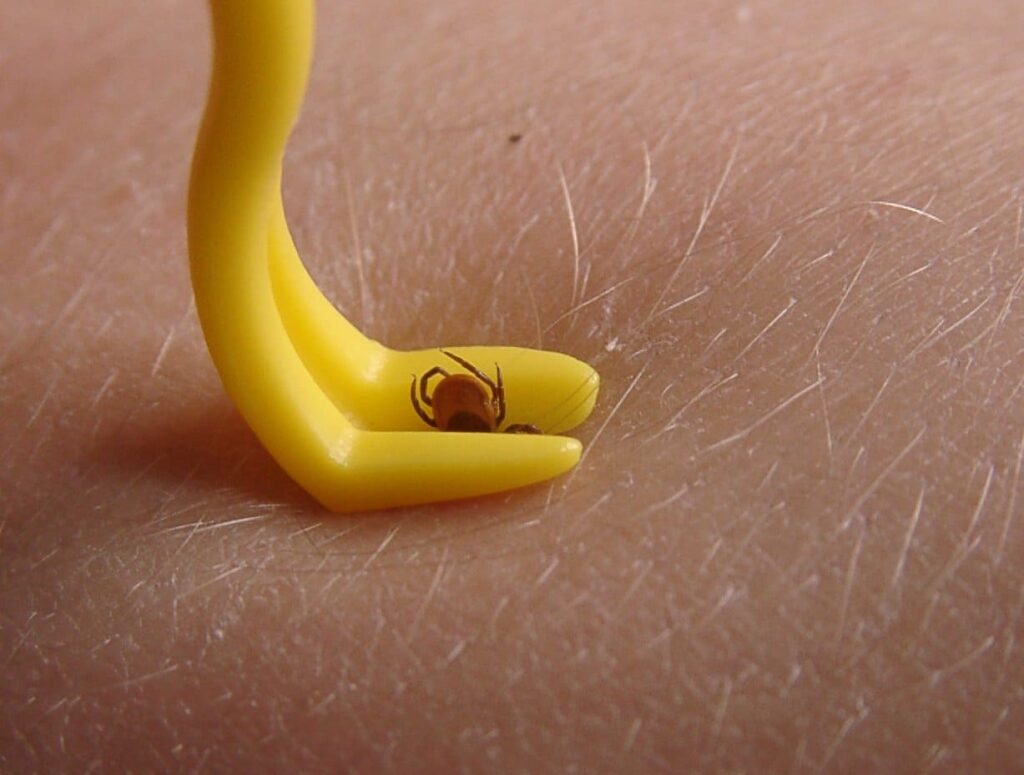
The safest method is to use a tick remover, a small tool available from pharmacies. This allows you to remove the tick without squeezing its body. This minimises the risk of transmitting pathogens.
Here’s how to do it:
- Place the tick remover as close to the skin as possible, around the tick’s head.
- Gently twist without pulling sharply until the tick comes away.
- Check that the tick’s head has been removed completely.
- Disinfect the area with a suitable antiseptic to prevent skin infection.
- Wash your hands thoroughly after removal.
Avoid removing the tick with your fingers, as this can squeeze the tick’s abdomen and increase the risk of bacterial transmission.

What not to do
Do not:
- apply alcohol or ether to the tick
- use a chemical or an irritant
- burn the tick with a heat source
- pull it out abruptly with your fingers or standard tweezers
What should you do after a tick bite?
After removing the tick, you should keep an eye on the area for several days.
Here are the steps to follow:
- monitor how the skin around the bite develops
- note the date of the bite so you can track any symptoms
- check for any unusual redness
What should I do if I don’t have tick tweezers?
If you don’t have tick tweezers, you can use fine tweezers or a piece of thread as a temporary solution.
Place the tick remover as close to the skin as possible, at the tick’s head, then pull gently and steadily without crushing its body. Once the tick has been removed, disinfect the area with an antiseptic. Avoid using alcohol, oil, chemicals or burning the tick, as this can increase the risk of bacterial transmission.
When should you see a doctor?

It is recommended that you consult a healthcare professional if you notice:
- the appearance of erythema migrans, i.e. a circular redness that gradually spreads around the bite
- a fever a few days or weeks after the bite
- unusual tiredness
- joint or muscle pain
- a severe skin reaction (swelling, widespread redness, persistent irritation)
- an abnormal development of the bite (unusual pain, significant inflammation, persistent symptoms)
- concern that the tick’s head may have remained in the skin after removal
These signs may sometimes indicate a tick-borne infection, such as Lyme disease. A medical diagnosis then allows appropriate treatment to be put in place if necessary.
How can people avoid tick bites?
Here are some simple steps to protect yourself from tick bites:
| Situation | Best practice |
| When out for a walk or a hike | Wear clothing that covers the skin (long trousers, long sleeves), opt for light-coloured clothing, and check your body after going outside |
| Skin protection | Use a suitable tick repellent, wear long clothing, and check children’s skin after outdoor activities |
| Take care after a hike | Check the head, neck, armpits, the backs of the knees and around the waist |
| Minimising environmental risks | Avoid walking through tall grass, stay on the paths, and avoid lying directly on the grass |
| Garden and pet care | Mow the lawn regularly, tend to the garden, check pets (dogs, cats) for ticks |
FAQ
Where do ticks attach themselves on humans?
– on the head and scalp
– behind the ears
– on the neck
– under the arms
– behind the knees
– in the groin or around the waist
– on the back
How long does a tick stay attached to a person?
Is it okay to leave a tick’s head in?
If the tick’s head remains in the skin, this can cause local inflammation, a minor skin infection or a persistent spot. In most cases, the body eventually eliminates this small fragment naturally, but it is advisable to disinfect the area and monitor the situation. If significant redness, pain or swelling develops, it is best to consult a healthcare professional.
How can you tell if you’ve been bitten by a tick?
– unusual redness around the bite
– unusual tiredness
– fever
– muscle or joint pain
– general malaise
If you notice any of these symptoms, consult a healthcare professional.
What is the first symptom of Lyme disease?
This is known as erythema migrans.
Does a shower get rid of ticks?