



Have you spotted a hornet or a suspicious nest nearby? It’s best to avoid taking any impromptu action, especially if there’s a colony present. European or Asian hornets can become aggressive if you get too close. Here are the right steps to take to get rid of these insects and what to do if you’re stung.
Key information
➡️ A single hornet does not necessarily indicate the presence of a nest.
➡️ Never attempt to destroy a nest yourself: move away, secure the area and contact a specialist company.
➡️ The cost of a call-out to destroy a nest ranges from €80 to €300.
➡️ Traps and repellents may be useful in certain situations, but they are no substitute for the professional removal of a colony.
➡️ After a sting, apply a cold compress and monitor your symptoms. If you experience difficulty breathing, feel unwell or have been stung in the mouth, call 15 or 112 immediately.
What should you do if you see an Asian hornet?
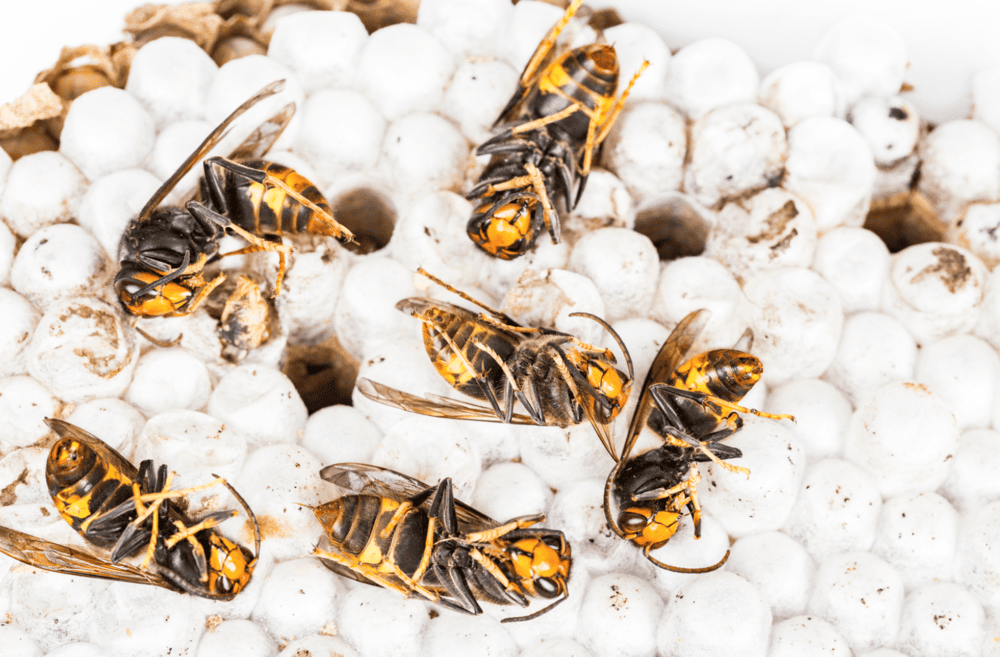
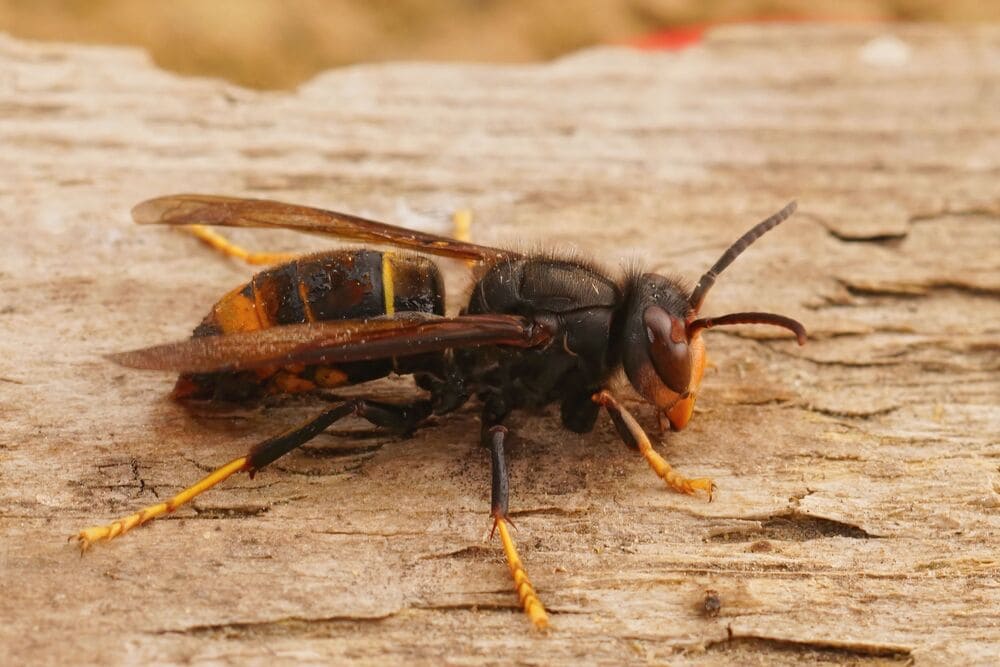
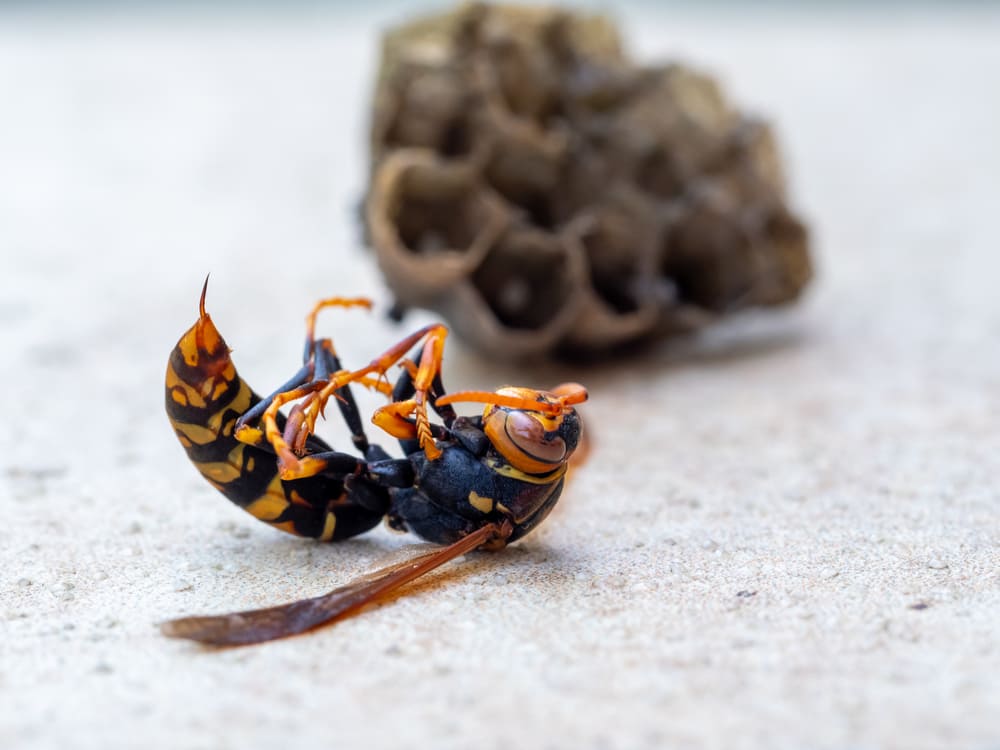
The Asian hornet, or Vespa velutina, looks like a large, dark wasp, with a black thorax, an orange band on its abdomen and yellow tips on its legs.
Here’s what it looks like in photos:
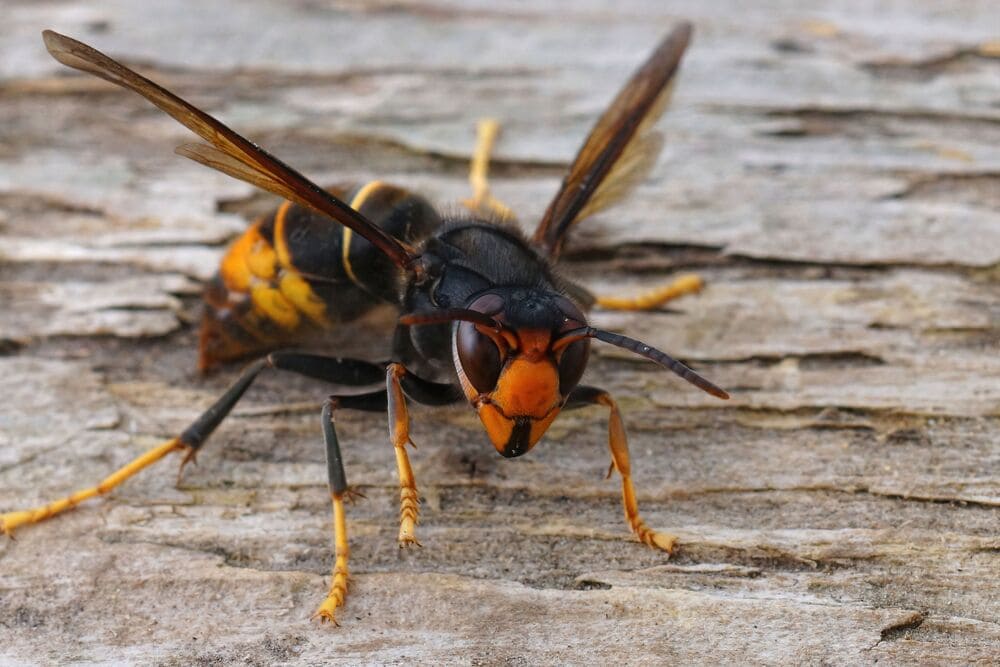
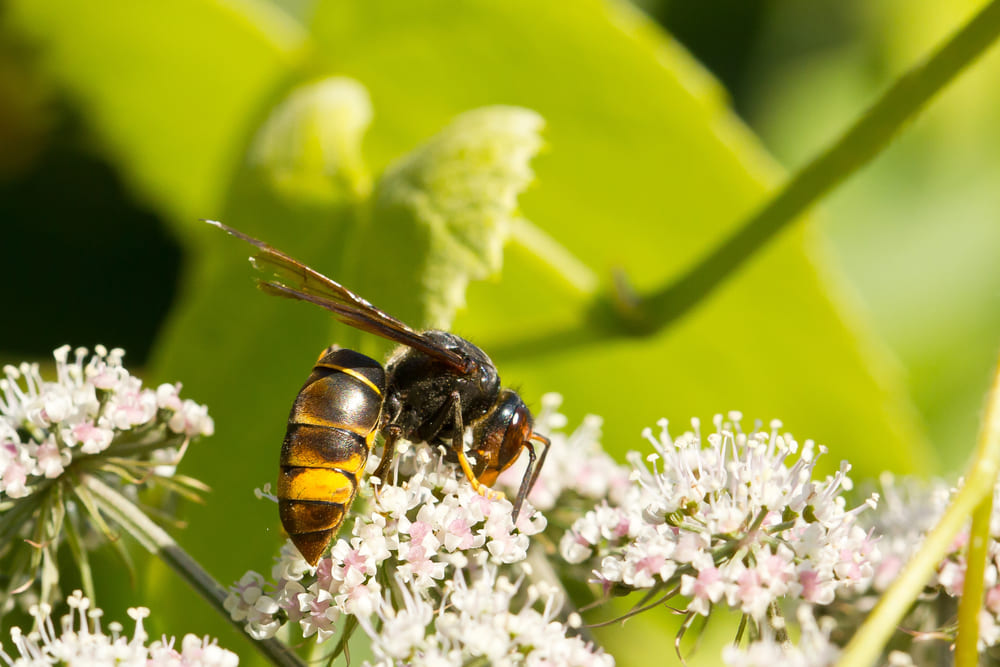
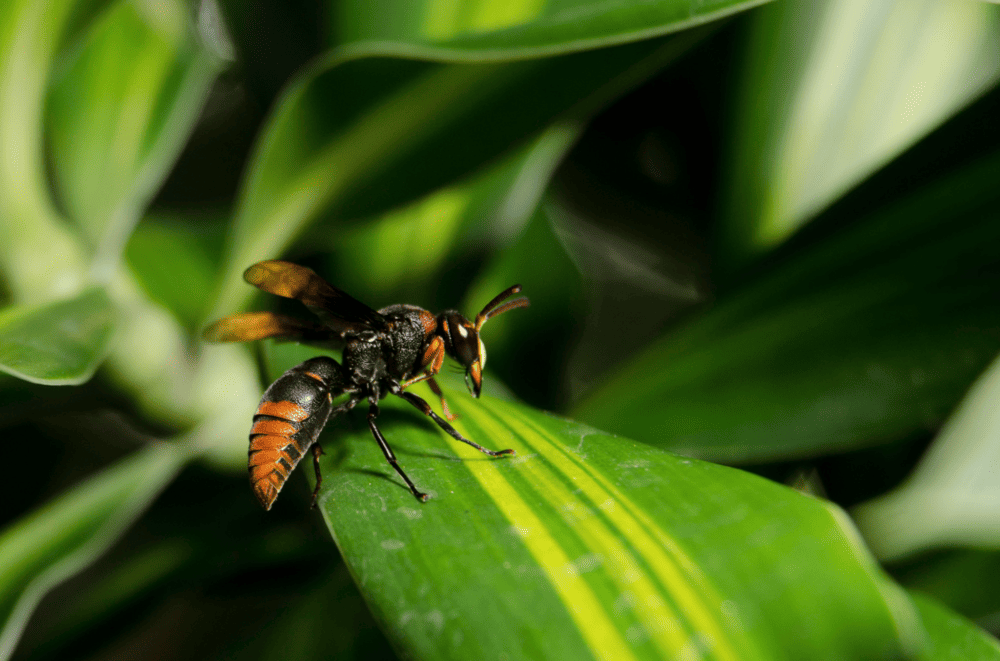
If you spot one, stay calm. The Asian hornet rarely attacks humans. It only becomes aggressive if you get within 4 or 5 metres of its nest.
A single hornet does not necessarily mean there is a nest nearby. The insect may simply be looking for water, ripe fruit or other insects to feed on.
Here are the correct steps to take:
- avoid sudden movements;
- do not try to swat it;
- do not spray insecticide, especially in a closed room;
- keep children and pets away;
- turn off the lights and open doors and windows wide.
See also: How to recognise an Asian hornet?
Does killing a hornet attract others?
Squashing a hornet does not automatically attract the whole colony. However, you should definitely avoid doing so, as the insect may release chemicals that act as an alarm signal to its fellow hornets. This is more dangerous if you are near a nest. Other hornets may then emerge in greater numbers to protect the colony.
👉 If a hornet is just passing through, it is best to let it go. However, if there is a nest, never try to kill the hornets yourself.
What should you do if you discover a hornet’s nest?
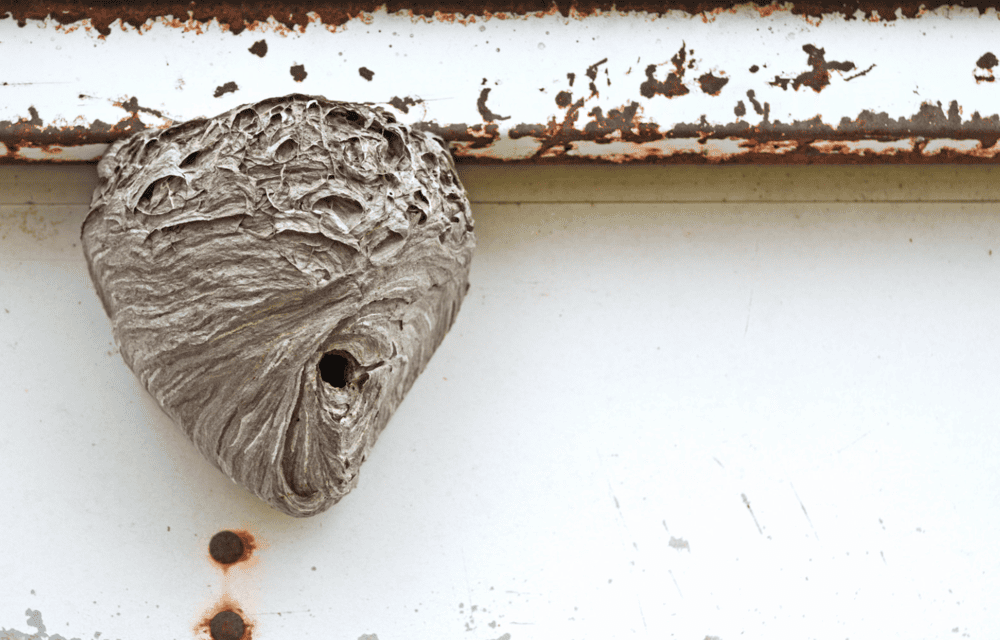
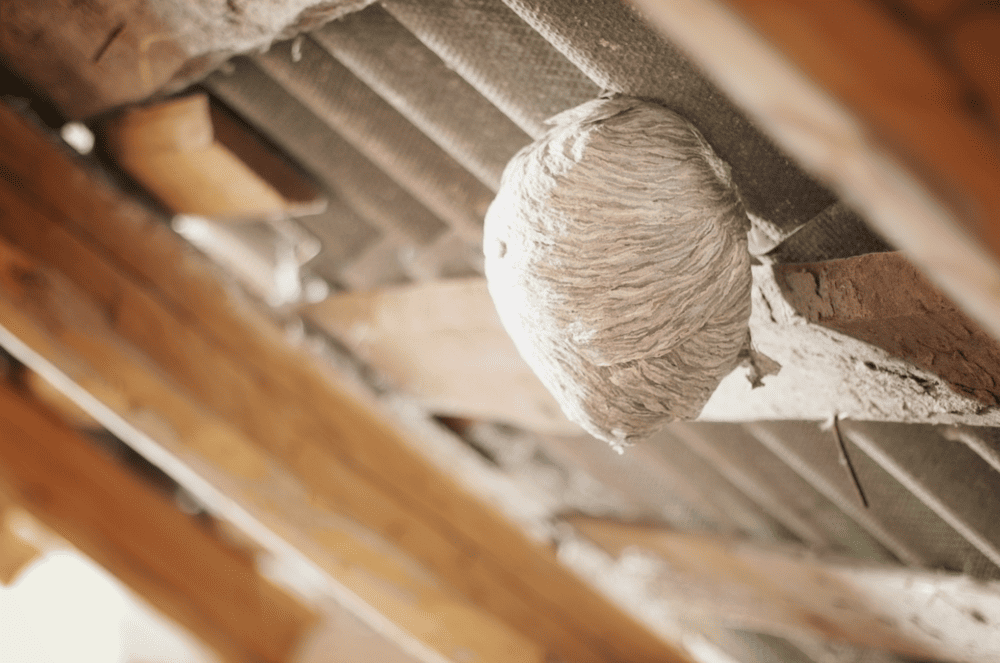
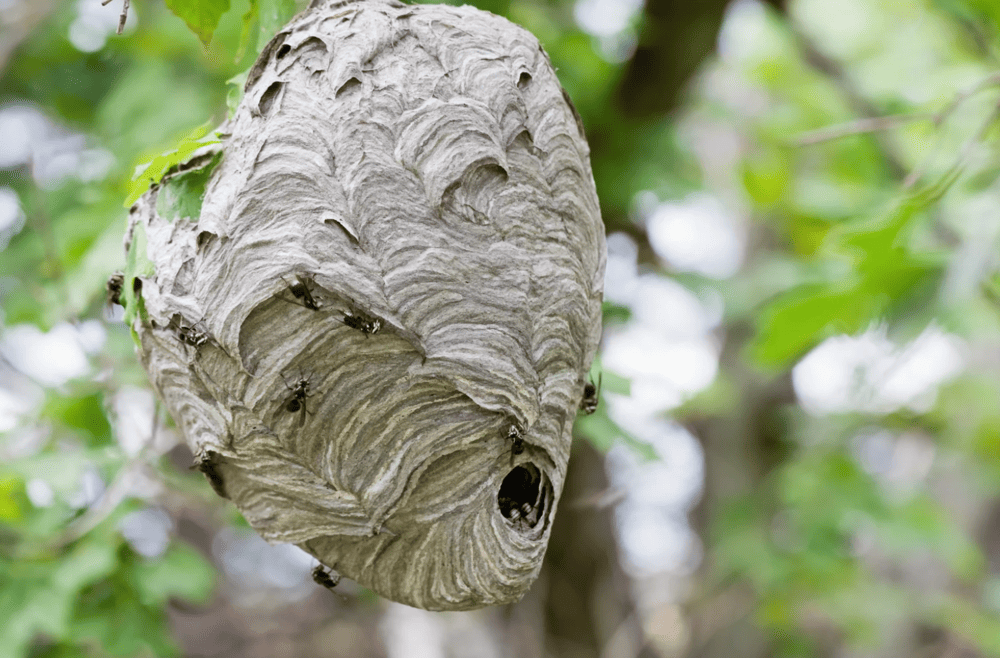
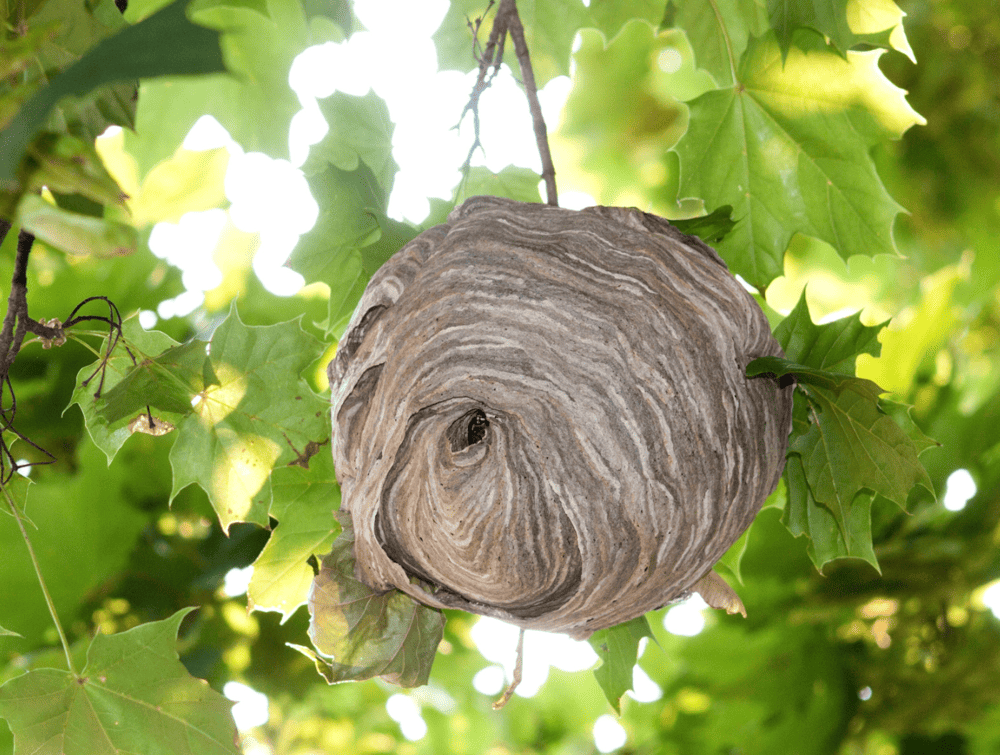
What does a hornet’s nest look like?
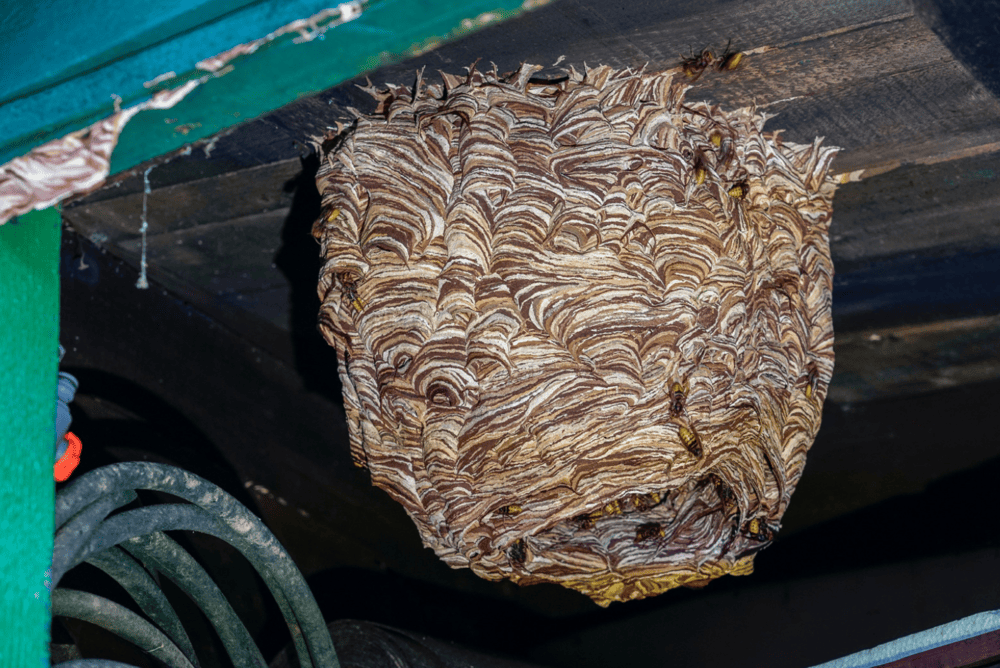
A hornet’s nest looks like a large ball of grey-brown paper or cardboard. It is made from chewed wood fibres, which gives it an appearance similar to kraft paper. Depending on the species and the time of year, it can range in diameter from a few centimetres to over 80 cm.
| Feature | Asian hornet’s nest | European hornet’s nest | Wasp’s nest |
| Aspect | A ball or oval shape made of grey-brown paper (kraft paper-like appearance) | Irregular brown paper ball | Grey paper, usually smaller |
| Entrance | On the side | Usually under the nest | Beneath the nest or to the side, depending on the species |
| Location | High up in the trees, sometimes under a roof, in a hedge or in a building | In a cavity: a hollow tree, a chimney, an attic, a wall, a shed… | Under a roof, in a shed, against a wall, on a shutter or in a hedge |
Photos of hornet nests
Precautions to take
Whether it is a nest of Asian or European hornets, a colony can become very aggressive if it feels threatened.
Whilst waiting for a professional to arrive, here are the precautions to take:
- do not approach the nest;
- do not touch the structure it is attached to;
- never throw anything at it;
- do not block the entrance;
- do not use a water jet or over-the-counter insecticide;
- stop mowing, trimming hedges or pruning nearby;
- do not carry out any work;
- warn your neighbours;
- keep children and pets at a safe distance.
Can you destroy a hornet’s nest yourself?
No, definitely not. Even if you use an insecticide or an aerosol spray available from shops, there’s a risk that you might be attacked by hornets or hurt yourself.
There is another risk to consider: mistaking an Asian hornet’s nest for that of a European hornet, a species that is protected in certain regions.
Can an empty nest be removed?
Yes, provided you are certain it has been completely abandoned. A hornet’s nest is not usually reused the following year, but it may remain occupied until late autumn.
Who should you call about a hornet’s nest?
The answer depends on the nest’s location and the level of danger. In principle, on private property, the removal of a nest is not the responsibility of the local authorities, but of a specialist company.
Hiring a pest control company
A pest control specialist in hornets can:
- identify the species;
- assess the level of risk;
- select the appropriate treatment method;
- treat a nest at height;
- secure the area;
- neutralise or remove the nest.
How can you find a competent professional?
Ask for a detailed quote and check what it includes: call-out, treatment, removal of the nest if necessary, and a follow-up visit should the problem recur.
The professional must also be fully authorised to use biocidal products intended for professional use only. The ‘pests’ Certibiocide certificate specifically covers TP18-type insecticides, used against arthropods such as hornets and wasps. It is awarded following a 21-hour training course – equivalent to three days – at an organisation accredited by the Ministry for the Environment.
Please note: the Certibiocide certificate is an individual qualification, not a certification awarded to the entire company. You should therefore ask whether the person carrying out or supervising the treatment holds a valid certificate.
Check a Certibiocide certificate

Should I contact the local council?
Yes. Hornet control measures vary from one local authority to another.
The local council may:
- record a report;
- refer you to a service provider;
- offer local assistance;
- take action if the nest is on public land;
- not provide any specific assistance.
Some local authorities contribute towards the costs, whilst others leave the full cost to the owner of the land in question.
The fire service in an emergency
The fire service can be contacted in the event of immediate danger, for example:
- an attack in progress;
- a nest in a busy public building;
- a vulnerable person who cannot be moved to safety;
- an urgent risk to several people.
Outside of an emergency, please contact a professional hornet nest removal company instead.

Hornet’s nest: who should pay for its removal?
Who is responsible depends on the location of the nest, the tenancy agreement and the circumstances.
| Situation | Who should I contact? | Who usually pays? |
| A nest on a property occupied by its owner | A pest control company | The owner |
| A nest in a rented flat | The landlord or estate agent prior to the visit | It depends on the tenancy agreement, the location of the nest and the cause of the problem |
| A nest in the communal areas of a block of flats | The property manager | Co-ownership, in accordance with the terms and conditions set out |
| A nest on a neighbouring plot | The owner of the land in question | The landowner |
How much does it cost to remove a hornet’s nest?
The cost of removing a hornet’s nest is usually between €80 and €300 including VAT.
The price depends mainly on:
- the height and accessibility of the nest;
- its size and location;
- the equipment required, such as a ladder or a cherry picker;
- the distance travelled by the professional;
- the urgency of the job;
- whether or not the nest is removed after it has been neutralised.
2026 Prices – Hornet’s nest removal
| Average price | |
| Accessible nest (at head height) | 80 – 120 € |
| Nest high up (5 to 15 m) | 120 – 200 € |
| Nests that are difficult to access (roofs, chimneys, lofts) | 150 – 300 € |
Ask for several quotes, providing photos where possible and all the necessary details: height, size, location, etc.
Can a hornet’s nest be removed free of charge?
Some local authorities, inter-municipal bodies or departments cover all or part of the cost of the operation. The rules vary depending on where you live and may require you to use an approved contractor.
Costs may also be covered:
- if the nest is on public land;
- by the landlord or property manager, depending on its location;
- through cover provided under certain home insurance policies; or by the owner of the land in question.
Should you set up an Asian hornet trap?
An Asian hornet trap may be useful in certain situations, but it is never a substitute for the professional removal of a nest. If used incorrectly, it can also catch many insects that are not the target, including bees, butterflies and other pollinators.
Trapping may be justified for:
- providing temporary protection for an apiary;
- monitoring an area where hornets are regularly seen;
- taking part in a targeted and supervised trapping campaign;
- temporarily limiting the presence of individual hornets around a specific location.
Their effectiveness varies, and they may cause more damage to biodiversity than to the target colony.
Is a homemade hornet trap effective?
There’s the bottle trap, which is easy to make, but its effectiveness is very limited. The problem is that whilst it can catch hornets, it also traps bees, butterflies and other insects that are beneficial to biodiversity. It’s also worth noting that the bait becomes less attractive in hot weather or when it rains. Finally, it is clearly not enough to get rid of a colony.
Are hornet repellents and sprays effective?
A hornet repellent can help keep them away from a patio or dining area on an ad hoc basis, but its effect is often short-lived. No repellent removes a nest or addresses the root cause of the problem.
Hornet sprays and aerosols have a more direct effect. There are long-range varieties available for targeting hornets from a distance. This is useful for dealing with a single hornet, but not for treating a colony.
Can you use an aerosol can on a hornet’s nest?
No, this is strongly advised against. The actual range may be insufficient and could provoke an immediate reaction from the colony. Hornets may swarm out in large numbers to attack you. You also expose yourself to the product and to the risk of falling.
What should you do after a hornet sting?
A hornet can sting several times. After being stung, move away from the area immediately to avoid another attack.
Quickly remove any rings, bracelets or shoes if the sting is on a hand, arm or foot, as the area may swell. Then clean the skin with soap and water, and apply a cold compress for a few minutes, protecting the skin with a cloth.
Monitor your general condition over the following hours.
What are the usual symptoms?
A hornet sting causes:
- sharp pain;
- redness;
- a sensation of heat;
- itching;
- swelling around the sting site.

How long does the pain from a hornet sting last?
The pain is intense immediately after the sting, then eases over the course of a few hours. However, discomfort, redness or swelling may persist for a few days.
The duration depends on the area affected, the amount of venom injected, your individual sensitivity and the number of stings.
Is it normal for the sting to swell up the next day?
Yes, a local reaction may continue to worsen over the following hours and be more noticeable the next day.
See a doctor if:
- the swelling becomes very severe;
- the pain increases rather than subsides;
- the redness spreads significantly;
- the area becomes very hot or appears to be infected;
- you develop a fever, feel unwell or experience other general symptoms.
What should you do if you are stung on the face or in the mouth?

In this case, call 15 or 112, as the swelling may obstruct your airways.
Here are the situations in which you should call the emergency services:
- difficulty breathing;
- swelling of the tongue or throat;
- feeling unwell or loss of consciousness;
- severe vomiting;
- a generalised reaction with rashes, itching or swelling over the body;
- multiple stings;
- a known allergy to venom.

What should you do if a dog or cat is stung?
First, move the animal away from the area. Contact a vet immediately if you notice:
- a sting in the mouth or throat;
- swelling of the muzzle, tongue or neck;
- difficulty breathing;
- multiple stings;
- unusual lethargy, vomiting or discomfort.
FAQ
At what time of year should we be particularly vigilant about hornets?
Is it possible to block the entrance to a hornet’s nest?
Do hornets return to the same nest?
Will insurance cover the cost of destroying a hornet’s nest?
