



A type of giant wasp, the Asian hornet is an invasive species that has been present in France since 2004. Before taking any action with treatments, you must ensure that it is indeed this insect. Colour, size, differences from its European cousin and bumblebees, and the shape of the nest… here are the key features to help you recognise them and determine whether a colony is present nearby.
Key information
➡️ The Asian hornet can be recognised by its very dark body, its orange band on the abdomen and its yellow legs.
➡️ It is generally smaller than the European hornet, although it often appears more robust in flight.
➡️ Its nest looks like brown paper, is spherical or oval in shape, and has an entrance on the side.
➡️ The danger is greatest near the nest: do not go near it and always leave its removal to a professional.
Introduction to the Asian hornet
The Asian hornet, whose scientific name is Vespa velutina, is a species native to the following countries: Afghanistan, India, China and Indonesia. Accidentally introduced into France in the early 2000s, it has since become established across almost the whole of the country and in several other European countries.
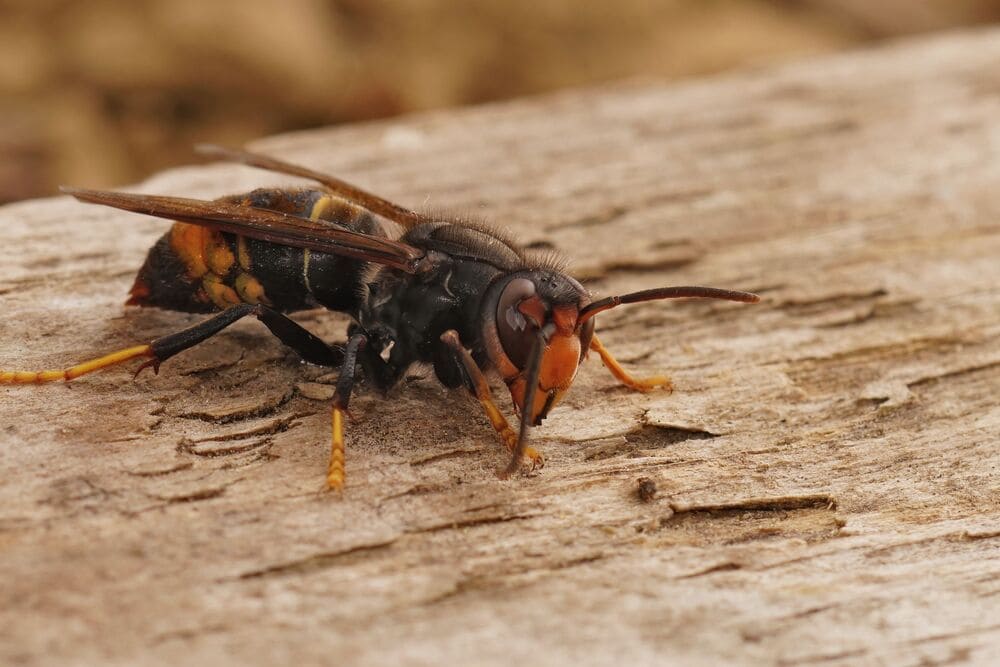
What does an Asian hornet look like?
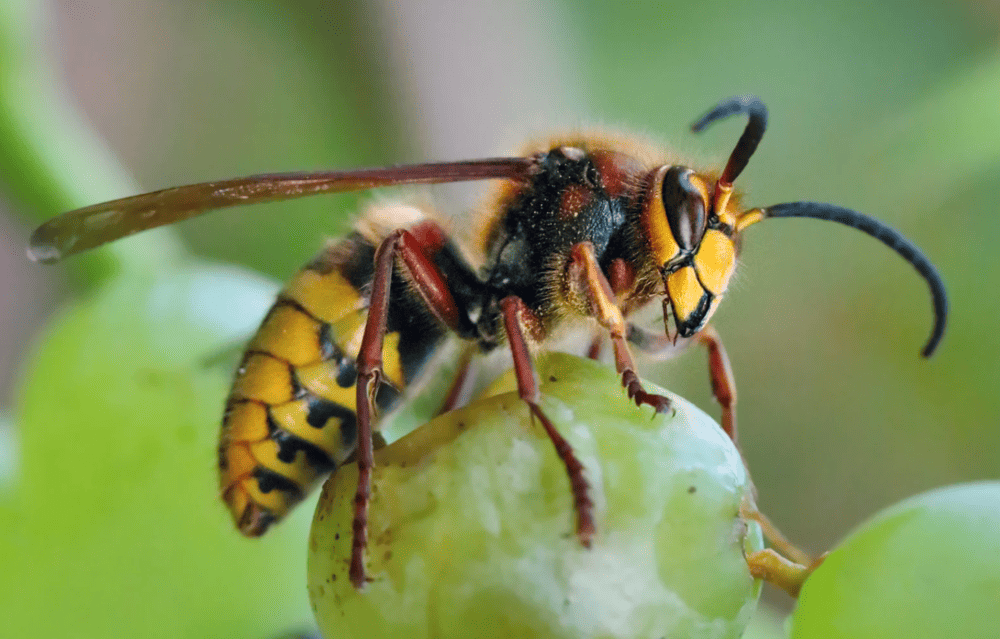
It is also known as the ‘yellow-legged hornet’, a detail that makes it much easier to identify.
Here are its distinguishing features:
- a generally very dark body;
- a black thorax;
- brownish wings;
- an orange-yellow band on the abdomen;
- yellow tips on its legs.
Its shape is that of a hornet: a sturdy body, a distinct waist between the thorax and the abdomen, and long antennae.
How big is an Asian hornet?
The size of an Asian hornet varies depending on its role within the colony. A worker is generally around 1.5 to 2.5 cm long, whilst a queen measures between 2.5 and 3.5 cm.
The queen is larger and more robust, particularly in spring when she establishes the colony on her own.
Photos of Asian hornets
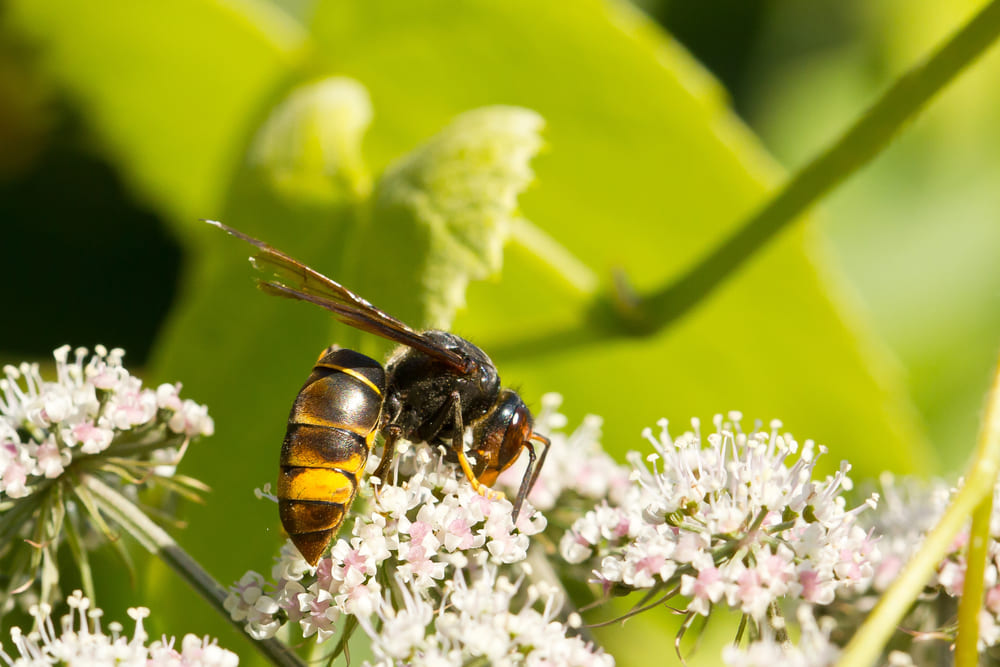
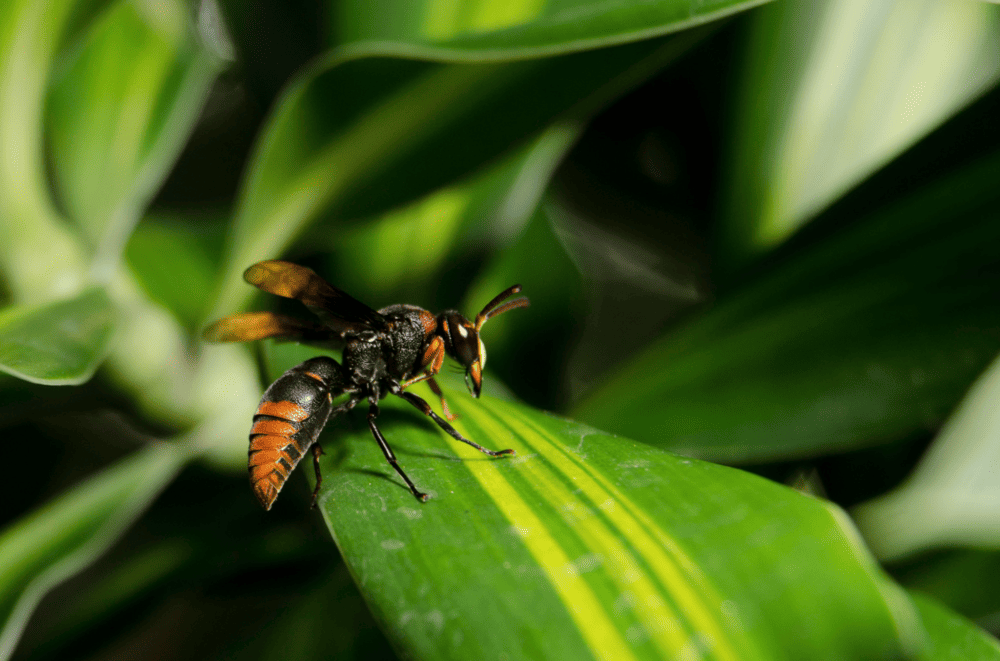
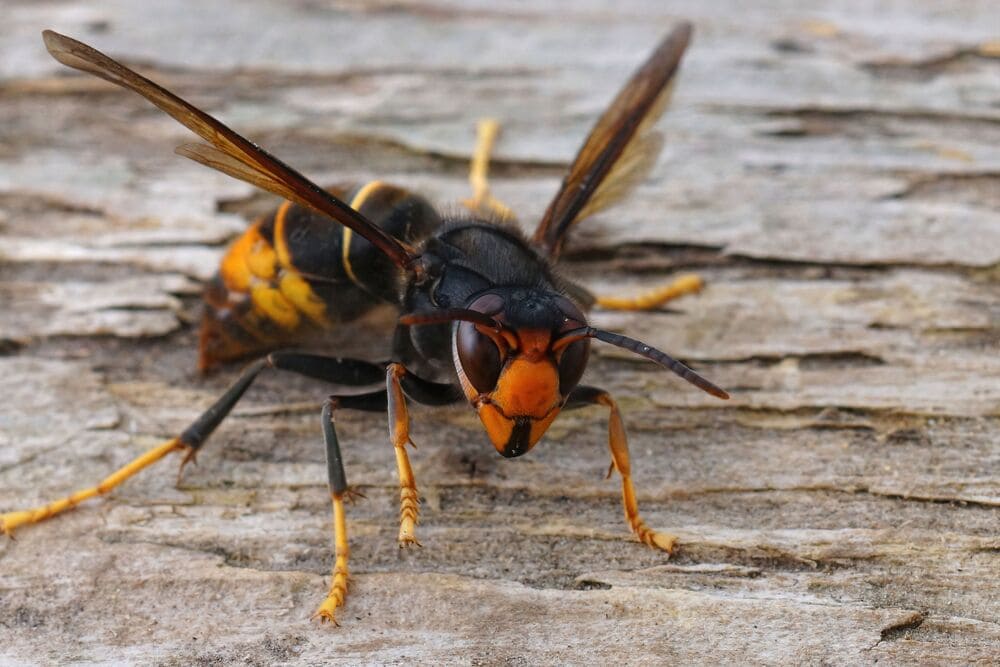
What are the differences between an Asian hornet and a European hornet?
The European hornet (Vespa crabro) is a species that has always been native to France. More colourful than its Asian cousin, it plays a role in the ecosystem by controlling the populations of many insects. The Asian hornet (Vespa velutina), which arrived much more recently, is recognisable by its darker body and yellow legs.
Here are the main differences between these two species.
| Criterion | Asian hornet | European hornet |
| Color | Mostly black body with an orange stripe on the abdomen | Brown, auburn and yellow body, much lighter in colour |
| Size | 17 to 25 mm (worker); up to 35 mm (queen) | 18 to 35 mm (worker); up to 35 mm (queen) |
| Legs | Yellow at the tips | Brown to reddish-brown |
| Abdomen | Very dark with a single broad orange band | Yellow with black stripes |
| Nid | Often high up in the trees, sometimes under a roof or in a hedge | In hollow spaces: hollow trees, lofts, chimneys, sheds… |
| Comportement | It actively defends its nest when threatened and hunts many insects, particularly bees | Generally unobtrusive when left undisturbed and less noticeable around the hives |
How can you tell the difference between a hornet, a wasp and a bumblebee?
It is not always easy to tell the three apart. However, if you take the time to look closely, they are very different.
- The hornet is the largest of the three. It has a sturdy body, long wings and a powerful flight. Depending on the species, it can be brown, black or yellow.
- The wasp is smaller and slimmer. Its abdomen has striking yellow and black stripes, and it is often attracted to sugary foods in summer.
- The bumblebee has a stocky body covered in hair. Its flight is slower and noisier. It is a particularly useful pollinator that feeds exclusively on nectar and pollen.
How can you recognise an Asian hornet’s nest?
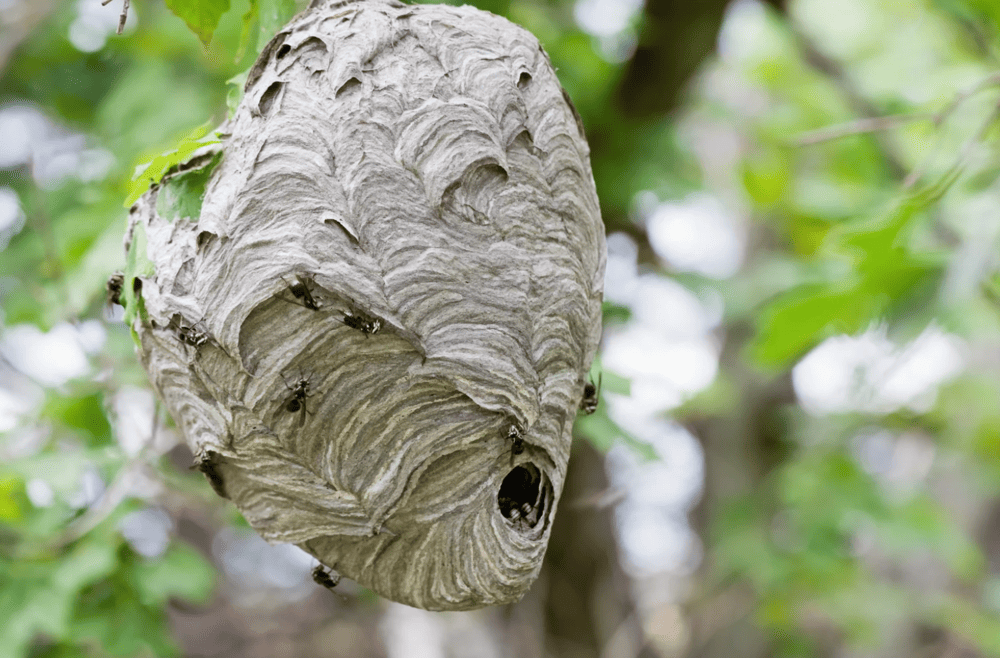
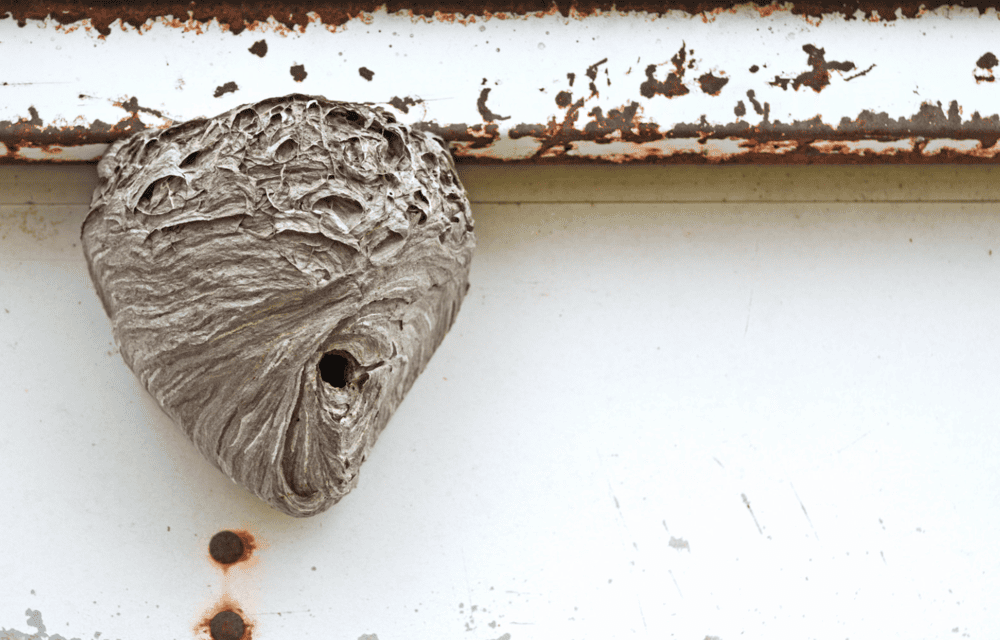
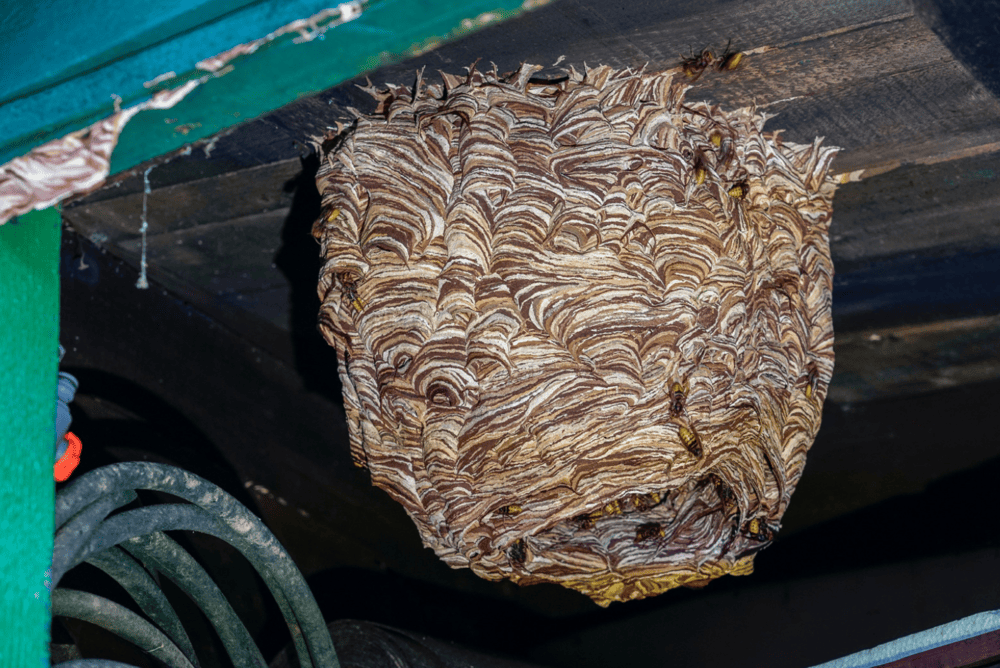
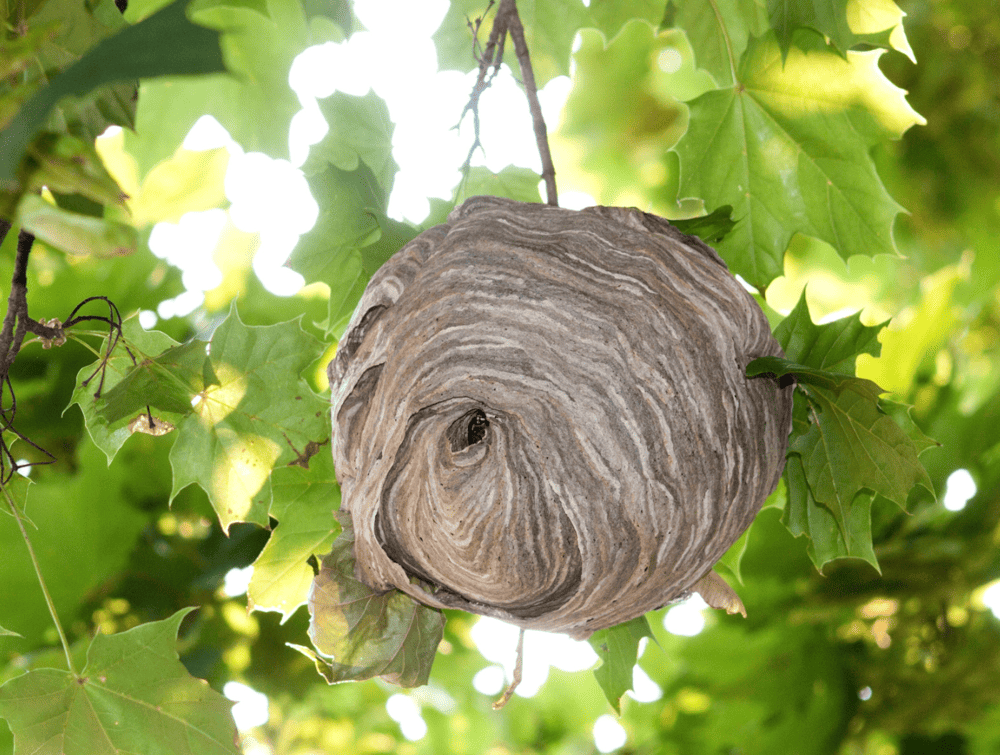
An Asian hornet’s nest is spherical or slightly oval in shape. Its outer shell is made up of thin layers of chewed wood fibres. It has a ‘kraft paper’ appearance, resembling paper or cardboard.
Its colour ranges from beige to light brown with darker concentric rings. Depending on its stage of development, a nest may measure just a few centimetres or exceed 80 cm in diameter by the end of the season.
There is another distinguishing feature: the entrance to the nest is on the side, unlike that of the European hornet’s nest, which is often situated underneath the nest.
In spring, the nests are still small and can easily go unnoticed. In summer and autumn, they become much larger and are more visible in the trees once the leaves have fallen.
What is the difference between a primary nest and a secondary nest?
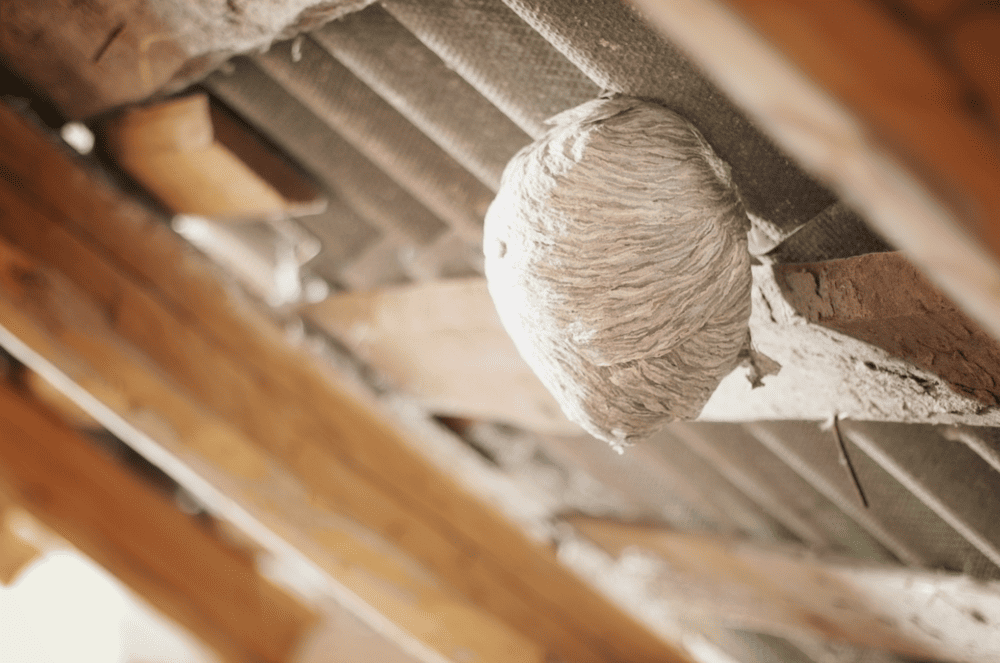
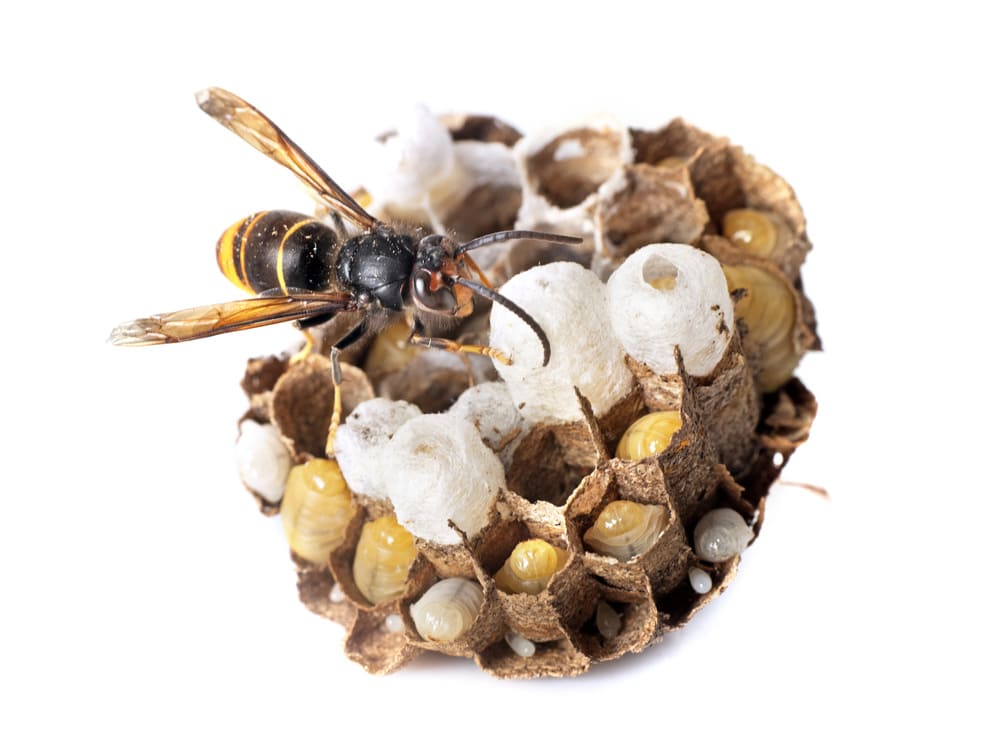
The Asian hornet builds two nests during its life cycle. Small in size, it usually measures between 5 and 15 cm in diameter. It is found in sheltered places such as a shed, a garage, a garden shed, a roof overhang or a small tree. It is in this nest that the queen lays her first eggs and raises the first workers. When the colony reaches around 200 individuals, the hornets leave this primary nest to build a larger one. Much larger, this nest is usually situated high up, several metres above the ground, in a tree or under a roof, in a shed, in chimneys or, more rarely, in a hedge. The colony lives there until autumn and can accommodate several thousand hornets.
- The primary nest built by the queen in early spring.
- The secondary nest built later by the workers.
Photos of Asian hornet nests
What is the role of the Asian hornet queen?
As with honeybees, the queen is the foundation of the entire colony. After spending the winter in shelter, the Asian hornet queen emerges from hibernation in early spring. She then seeks out a sheltered spot to build her first nest, known as the primary nest.
At this stage, she works alone. She builds the first cells, lays her first eggs (one per day at the start of the season), feeds the larvae and oversees the development of the first workers. For several weeks, she therefore carries out all the colony’s tasks single-handedly.
When the first worker wasps reach adulthood, they take over. They expand the nest, forage for food and care for the new larvae. The queen can then devote herself exclusively to laying eggs.
As the months go by, the colony grows rapidly. By the end of summer, the queen may have given birth to several thousand hornets. It is also at this time that the future queens and males are produced, and they will leave the nest to mate.
How many queens are there in an Asian hornet nest?
A single queen rules the colony. New queens are born at the end of the season, but they leave the nest after mating to spend the winter in a shelter. The original nest is then gradually abandoned and will not be reused the following year.
Is the Asian hornet dangerous?
The Asian hornet can be dangerous, but it does not automatically attack people it encounters. When foraging for food away from its nest, it tends to be fairly calm. However, it becomes more aggressive when someone approaches the colony, shakes a branch, trims a hedge or attempts to destroy the nest.
Is the Asian hornet dangerous to humans?
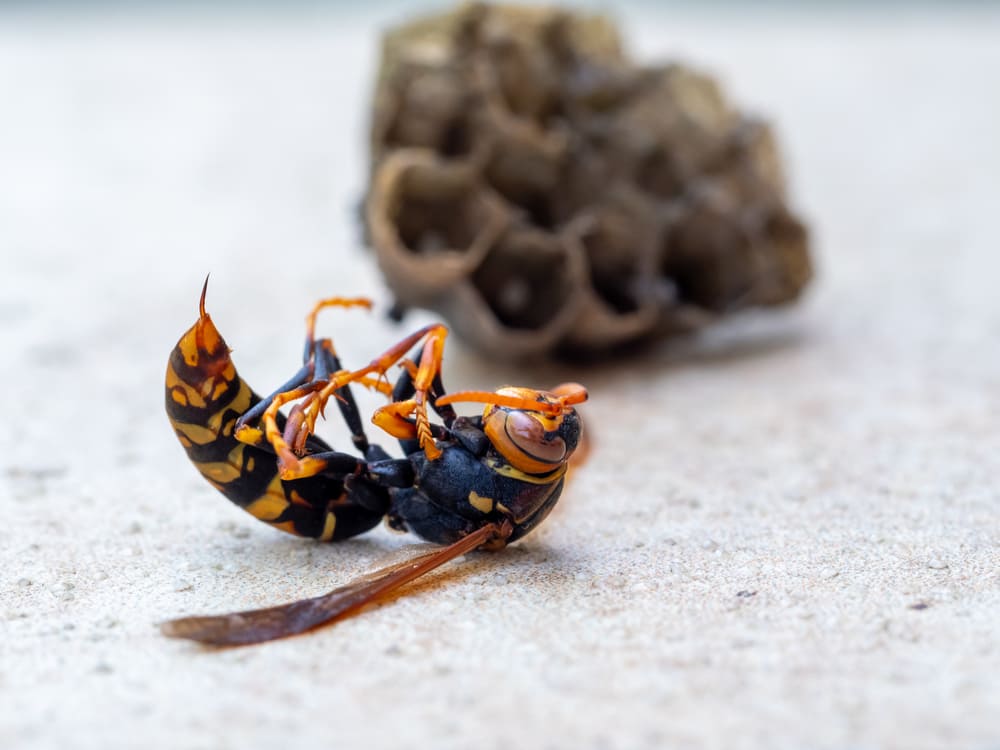
The Asian hornet has a stinger connected to a venom gland. It can sting several times, as it does not lose its stinger after the first sting.
Asian hornet stings are very painful and cause redness and swelling. Serious complications are rare, but they can occur in the following cases:
- allergy to the venom;
- multiple stings;
- a sting in the mouth or throat;
- a sting to the face;
- a systemic reaction with breathing difficulties, malaise or oedema.
In the event of a medical emergency, you must call 15 or 112 immediately.

And what about the animals?
The Asian hornet is known to be a formidable bee killer. Its presence puts double pressure on colonies. Captured worker bees disappear, whilst the other bees are reluctant to leave the hive when a hornet is flying in front of the entrance. They therefore bring back less nectar and pollen, which can gradually weaken the colony. The hornet’s method is unstoppable: stationed in front of the hive, it kills bees returning laden with pollen and carries their thoraxes back to the nest to feed the larvae.
Hovering about twenty centimetres from the hive entrance, one Vespa velutina worker takes turns with another to capture foragers returning laden with pollen. The hornet kills the bee, strips it of its body parts and carries the thorax back to the nest.
Pets, such as dogs and cats, can also be stung if they try to catch a hornet or if they go near a nest. A sting in the mouth or throat can cause dangerous swelling. Contact your vet straight away if this happens.
What should you do about Asian hornets?
It is essential to stay at least five metres away from a nest, keep children and pets away, and never attempt to remove or treat it yourself.
The job must be left to a properly equipped professional.
For more information: Hornet’s nest: what to do, who to call and how to react?
FAQ
Is the Asian hornet bigger than the European hornet?
Does a single hornet indicate the presence of a nest?
What are the natural predators of the Asian hornet?
Should you swat an Asian hornet?
How long does it take for Asian hornets to build a nest?
