



Scabies is a contagious disease caused by a microscopic parasite. It is not linked to poor hygiene and can affect anyone, regardless of age.
It is essential to act quickly to prevent the parasite from spreading.
How do you catch scabies? What are the effective treatments? Should the whole family be treated, should clothes be washed and should the house be disinfected?
Here’s what you need to do to get rid of it and minimise the risk of infection.
N.B.: this article is provided for information purposes only and is no substitute for your doctor’s advice.
In summary
➡️ Scabies is caused by the parasite Sarcoptes scabiei and is transmitted through prolonged skin-to-skin contact with a person who is infested.
➡️ A person may be contagious before symptoms appear.
➡️ Treatment for scabies can be topical or oral.
➡️ It is best to treat those in close contact with the affected person at the same time.
➡️ Itching may persist for several weeks after treatment without this necessarily meaning that the scabies is still active.
➡️ Potentially contaminated clothes, bed linen and towels should be washed at 60 °C or sealed in an airtight bag.
How do you catch scabies?
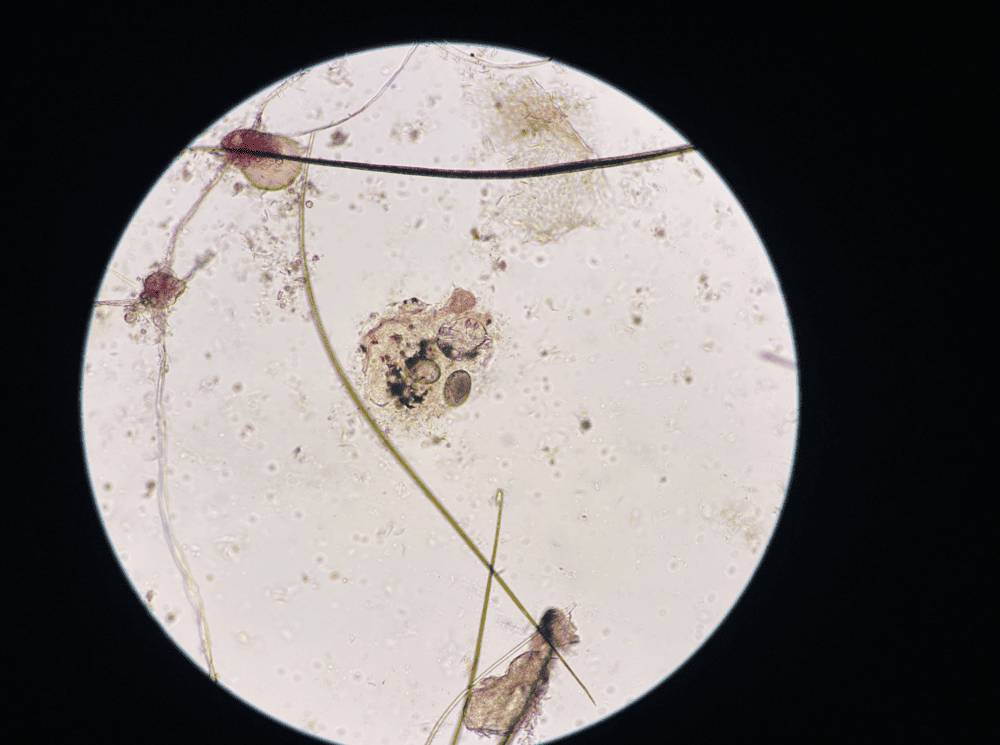
Scabies is caused by Sarcoptes scabiei, a microscopic mite that lives in the outermost layer of the skin. The female burrows small tunnels there to lay her eggs.
👉 It is important to note that it does not appear spontaneously on you; it is transmitted by someone who is already infested through direct and prolonged contact with their skin. The parasite is passed on in this way from one person to another [1].
The following situations involving close contact are particularly high-risk:
- between family members;
- within a couple;
- during sexual intercourse;
- in certain communities.
Please note: Brief contact, such as a handshake, carries a much lower risk of transmitting scabies.
Can you catch scabies from clothes or bed linen?
Yes, but it is less common. Transmission via clothes or bed linen is mainly possible in severe forms of scabies (profuse or hyperkeratotic), as the person then has many more mites on their skin [2].
This is why both the person and the textiles must be treated.
What are the symptoms of scabies?
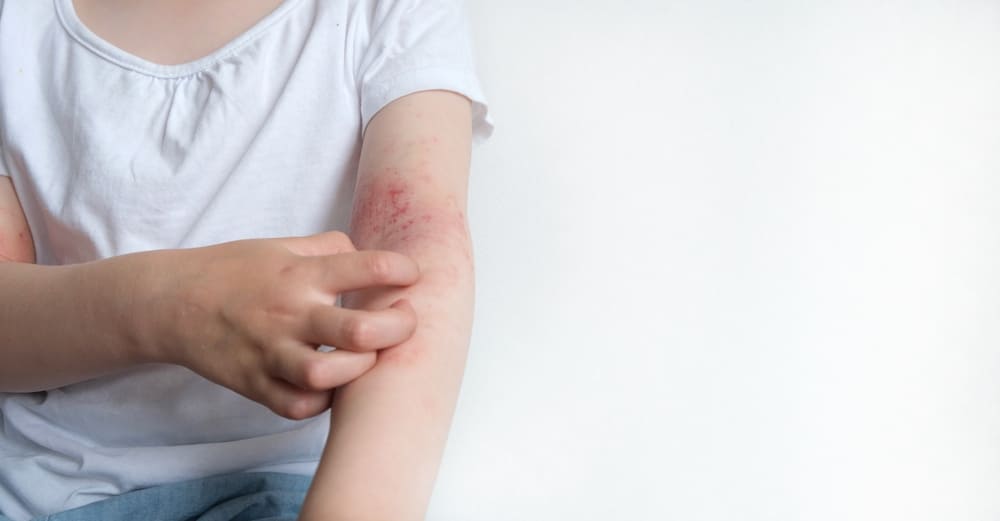
The main symptom of scabies is severe itching, which is often worse at night. It is usually accompanied by small red lesions caused by the parasite or by scratching [3].
Symptoms frequently appear:
- between the fingers;
- on the wrists and elbows;
- in the armpits;
- around the navel and waist;
- on the buttocks;
- in the genital area.
Small, fine, winding lines may also be visible on the skin. These are the burrows dug by the female sarcoptic mite.
See also: Scabies: what are the symptoms and how can you recognise it?
Is scabies contagious?
Yes, scabies is a highly contagious condition. It is important to note that a person can pass on scabies before the first signs of itching appear. During an initial infestation, there is in fact an incubation period generally lasting between 4 and 6 weeks, during which there are no visible symptoms (Source: World Health Organisation).
How long is scabies contagious?
Once treatment has begun, skin-to-skin contact should be avoided for 3 days to minimise the risk of transmission. The itching, however, may persist for several weeks, but this does not necessarily mean that the person is still contagious.
The French National Health Insurance Scheme states that itching generally persists for about two weeks after the end of treatment, and sometimes for two to four weeks, even as scabies begins to clear up.
How is scabies treated?
Scabies does not clear up on its own; treatment in the form of a cream (topical), tablets or both is necessary. The choice of medication will depend on the patient’s age, their state of health and the type of scabies. It is essential that people in your household are also treated [4].
Topical treatments for scabies
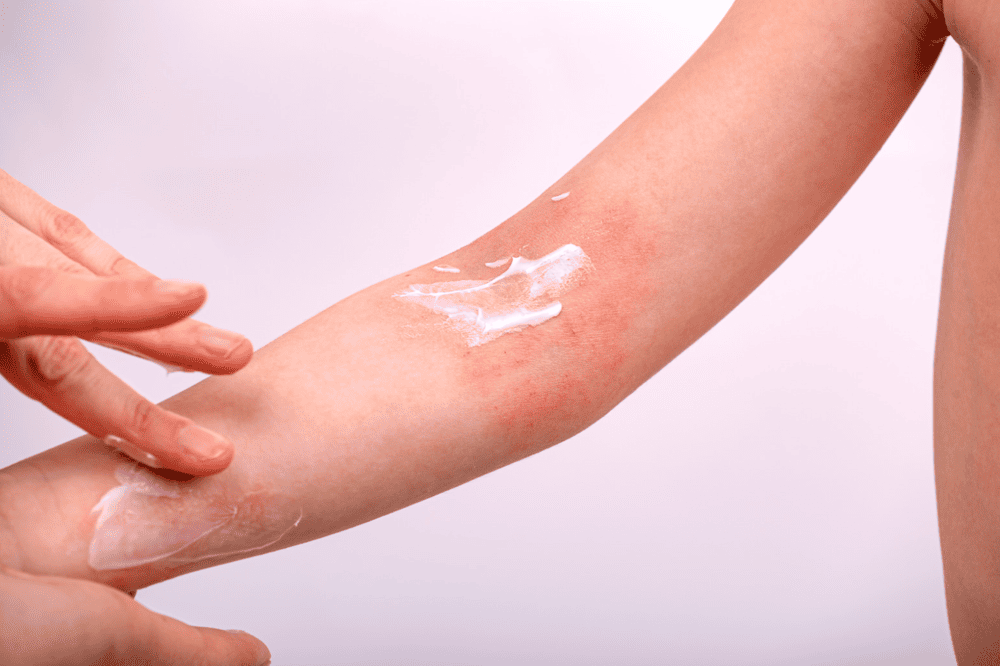
Topical treatments are medicines scabicides designed to eliminate Sarcoptes mites (the parasites responsible for scabies).
According to the EN National Health Insurance Scheme, two products in particular can be used to treat common scabies:
- 5 per cent permethrin, in cream form;
- benzyl benzoate, in lotion form [4].
5% permethrin is one of the main standard topical treatments for scabies [5].
The product must be applied carefully to the areas indicated by the doctor, taking care to cover skin folds and other places where the Sarcoptes mite may hide.
Make sure you follow the doctor’s instructions and the product information leaflet, particularly regardingant les zones à traiter, la durée d’application et le renouvellement éventuel du traitement.
Oral treatment
Ivermectin is the main oral treatment for scabies. This antiparasitic medicine (available on prescription only) acts on the sarcoptic mite’s nervous system to kill it.
The choice between topical treatment and ivermectin depends, in particular, on the patient’s age, weight, state of health, the type of scabies and the number of people to be treated [4][5].

Should the whole family be treated?
It is best to treat people who have had close and prolonged contact with the person who has been infected at the same time, even if they do not yet have any itching.
This precaution is important because an individual with an infestation may be contagious several weeks before the first symptoms appear. Without simultaneous treatment of those who have been in contact with the individual with an infestation, there is therefore a risk that the parasite will spread amongst members of the household once again.
Treating scabies in children or infants
In children, treatment for scabies must be tailored to their age and weight. In infants under 2 years of age, the doctor determines, in particular, which product to use and the duration of treatment. Oral ivermectin is contraindicated in children weighing less than 15 kg [4].
As with adults, treatment is not limited to the child alone: people who have had close contact with the child must be identified and treated at the same time.
Treating severe or crusted scabies
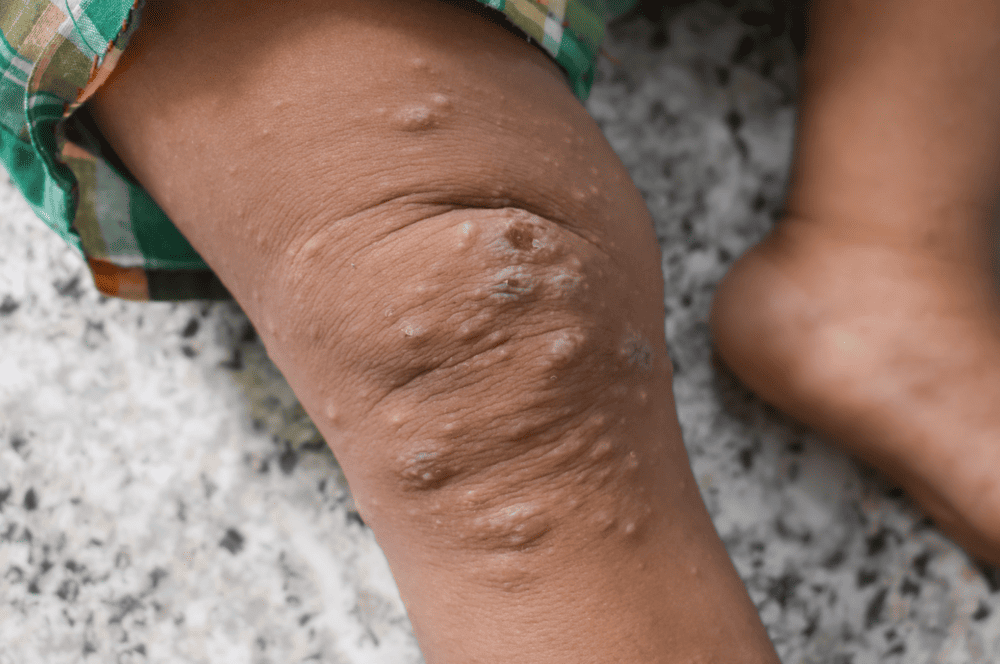
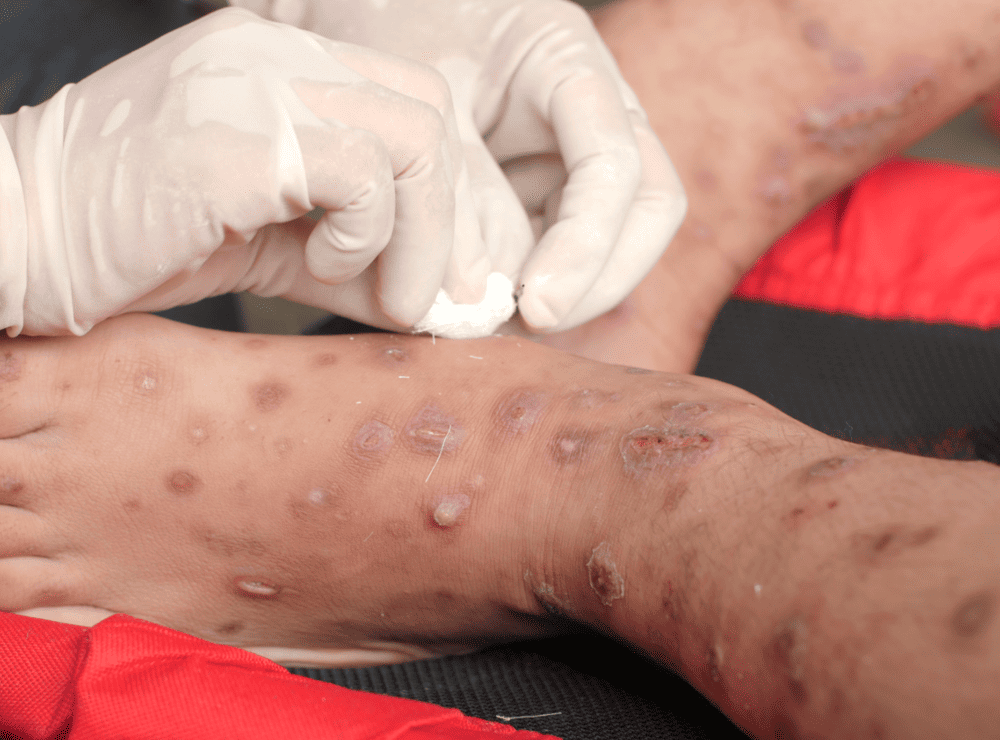
Severe scabies and crusted (or hyperkeratotic) scabies require more intensive medical management, sometimes involving isolation or admission to a single room. These forms are much more contagious than common scabies due to the large number of mites present on the skin.
Treatment generally combines oral ivermectin with the application of a scabicide to the skin. Several doses or applications may be necessary [5].
How is scabies treated during pregnancy?
Scabies can be treated during pregnancy, but the choice of medication must be made by a doctor. If you are pregnant or think you might be, tell your doctor before starting any treatment and avoid self-medication.
According to the EN National Health Insurance Scheme, treatment for scabies in pregnant women involves, first and foremost, the topical application of 5 per cent permethrin or 10 per cent benzyl benzoate, to be repeated between 8 and 14 days later.
During pregnancy, never start, stop or change a treatment for scabies without consulting a healthcare professional.


What should you do with clothes, bed linen and towels?
If you have scabies, you must eliminate any sarcoptic mites that may be present on your textiles.
Machine wash at 60 °C any laundry that may have been contaminated:
- clothes and underwear;
- sheets and pillowcases;
- blankets;
- bath towels;
- other textiles recently used during an infestation.
For clothes and textiles that cannot be washed at 60 °C, you can treat them with specialised sprays or place them in a bagplastique hermétique pendant une semaine [4].
The sarcoptic mite does not survive for long when separated from its host – 2 to 3 days, according to the World Health Organisation.
To minimise the risk of further infestation, make sure you treat the affected people and their laundry at the same time.
Do you need to disinfect the whole house?
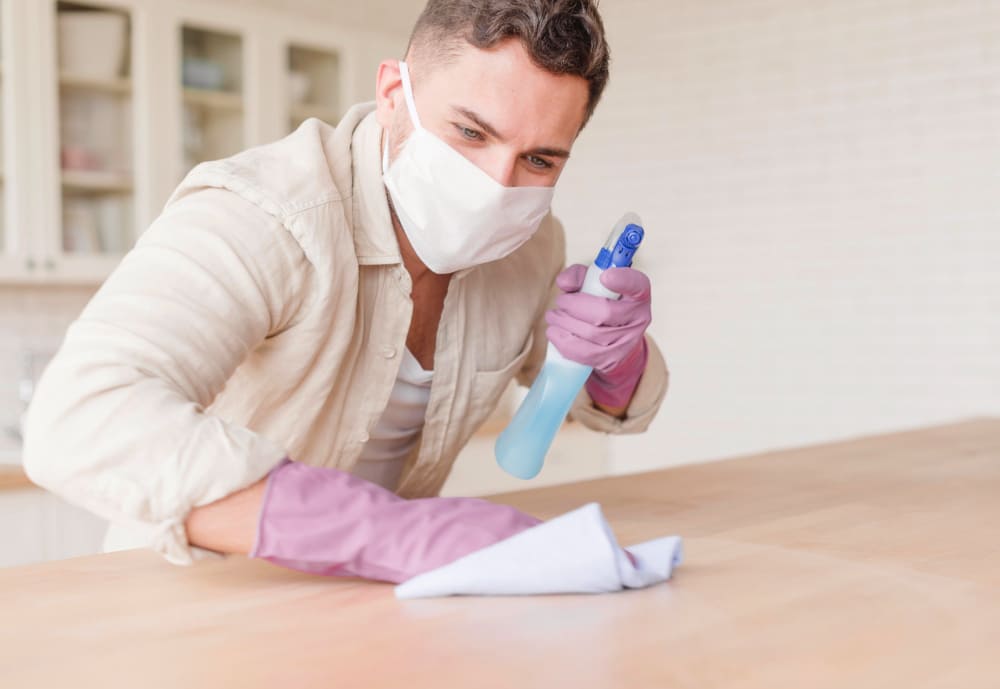
No, there is no need to disinfect your entire home if you have common scabies. The sarcoptic mite survives for only a short time outside the human skin.
You can still:
- vacuum sofas, armchairs, carpets and mattresses thoroughly;
- clean surfaces and objects that are used regularly;
- avoid sharing towels, clothes and bedding whilst treatment is ongoing;
- dispose of the vacuum cleaner bag after use, or empty and clean the dust compartment.
However, greater precautions are required in cases of severe or hyperkeratotic scabies, as the number of mites present in the environment may be much higher. In this case, demandez conseil à votre médecin.
How long does scabies last after treatment?
Effective treatment eliminates the sarcoptic mites, but the symptoms of scabies do not disappear immediately. The itching may persist for several weeks after treatment, even though the mites have been eliminated [5].
Depending on how your skin reacts, they may even get worse for one to two weeks after treatment begins. So continuing to scratch does not necessarily mean that the scabies treatment has failed.
How can you tell if the treatment has worked?
In principle, the itching and lesions gradually disappear. However, recovery from scabies must be assessed over time.
Consult your doctor again if:
- the itching does not subside as expected or worsens persistently;
- new lesions or new rashes appear;
- other people in your household develop symptoms;
- you think you may have been exposed to a person with an infestation again.
If in doubt, do not restart treatment on your own initiative. Your doctor must determine whether this is a case of persistent itching following recovery, treatment failure or re-infectionnation.
How can you prevent re-infection?
Having had scabies does not protect you against a new infestation. It is therefore possible to catch scabies more than once, particularly if someone you live with is still carrying the parasite [6].
To minimise the risk of re-infection, three precautions are essential:
- treat all affected people in your household at the same time, even if some do not yet show any symptoms;
- follow the full course of the prescribed treatment, including where a second application or dose is required;
- treat laundry and textiles at the same time as the people affected by infestation to prevent further exposure to the parasite.
FAQ
How long is scabies contagious?
When can you go back to work or school after having scabies?
Can you sleep with someone who has scabies?
Can you catch scabies twice?
Should the whole family be treated?
Références
[1] Organisation mondiale de la Santé. Scabies (Gale). OMS, fiche d’information.
