


Have you turned your heating back on? Watch out for silverfish! These tiny silvery insects love heated, poorly ventilated homes and rooms where damp builds up. Are they dangerous? Where do they hide and how can you get rid of them? Here’s what you need to know.
In summary
➡️ The common silverfish, Lepisma saccharinum, particularly favours very damp areas, whilst some species of the genus Ctenolepisma can tolerate drier, heated homes
➡️ In winter, condensation and poor ventilation can create suitable hiding places;
➡️ Bathrooms, kitchens, utility rooms and basements are the rooms most commonly affected;
➡️ They are harmless to humans but can damage paper, cardboard, adhesives and certain textiles;
➡️ Reducing humidity and applying a suitable treatment are essential to prevent them from returning.
An introduction to the silver fish

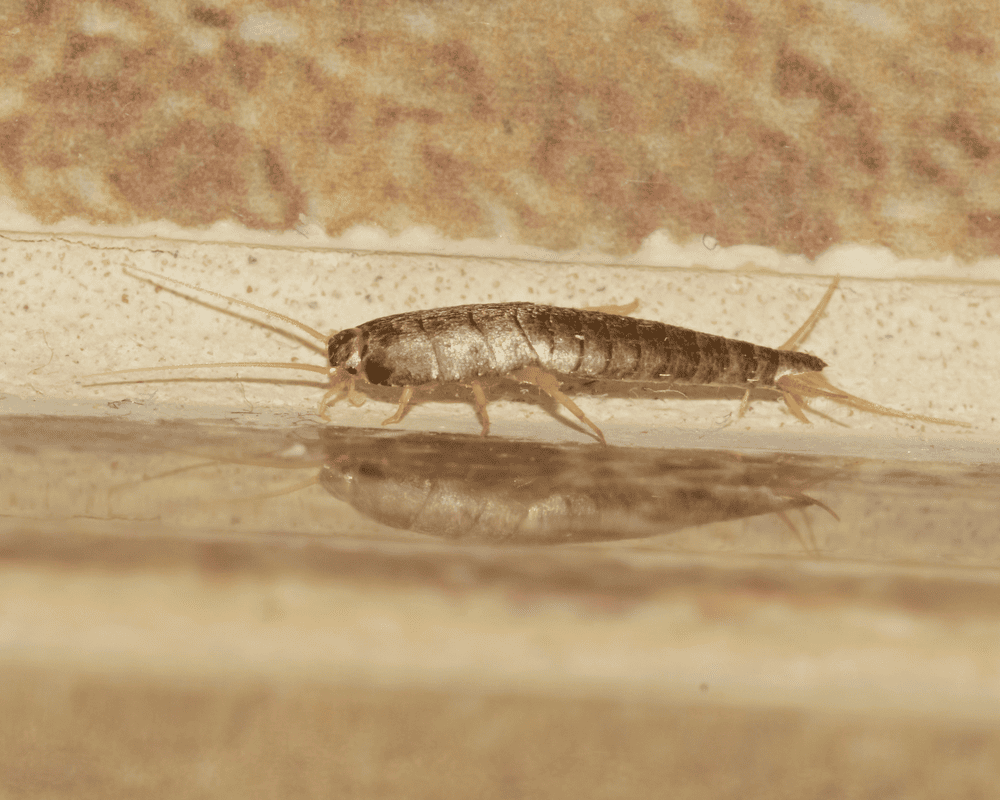
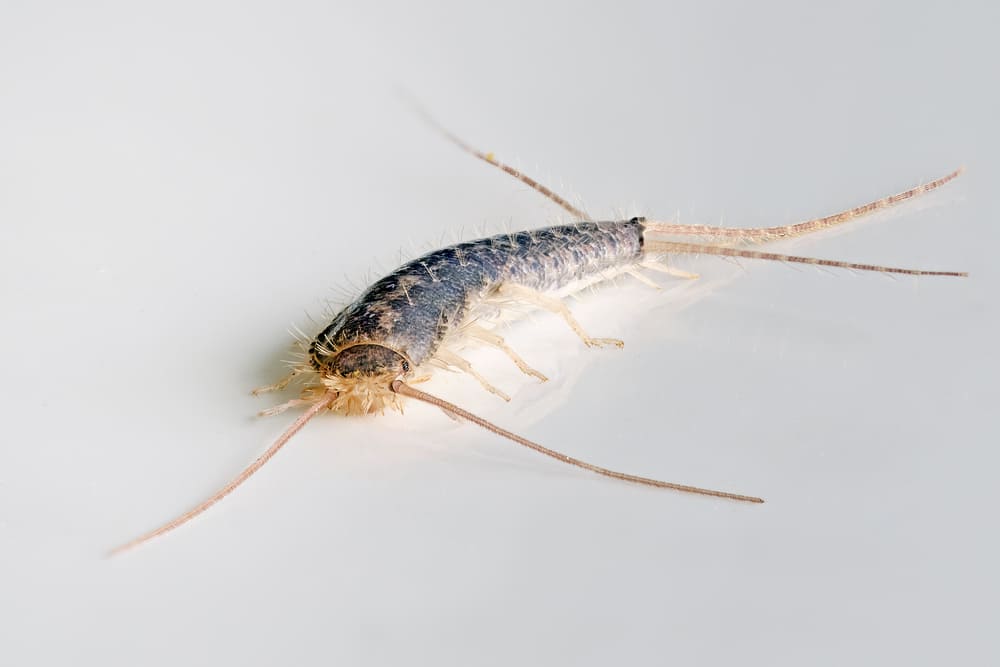
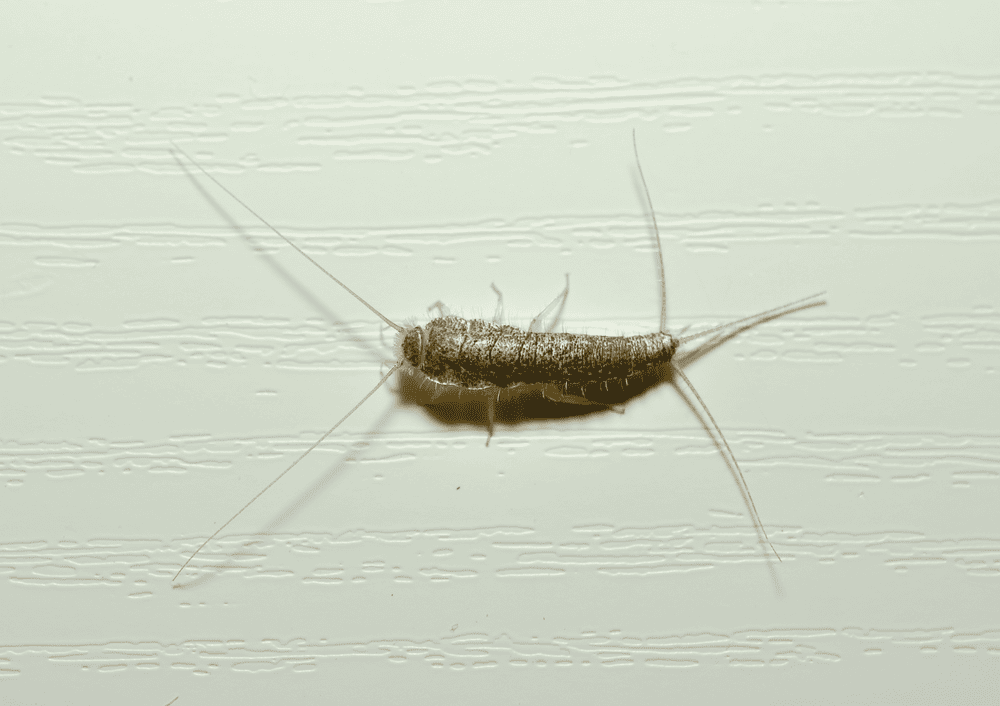
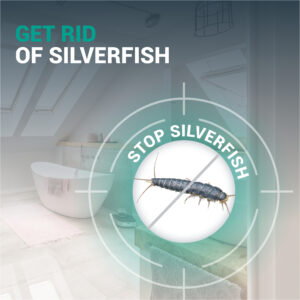
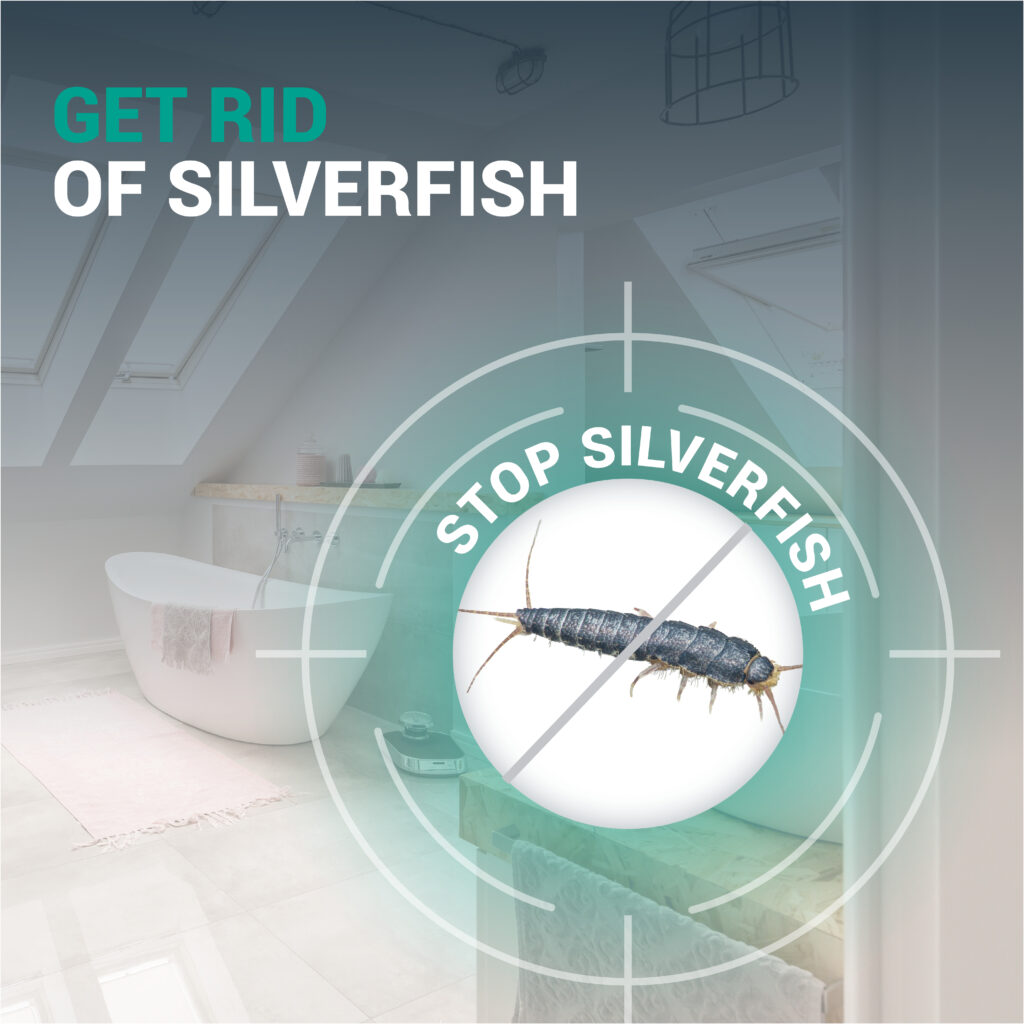
The silverfish, or Lepisma saccharinum, is a small nocturnal insect recognisable by its elongated body covered in silvery scales. It is usually around one centimetre long and moves very quickly.
It prefers places that are dark, warm and damp, such as bathrooms, kitchens, utility rooms or basements.
Rest assured: silverfish do not bite and do not transmit any known diseases to humans. However, they can become a nuisance when they multiply and may damage paper, cardboard, adhesives or certain textiles.
Why do we see more silverfish in winter?
Heat and humidity: the ideal conditions
Lepisma saccharinum thrives in warm and very damp environments. When relative humidity exceeds around 75 per cent, conditions become particularly favourable for its growth [1].
Heating alone is therefore not necessarily to its advantage. On the contrary, it can dry out the air and limit the number of favourable areas.
The problem is that certain parts of the home remain damp despite the heating: the bathroom, under the bath, cold corners, pipework or under furniture. These small spaces can retain a damp microclimate which silverfish thrive in.
The common silverfish, Lepisma saccharinum, is mainly found in very damp rooms. Other silverfish species, such as Ctenolepisma longicaudatum and Ctenolepisma calvum, can, however, tolerate drier conditions and may be found in homes heated to room temperature [2,3].
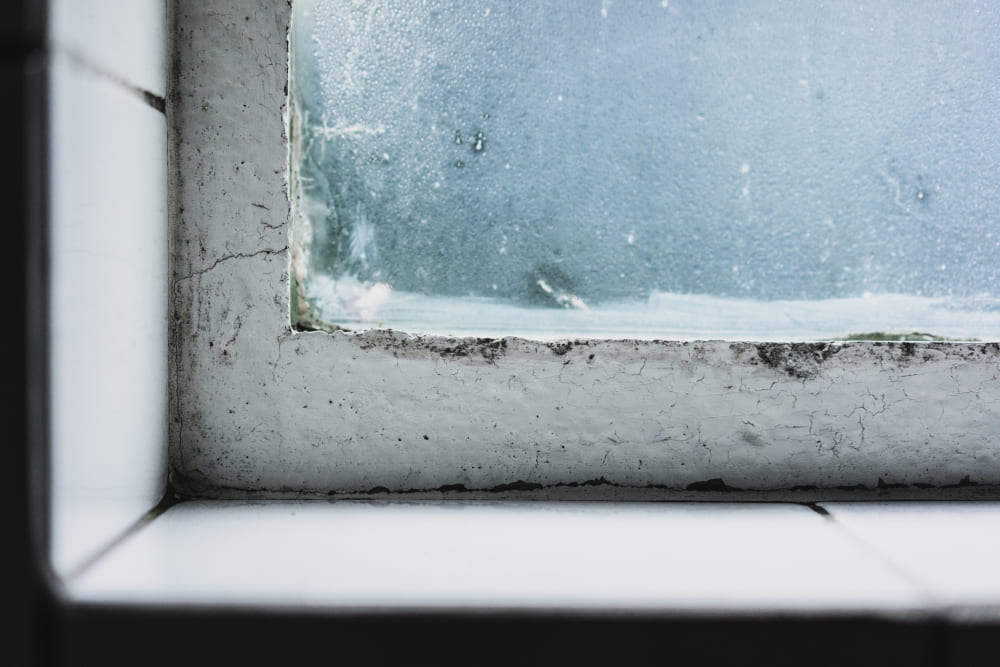
Condensation creates small damp pockets
In winter, the air indoors is warmer than the walls, windows or some floors. When this warm, damp air comes into contact with a cold surface, condensation can form on various surfaces:
- on windows;
- in poorly insulated corners;
- near joints;
- behind or under certain pieces of furniture;
- around pipes;
- in the bathroom after a shower.
A study carried out in several Austrian museums has shown that silverfish are more numerous in areas where floor humidity is higher, particularly due to wet cleaning, condensation or water leaks [4].
Key point: It is not the heating alone that encourages silverfish, but above all heated areas where humidity remains high.
Bathrooms, kitchens, utility rooms: their favourite hiding places
Silverfish like to stay hidden during the day.
They are often found:
- behind skirting boards,
- in cracks, under furniture,
- behind bathroom fittings,
- or near pipes.
The bathroom is a favourite spot for these insects: warmth, steam, low light and plenty of nooks and crannies create an ideal environment. Silverfish also easily find small pieces of organic matter there to feed on.
Kitchens, toilets and utility rooms can also be affected if they remain damp or poorly ventilated.
Is the appearance of silverfish linked to poor hygiene?
No. The presence of silverfish does not mean that your home is dirty.
Even a clean flat or house can therefore harbour them if certain areas remain damp or poorly ventilated. In a block of flats, they can move from one room to another through cracks, service ducts and other passages within the building.
Can silverfish cause damage?

Silverfish feed mainly on materials rich in starch, sugar and cellulose. They can damage paper, cardboard, books and wallpaper.
The damage is usually limited to nibbled edges or small holes.
How can you get rid of silverfish?
Start by identifying what is causing them to stay: condensation, a leak, poor ventilation or a room that is constantly damp. As long as this problem persists, silverfish are likely to return.
Next, vacuum thoroughly along the skirting boards, behind furniture, around bathroom fixtures and in any cracks. Dispose of or empty the dust bag after cleaning.
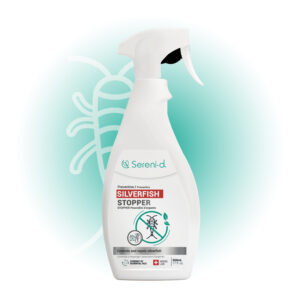
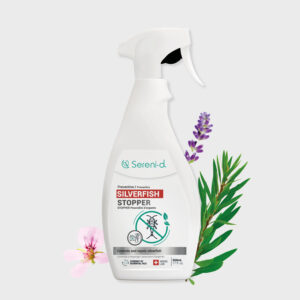
You can then treat the areas where they hide with our silverfish repellent spray. Sereni-d Silverfish STOPPER contains, amongst other ingredients, plant-based pyrethrum, a plant-derived insecticide that is low in toxicity to mammals when used in accordance with the instructions. Like any insecticide, however, it must be used with caution in the presence of pets.


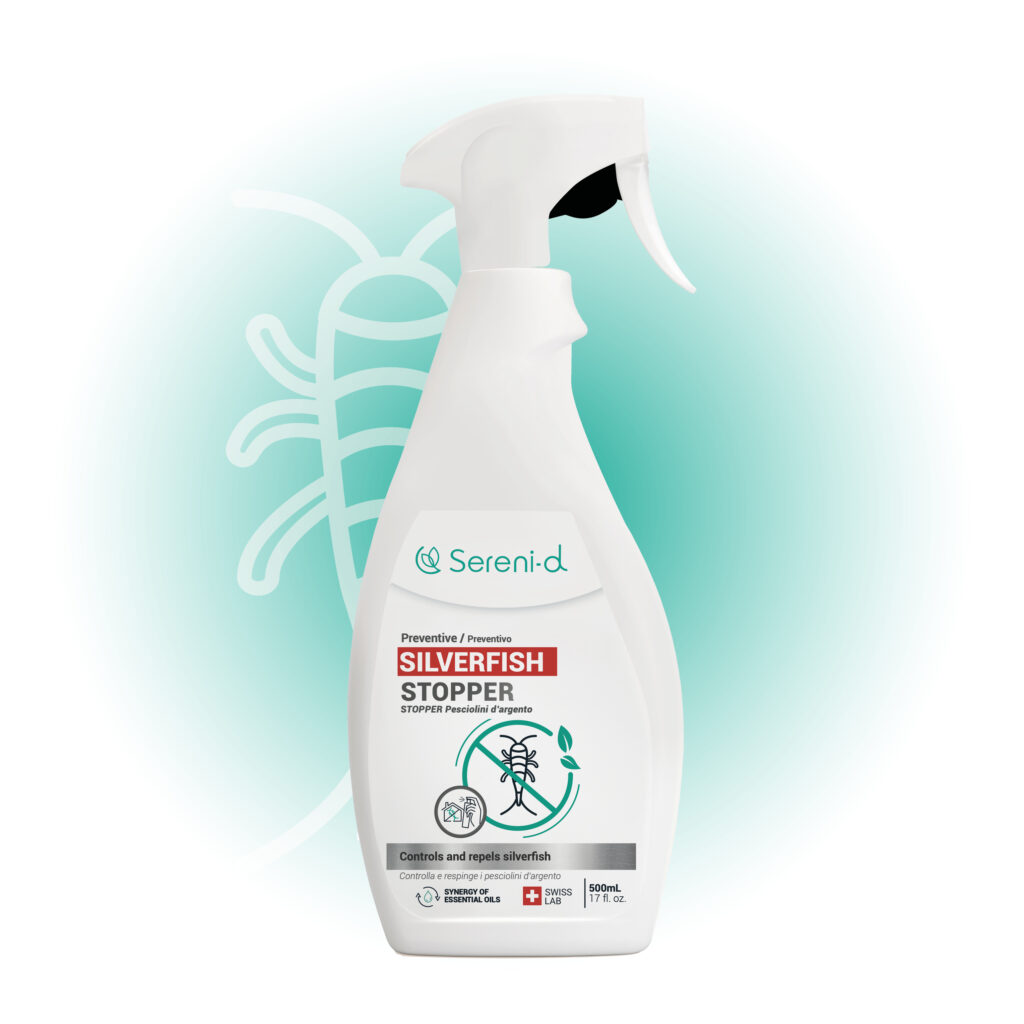
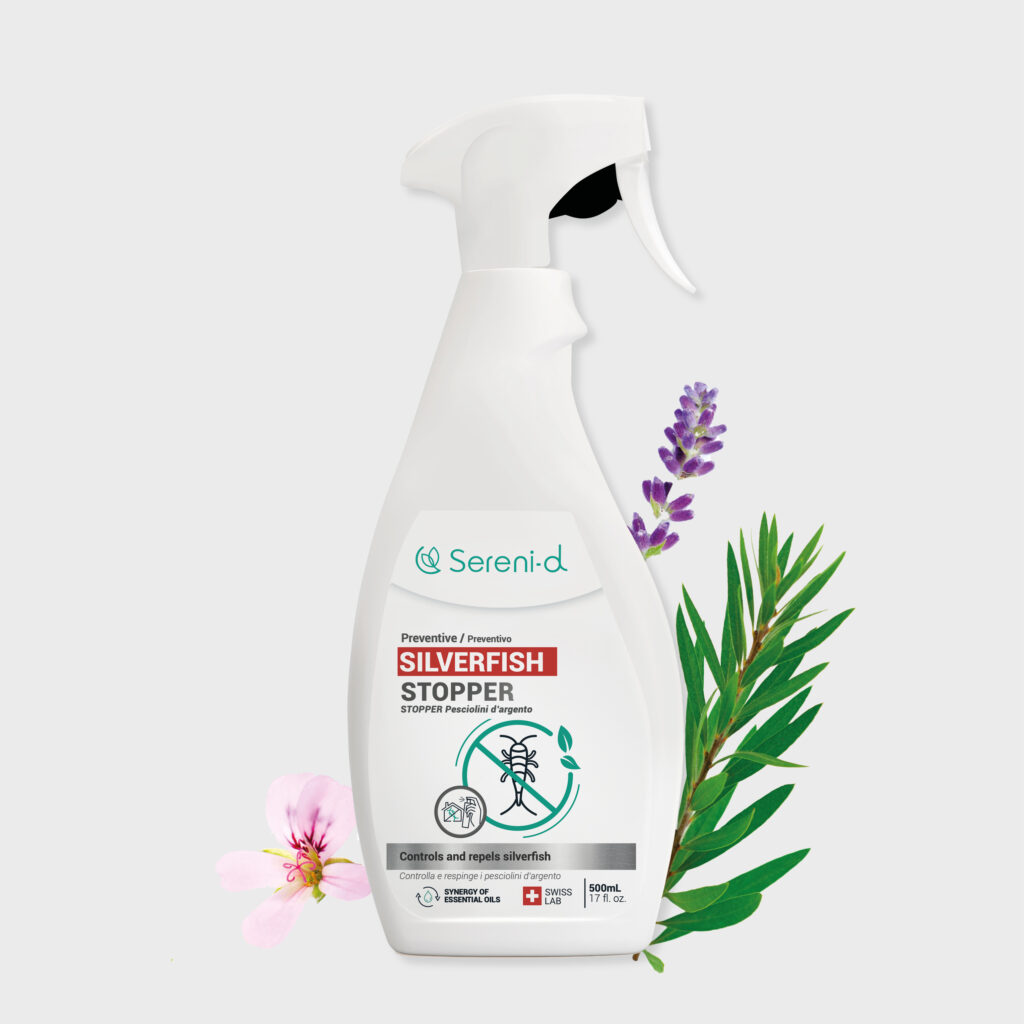


STOPPER Silverfish
• Curative spray against silverfish
• Eliminates 100% of silverfish (eggs, larvae, adults)
• Immediate, safe and long-lasting protection
• Over 250,000 satisfied Sereni-d® customers
CONCENTRATED FORMULA – MAXIMUM RESULT
In stock
Use biocides with care. Before use, read the label and product information.
For a comprehensive guide: How to get rid of silverfish?
How can you prevent silverfish from multiplying in winter?
Reduce humidity
Try to keep your home sufficiently dry and well-ventilated, especially during the winter months.
Some useful everyday tips:
- air your home every day;
- check that the mechanical ventilation system is working properly;
- open the window after a shower whenever possible;
- use the extractor hood whilst cooking;
- avoid drying large amounts of laundry in a poorly ventilated room;
- repair leaks promptly;
- wipe down areas where condensation appears.
It is recommended that indoor humidity be kept below 50 per cent, and sometimes even lower during the colder months to minimise condensation [5].
To measure the humidity level in your home, you can use a hygrometer. These are readily available at low prices, either on their own or as part of a room thermometer.
If the humidity remains too high despite airing and ventilation, a dehumidifier may be useful. It draws in humid air, collects the water in a tank and then releases drier air back into the room.

Get rid of their hiding places
Silverfish like dark, undisturbed places.
So you can:
- seal any cracks and small gaps;
- clean regularly behind furniture and bathroom fixtures;
- avoid storing cardboard boxes for long periods in a damp room;
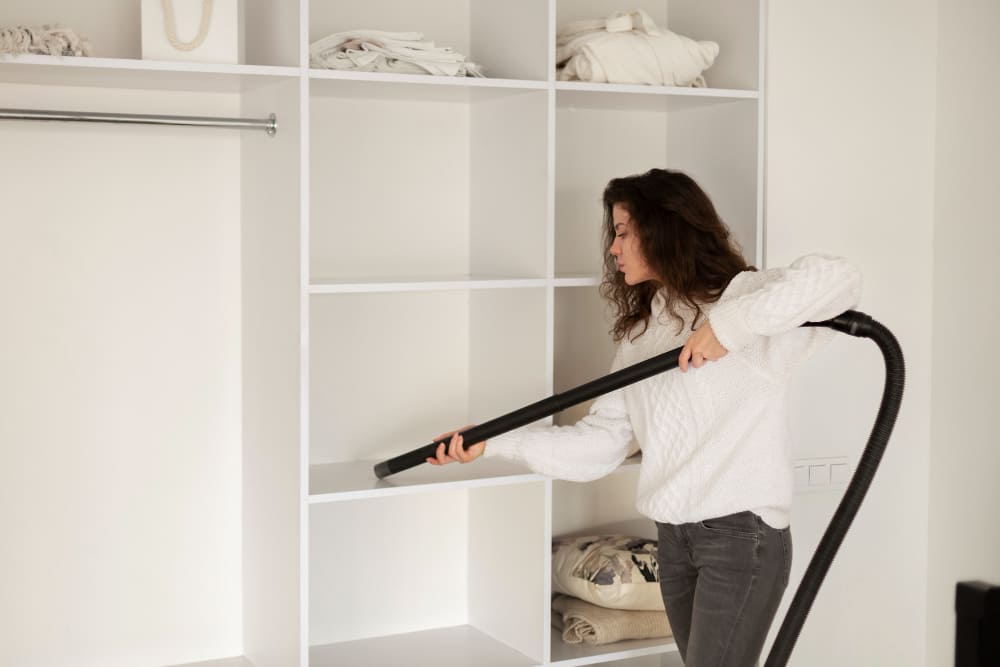
- vacuum along skirting boards and in corners.
What should you do if silverfish keep coming back?
If silverfish keep coming back despite cleaning and treatments,start by checking for a damp problem.
There are certain warning signs to look out for:
- heavy condensation on windows or walls;
- traces of mould;
- a persistent damp smell;
- peeling paint or wallpaper coming away;
- walls that feel cold or damp to the touch;
- water leaks, even minor ones.
In this case, it is best to find and rectify the source of the problem: for example, inadequate ventilation, water ingress, leaks or thermal bridges.
Please note: if these insects persist even though humidity levels are well controlled, they may be a different species of silverfish. Ctenolepisma longicaudatum tolerates low indoor humidity levels better, whilst Ctenolepisma calvum can live in homes heated to room temperature and which are relatively dry [2,3].
References
[5] University of Minnesota Extension. Controlling moisture problems in your home. 2023.
