



With the explosion in tourism and travel, cases of bed bug infestation are becoming increasingly common in holiday lets. Airbnb accommodation is particularly affected, leaving travellers and owners often powerless to deal with the problem. What are the right things to do? Is it possible to get a refund? Who should pay for treatment? Here’s a practical guide to the subject of bed bugs in Airbnb accommodation.
Bed bugs in an Airbnb: key information
- With the increase in travel and use of Airbnb accommodation, bed bug infestations are becoming more and more common.
- Travellers should get into the habit of checking for bed bugs as soon as they arrive at their Airbnb accommodation.
- Avoid placing your luggage directly on the bed or floor to limit the risk of spreading.
- If bed bugs are found, quickly report the problem to the host and Airbnb customer service.
- Airbnb offers a partial or full refund of your stay via AirCover protection, provided you supply proof (photos, videos).
- Hosts must implement a rigorous prevention and treatment protocol, including the intervention of certified professionals.
How do you know if there are bed bugs in an Airbnb?
Before unpacking your bags and enjoying your Airbnb, it’s a good idea to check whether or not the accommodation is infested with bed bugs. Prevention is better than cure! Although these pests are often difficult to spot at first sight, they do leave some characteristic clues.
Here are the steps to follow to detect their presence:
1. Inspect the bed and bedding
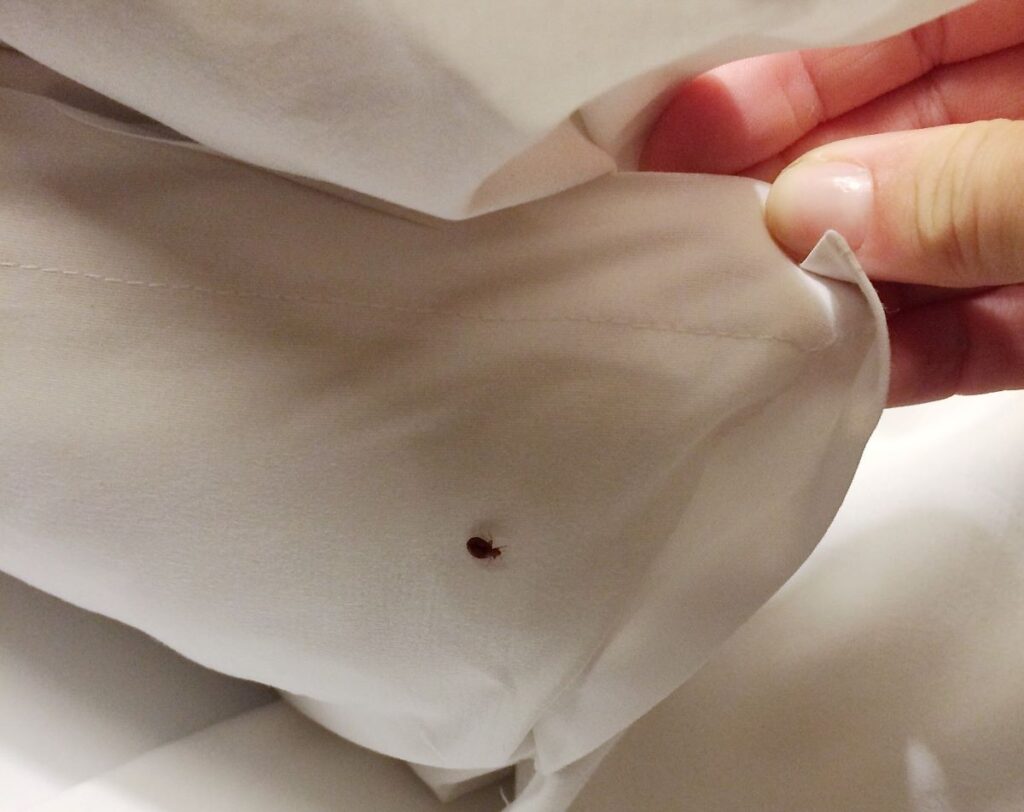
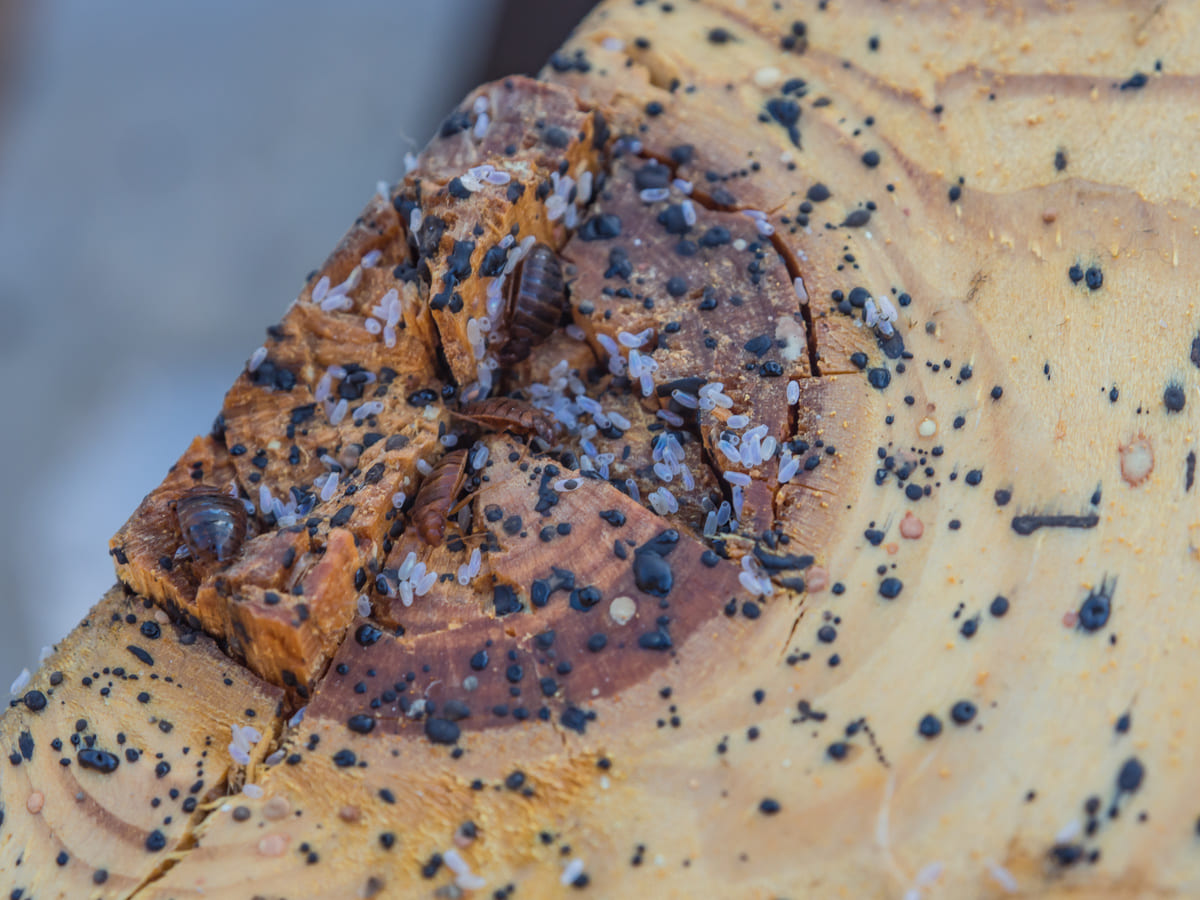
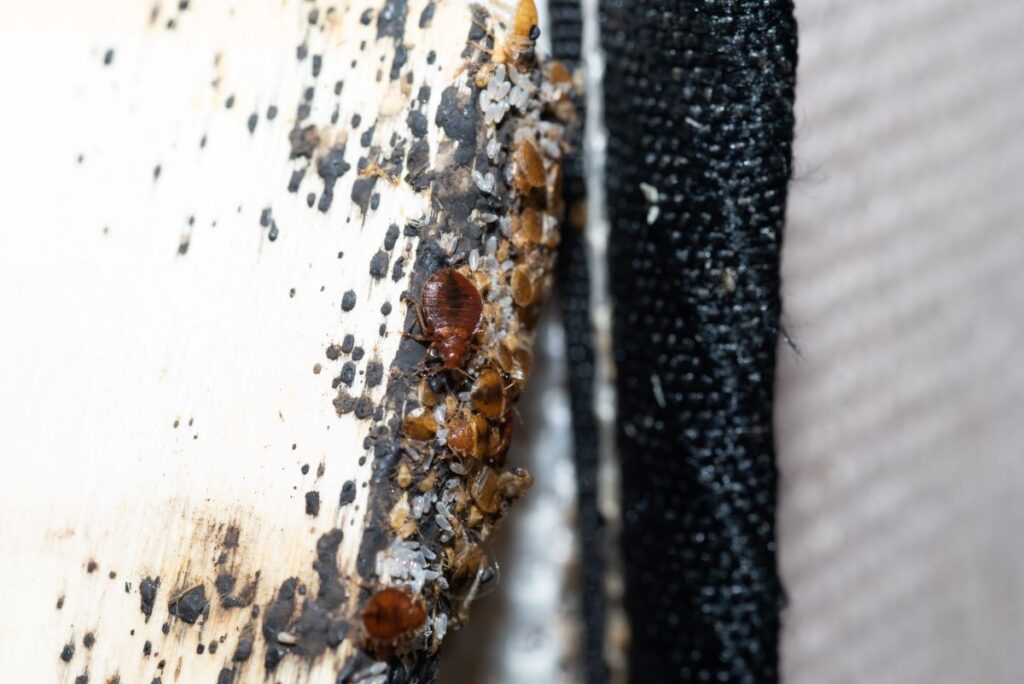
Carefully examine the mattress, sheets, pillows and seams of the bed base. Look for traces of blood, black spots (droppings), whitish eggs or dead skin. Don’t forget to check the headboard and footboards.
2. Check the nooks and crannies
Bed bugs love to hide in cracks, skirting boards or furniture close to the bed. Use your phone’s torch to get a better look.
3. Detect an unusual smell
In the event of a major infestation, bed bugs give off a slightly sweet or musty smell due to their pheromones.
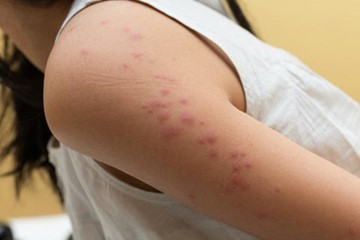
4. Keep an eye on your bites
If you notice bites grouped in rows or clusters on exposed areas of skin during the night, bed bugs are very likely to be present. These bites often cause intense itching.
In principle, bed bug bites are not dangerous to health, but they can cause allergic reactions.
What to do in the event of an infestation
Discovering bed bugs in an Airbnb can be very stressful. Don’t panic, here’s what you need to do to limit the damage.
Report the problem immediately
Contact your host and Airbnb customer service as soon as you suspect the presence of bed bugs. Take photos of any visible marks (black spots, bedbugs, eggs) and bites on your skin to support your report. Transparency is essential to avoid other travellers being affected as well.
Contact Airbnb user support
The Airbnb platform offers assistance for travellers.
You can contact them by e-mail, online chat or telephone on +33 1 84 88 40 00.
Good to know: every booking on Airbnb includes AirCover protection, which means that in the event of a serious problem, you will be offered similar accommodation, subject to availability and at a comparable price.
Don’t move your luggage
Avoid placing your luggage on the floor, bed or surfaces close to infested areas. Place it on a metal support, such as a luggage rack, or in the bathroom, where bedbugs have fewer hiding places. In any case, up high! And lock your luggage at night.
Protect your personal belongings
Put your clothes and personal belongings in airtight plastic bags to keep bedbugs out. If you have any doubts, wash your clothes (worn or not) immediately at a minimum temperature of 60°C or freeze them at -18°C for at least 48 hours.
Inspect and clean your luggage
Before leaving your home, thoroughly inspect your suitcases and bags. Use a hoover to remove any eggs or bedbugs. Empty the contents of the hoover into an airtight bag and dispose of it outside.
Avoid carrying bedbugs home
When you return, take precautions to avoid contaminating your home. Unpack your luggage outside or in a tiled room that’s easy to clean, or even in your bathtub. Put your clothes in a tumble dryer at high temperature or use a steam cleaner on your luggage and textiles.
Don’t sleep in another bed in your home
Changing beds or rooms can worsen the infestation by dispersing bed bugs throughout the accommodation. It’s best to stay in the infested room until the host takes action.
Request a change of accommodation
If the infestation is confirmed and the host cannot resolve the problem immediately, ask to be rehoused.
➡️ Also worth reading: Bed bugs in hotels
Precautions to take when travelling
To avoid bringing bed bugs home with you after a stay in an Airbnb or other accommodation, here are the preventive measures to take before, during and after your trip.
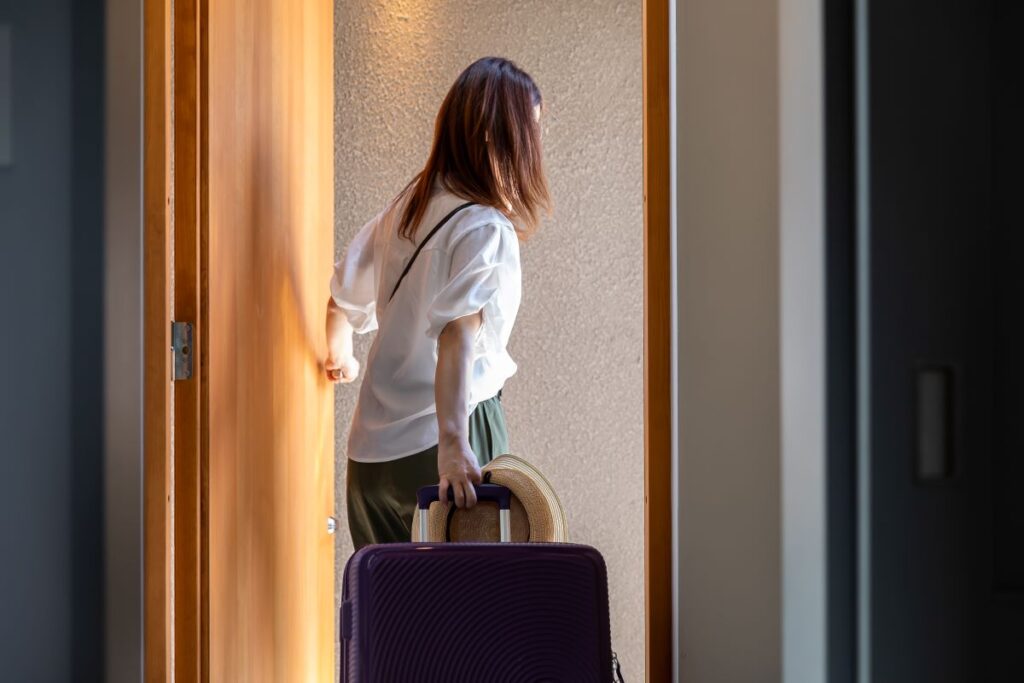
Before you arrive
- Check the latest notices
- Prepare your bedbug repellent kit: Take along airtight plastic bags, a natural repellent spray (such as pyrethrum-based sprays), a repellent leaflet and, if necessary, adhesive traps.

SHIELD Bed bug repellent treatment
21,90 €
- Preventive spray against bed bugs
- Preventive bed bug repellent
- Safe, long-lasting protection
- Over 250,000 satisfied Sereni-d® customers .
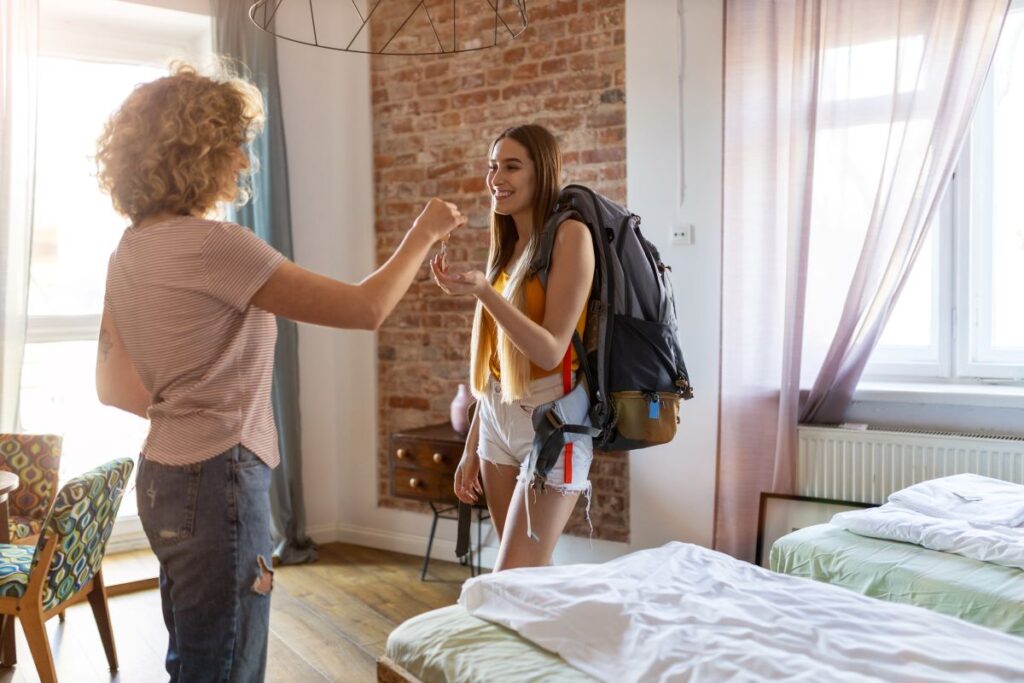
During your stay
- Avoid placing your luggage on the bed or floor
- Inspect bedding and furniture
- Store your belongings in airtight bags
- Use bed bug repellents
Before going home
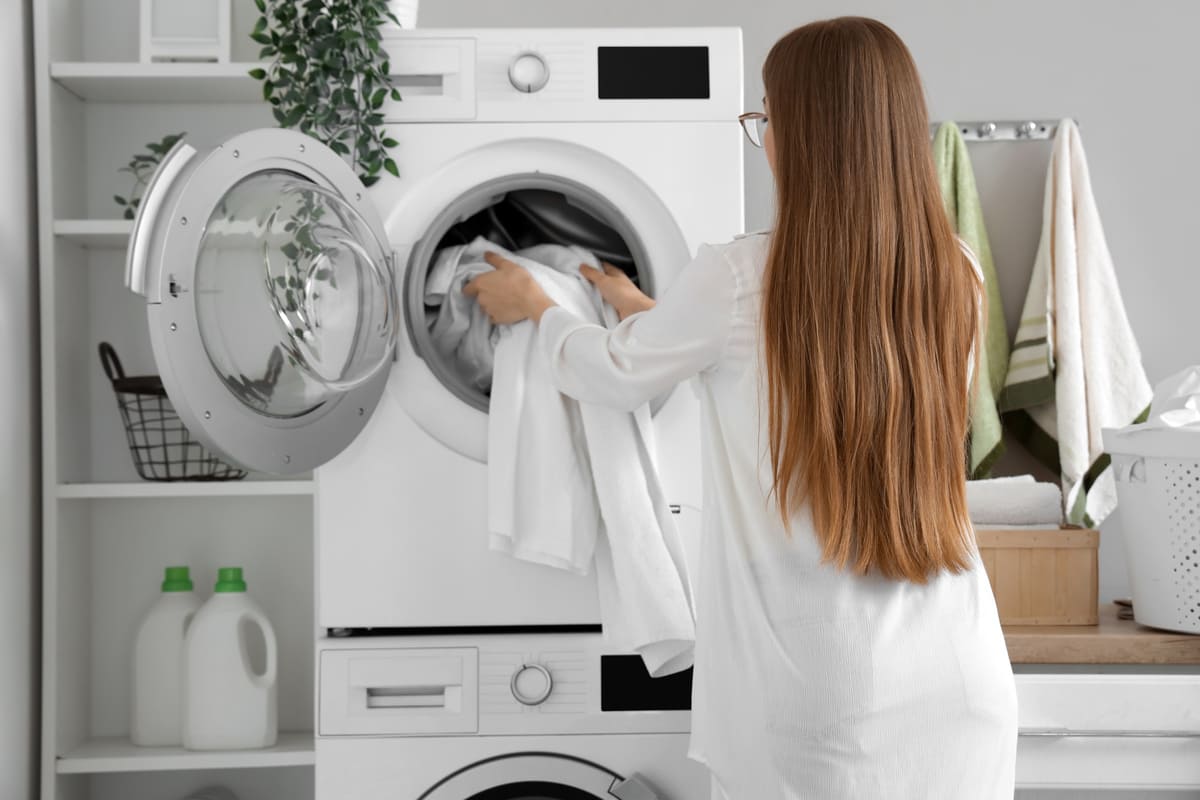
- Wash your clothes at a high temperature: Run your clothes at 60°C minimum or tumble dry to kill any bedbugs or eggs.
- Inspect your luggage: Check the seams, folds and pockets to make sure no bedbugs have infiltrated. Vacuum your luggage and empty the bag into an outside bin.
- Put your luggage in the freezer if necessary: If you have any doubts, leave your luggage in a freezer at -18°C for 48 hours to eliminate any parasites.
Once you’re home
- Unpack your suitcases outside
- Never put your luggage on or near your bed
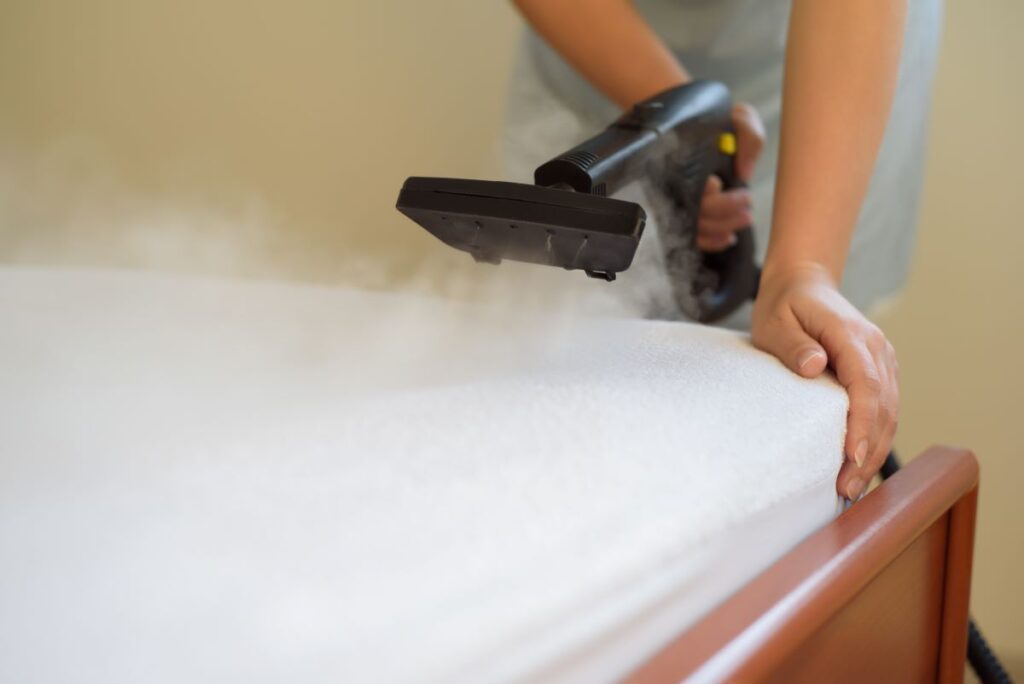
- Use a steam cleaner: steam dry your luggage, textiles or other objects to disinfect them completely.
Bed bugs in an Airbnb: can you claim a refund?
Refunding your stay
If bed bugs are found in your Airbnb, you are entitled to a full or partial refund of your stay.
Here’s how to proceed:
- Report the problem immediately within 72 hours of discovering it.
You can contact Airbnb user support by email, online chat or by phone on +33 1 84 88 40 00.
- Provide proof: photos or videos.
Good to know: In principle, the owner is obliged to provide pest-free accommodation. In the event of a proven infestation, payment will therefore be cancelled in full or in part.
Reimbursement of medical expenses
Medical consultations, antihistamines or antiseptic ointments – bed bug bites can cost money. Here again, travellers can request reimbursement of these costs.
Airbnb owners: what to do if your accommodation is infested by bed bugs
The use of Airbnb accommodation by French and foreign travellers automatically increases the risk of contamination. It should be remembered that the presence of these pests is in no way linked to a lack of hygiene.
➡️ For further information: The complete protocol against bed bugs.
Here’s what landlords should do if they find bed bugs in their Airbnb rental property.
Schedule a specialist response
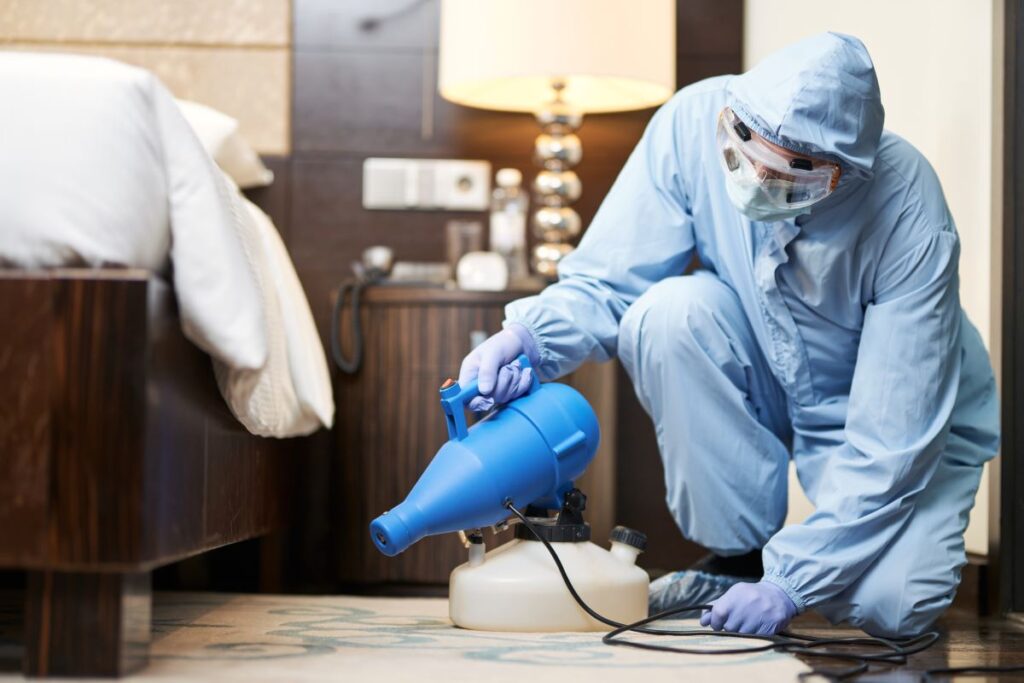
Airbnb can help you coordinate the services of a company specialising in bed bug treatment. Dog detection is also a very effective method.
For the owner, this inspection is covered financially by Airbnb up to a maximum of €300 inc VAT.
The professional who carries out the inspection in your Airbnb property must provide you with a detailed report following the inspection.
Carry out appropriate treatment
In the event of an advanced infestation, chemical treatment against bed bugs is necessary.
We recommend that you use a service provider with Certibiocide accreditation (certifying that technicians are properly trained to handle powerful insecticides). To avoid fraudulent intervention, here is a map of approved professionals.
The company must undertake to spray a minimum of 2 times, approximately 15 days apart. A second pass allows the insecticide to act on the young bedbugs after the eggs have hatched.
Does home insurance cover bed bug treatment?
The extent to which home insurance covers bed bug treatment varies from policy to policy and from company to company. Generally speaking, standard home insurance policies do not cover the cost of eradicating pests, including bed bugs, as these operations are considered to be part of routine home maintenance.
You should therefore check the clauses of your home insurance policy and contact your insurer to find out whether such cover is included or can be added.