



Have you spotted one or more cockroaches in your home? Don’t panic – here’s everything you need to know and the right steps to take. In this article, we’ll help you recognise a cockroach, spot the signs of an infestation and understand when you need to take action. You’ll also learn the differences between adult cockroaches, baby cockroaches and eggs, making it easier to assess the situation in your home.
Key information
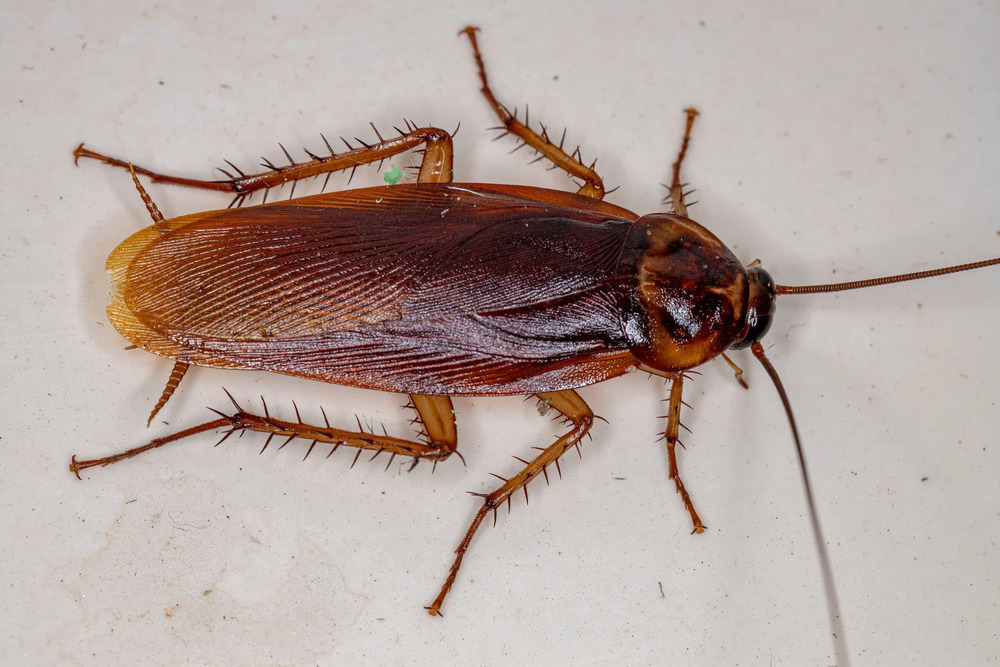
➡️ An adult cockroach usually has a brown to black body, long antennae and moves very quickly.
➡️ Seeing a cockroach in broad daylight is often a sign of an already significant infestation.
➡️ The presence of nymphs (baby cockroaches), eggs, moulted skins or droppings indicates that cockroaches are breeding in the home.
➡️ House cockroaches seek out food, moisture and warmth, particularly in kitchens and bathrooms.
➡️ Although they very rarely bite, cockroaches can carry bacteria and cause allergic reactions in some people.
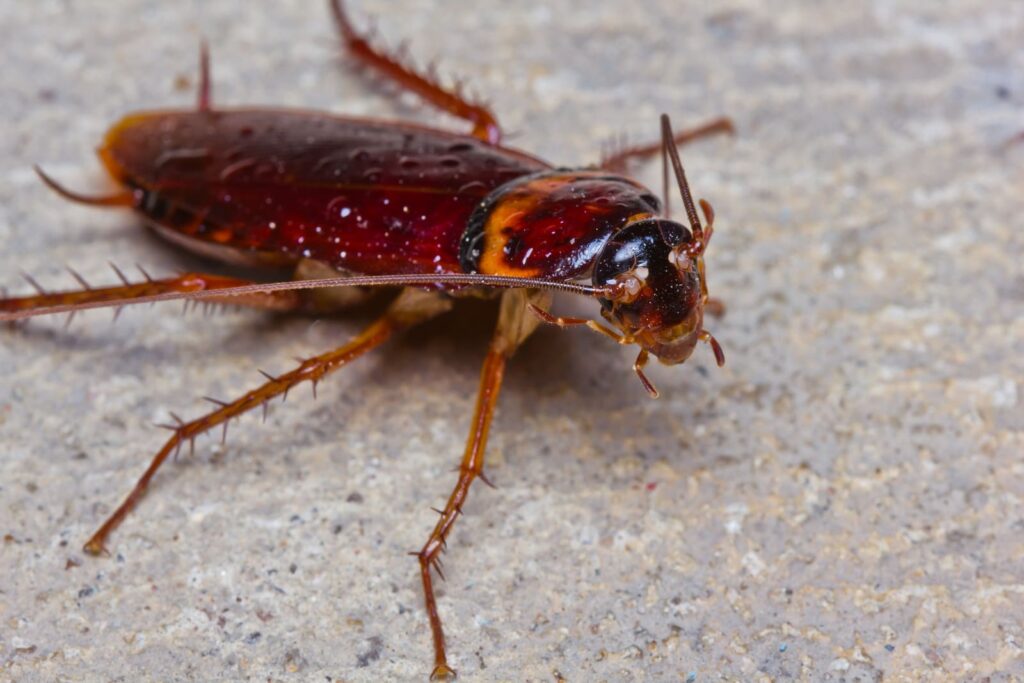
What does a cockroach look like?
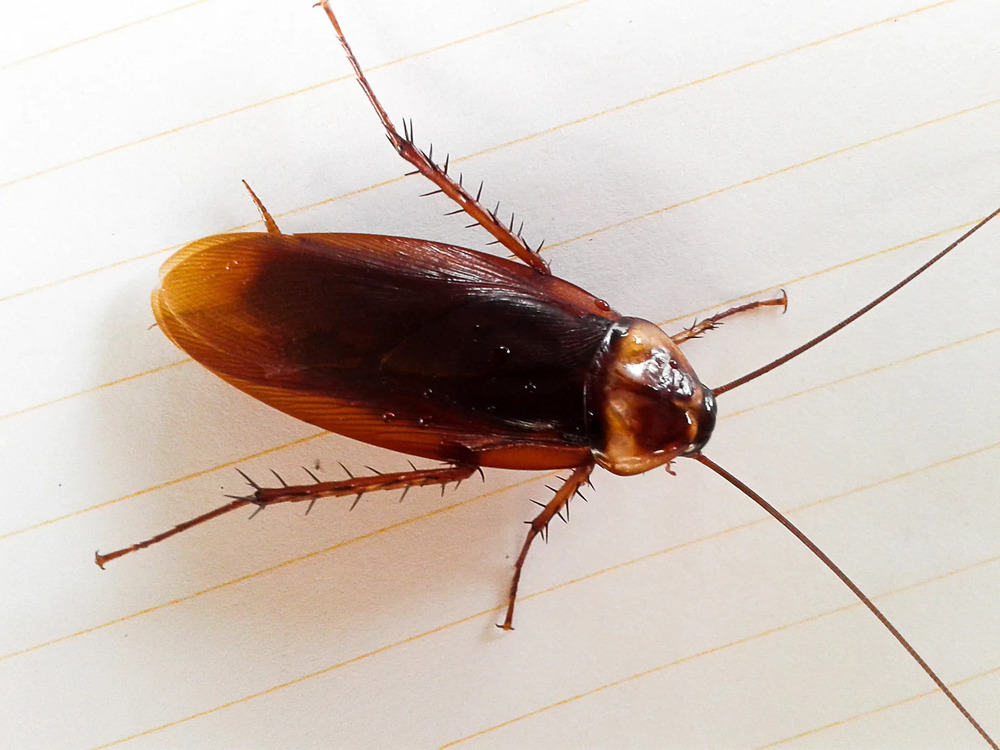
Here are the characteristics of an adult cockroach:
- colour ranging from light brown to black;
- sometimes a reddish appearance, depending on the species;
- long, slender antennae at the front of the head;
- a flattened body that allows it to squeeze into the tiniest cracks;
- six legs that enable it to move quickly.
When disturbed, this pest immediately seeks out a dark hiding place. Because it moves so quickly, it is not always easy to identify it correctly.
There are several species around the world. In France, the most common are:
- the American cockroach
- the German cockroach
- the Oriental cockroach
- and the flying cockroach
How big is a cockroach?
The size varies greatly depending on the species.
The smallest cockroaches are only a few millimetres long, whilst some species can grow to over 3–4 cm in length as adults.
👉The younger a cockroach is, the smaller it is. Baby cockroaches (known as nymphs) are often mistaken for other insects because of their small size.
Where do cockroaches hide in a house?
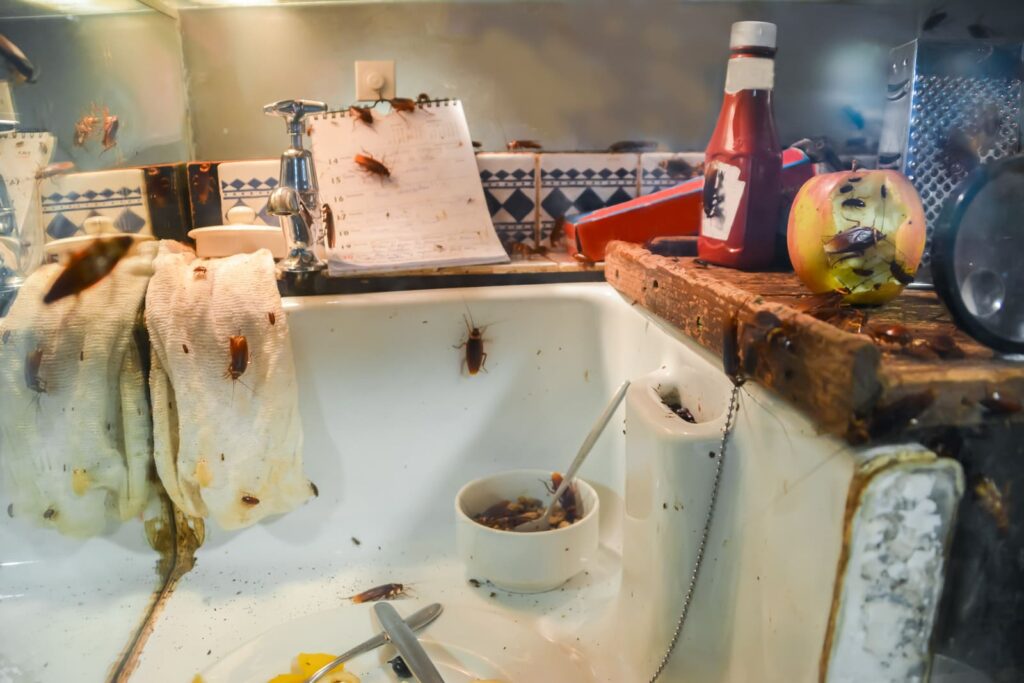
Cockroaches seek out warm, damp places close to a food source.
They are often found:
- in the kitchen;
- in the bathroom;
- behind the fridge;
- under furniture;
- near pipes;
- behind household appliances;
- in cupboards or under the sink.
Good to know: they are mainly active at night. If you switch on the light and a brown insect scurries off to hide, it is often a cockroach.
Cockroach: what’s the difference?
👉 The terms ‘cockroach’ and ‘blatte’ refer to the same insect.
The word cafard is the one most commonly used by the general public, whilst blatte is the scientific term used to refer to insects belonging to the order Blattaria (cockroaches).
What is a German cockroach?
There are several species of cockroaches, but some are much more common in homes than others.
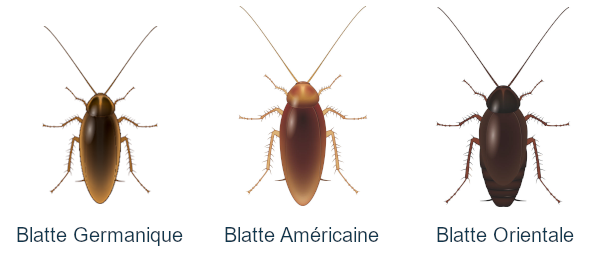
The most widespread is the German cockroach (Blattella germanica), a small, light-brown cockroach particularly well-suited to indoor life. It thrives in kitchens, bathrooms and warm places near food.
We also find:
- the Oriental cockroach (Blatta orientalis), which is darker in colour and often found in cellars or damp areas;
- the American cockroach (Periplaneta americana), which is larger and less common in French homes.
The life cycle of a cockroach: eggs / nymphs / adults
Cockroach eggs
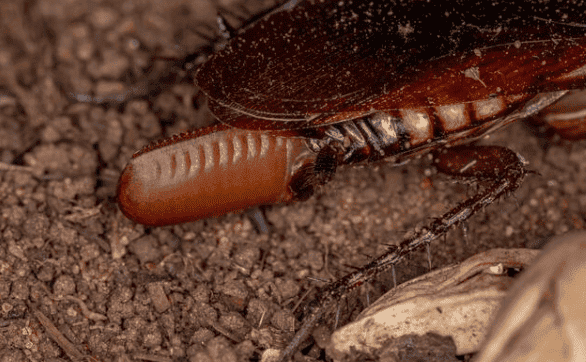
Cockroach eggs are not visible individually. The female groups them together in a protective capsule called an ootheca, which she carries or deposits in a hidden place before hatching (incubation period of between 20 and 28 days).
This ootheca resembles a small, elongated, oval-shaped capsule:
- colour: light brown to dark brown;
- size: approximately 5 to 10 mm depending on the species;
- appearance: rigid capsule with small ridges visible along its entire length;
- shape: similar to a small coffee bean or an elongated shell.
Good to know: a female cockroach can lay between 100 and 300 eggs in her lifetime.
Nymphs
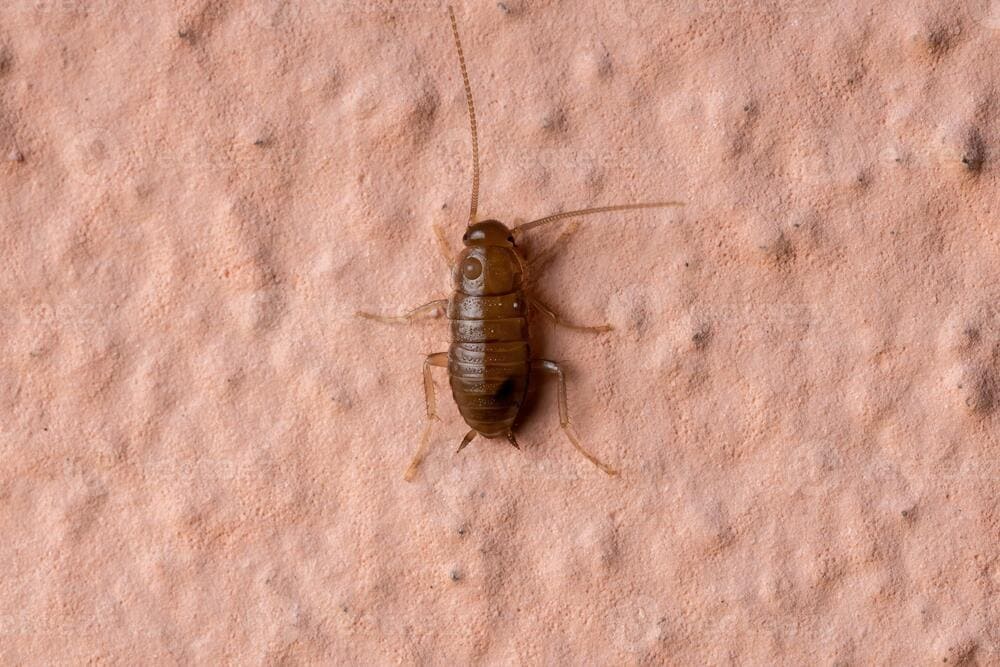
Unlike flies or butterflies, cockroaches do not have a larval stage. After hatching from the egg, the young cockroach already resembles a miniature adult. This is known as a nymph.
A nymph has the same characteristics as an adult cockroach, but with a few differences:
- it is much smaller;
- its wings are not yet developed;
- its colour is often darker;
- its body is slimmer and less robust.
Depending on its age, it may measure just a few millimetres, which sometimes makes it difficult to spot. As it grows, the nymph will undergo several successive moults before reaching its adult size.
It is easy to mistake a young cockroach for other small household insects.
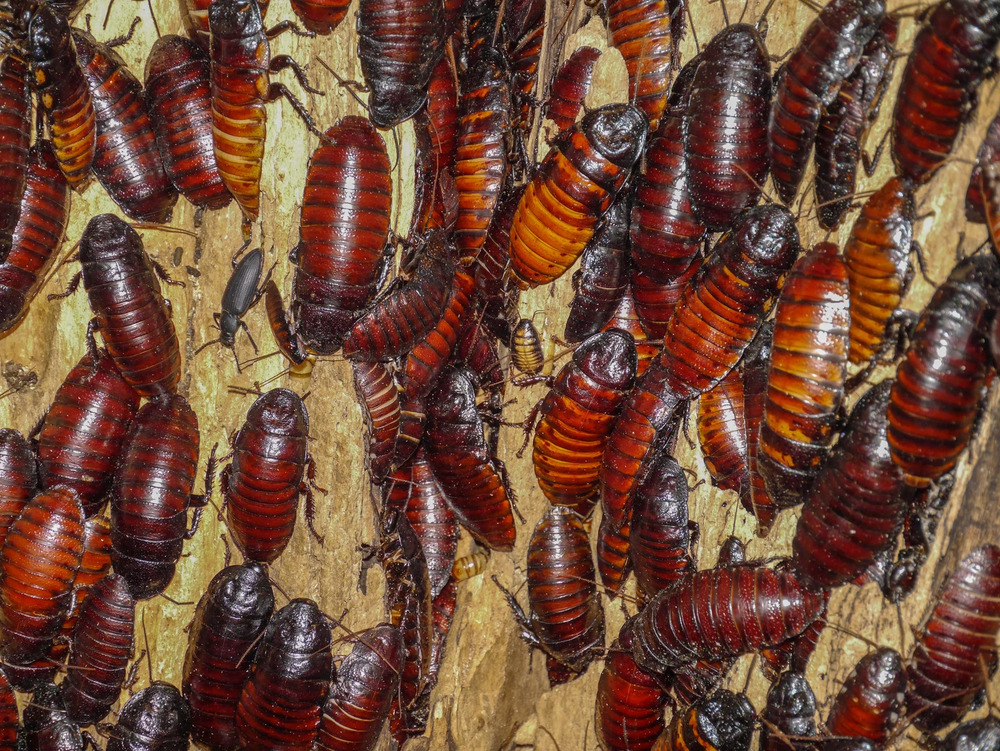
⚠️ The presence of nymphs is generally a bad sign. It means that eggs have recently hatched in your home and that cockroaches are actively breeding nearby. In other words, this is no longer a single cockroach that has wandered in by chance, but often an established infestation.
Can a cockroach be on its own?
Yes, a cockroach can sometimes be on its own in the following situations:
- A garden cockroach may have accidentally entered through an open window or door.
- A cockroach may have come from a neighbouring flat in a block of flats.
- It may be the first visible sign of an infestation that is just beginning.
The problem is that cockroaches are very discreet insects and mainly nocturnal. If you see one, it is possible that others are already hiding behind appliances, under furniture or near pipes.
Let’s now look at the signs of an infestation.
What are the signs of a cockroach infestation?
| Signs of infestation | What does it look like? | Alert level |
| Cockroaches visible in the home | Cockroaches are seen in the kitchen, the bathroom or near the pipes, mainly at night. | ⚠️ If you see them regularly, an infestation is likely. |
| Cockroaches visible during the day | Insects are still about even when the light is on. | 🚨 This is often a sign of a serious infestation: the hiding places are full to bursting. |
| Cockroach droppings | Small black specks resembling coffee grounds or ground pepper. | ⚠️Indicates that there are cockroaches in the vicinity. |
| Shed skins (exuviae) | Empty shells left behind by young cockroaches as they grow. | ⚠️ A sign that cockroaches are breeding in the home. |
| Eggs (oothecae) | Small, brownish capsules, 5 to 10 mm in size, containing several eggs. | 🚨Indicates active reproduction and an established colony. |
| Unusual smell | A lingering, slightly oily or unpleasant smell that is difficult to identify. | 🚨 Often seen in cases of advanced infestation. |
Are cockroaches a health hazard?
Having cockroaches in the house is not only unpleasant, but it can also pose certain health risks.
Do cockroaches bite?
Cockroach bites are extremely rare. Unlike mosquitoes, fleas or bed bugs, cockroaches do not feed on human blood. The main risk is therefore not the bite itself, but the bacteria and allergens they carry.
What are the health risks?
As they move through rubbish, sewers or pipes, cockroaches can carry microorganisms on their bodies and legs.
In particular, they can:
- contaminate food;
- soil worktops and kitchen utensils;
- spread certain bacteria;
- leave droppings in areas of infestation.
This is why a cockroach infestation must be taken seriously, particularly in kitchens and restaurantsnts ou les lieux où les aliments sont stockés.
What are the risks for children and vulnerable people?
Cockroaches can also produce allergens found in their droppings, shed skins and bodily debris.
In such cases, some people may experience allergic reactions, respiratory irritation or even a worsening of asthma symptoms.
Young children, the elderly and those already suffering from respiratory problems are generally the most vulnerable.
👉 The more severe and long-standing the infestation, the greater the amount of allergens present in the home. Prompt treatment is essential.

Black cockroaches, white cockroaches, flying cockroaches: should you be worried?
The black cockroach
The term ‘black cockroach’ generally refers to darker species, such as the Oriental cockroach.
These cockroaches are often:
- very dark brown to black;
- slightly larger than the German cockroach;
- found in cellars, basements or damp areas.
👉 Black cockroaches pose the same health risks as other species.
The white cockroach
This white colour is due to a natural phenomenon: cockroaches temporarily turn white after moulting. Their new shell has not yet had time to harden and take on its usual colour. This phase lasts only a few hours before the insect regains its brown or black hue.
Flying cockroaches
Yes, certain species of cockroach can fly or glide short distances.
This is particularly the case with certain large cockroaches that have well-developed wings.
Rest assured, a flying cockroach is no more dangerous than any other. It does not bite, is not aggressive and does not seek to attack humans.
Garden cockroach or house cockroach: how can you tell the difference?
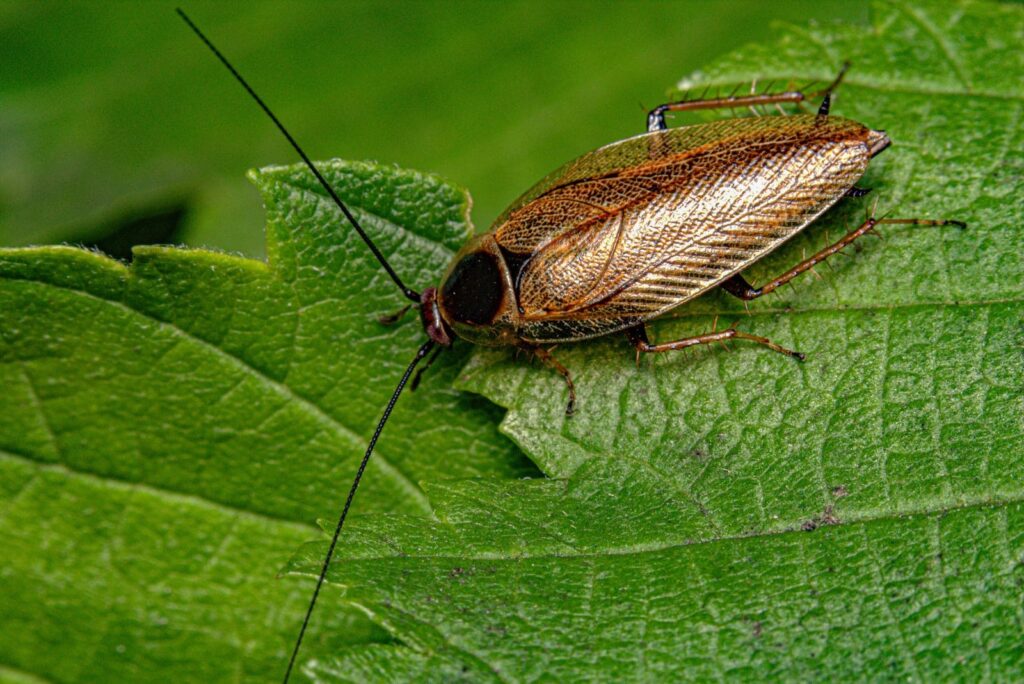
Garden cockroaches
Garden cockroaches naturally live outdoors, in green spaces, under dead leaves, wood or in damp areas. They are attracted to light and can fly.
They are often:
- drawn to the light from windows and patios;
- seen near gardens, balconies or around the edges of houses;
- occasionally found indoors.
👉 If you find a single cockroach near an open window or a door leading outside, it may simply be a garden cockroach that has wandered in by chance.
House cockroaches
House cockroaches, such as the German cockroach, behave very differently. They prefer dark, warm and damp places and are mainly active at night. Unlike garden cockroaches, they are able to reproduce indoors and quickly form a colony.
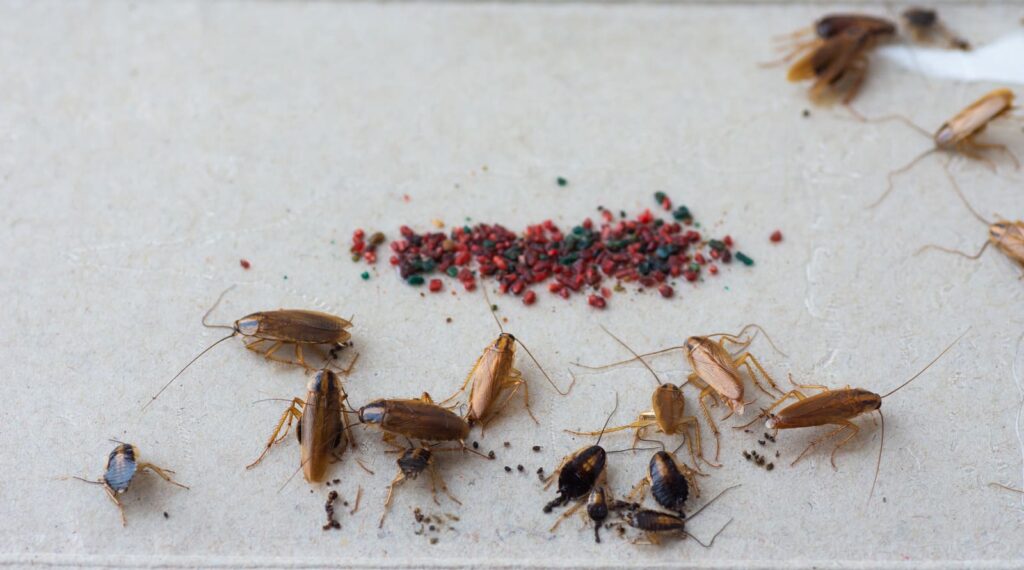
Which insects look like a cockroach?
Have you spotted a small brown insect in your home? Is it a cockroach? Here are some insects that may look similar and be mistaken for one.
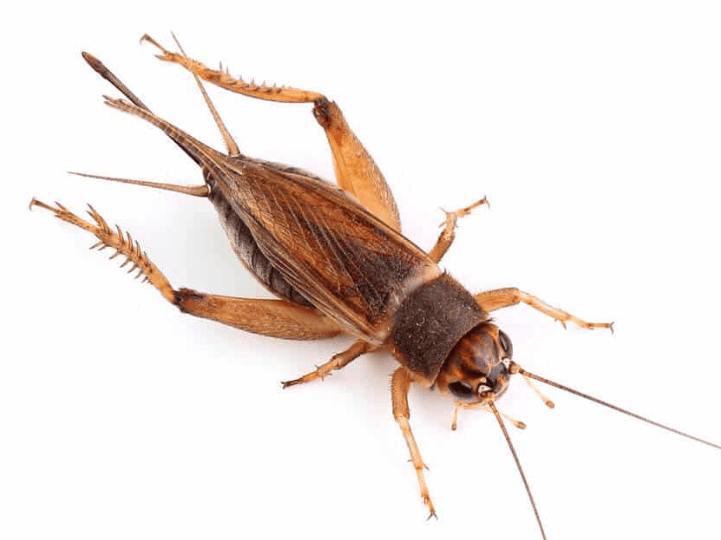
The cricket
The cricket is brown in colour and can resemble a cockroach.
The main difference is that it has:
- long hind legs adapted for jumping;
- a more cylindrical body;
- the ability to jump, unlike the cockroach.
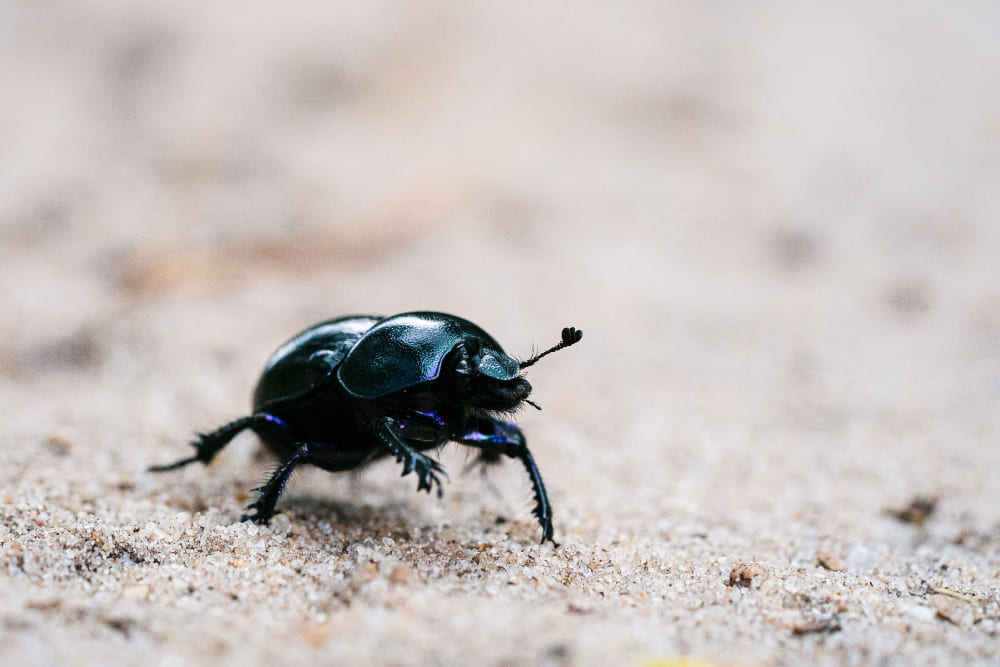
The black beetle
Some species of beetle can resemble small black cockroaches.
Unlike cockroaches, their bodies are generally more rounded and their elytra (hard wings) are clearly visible.
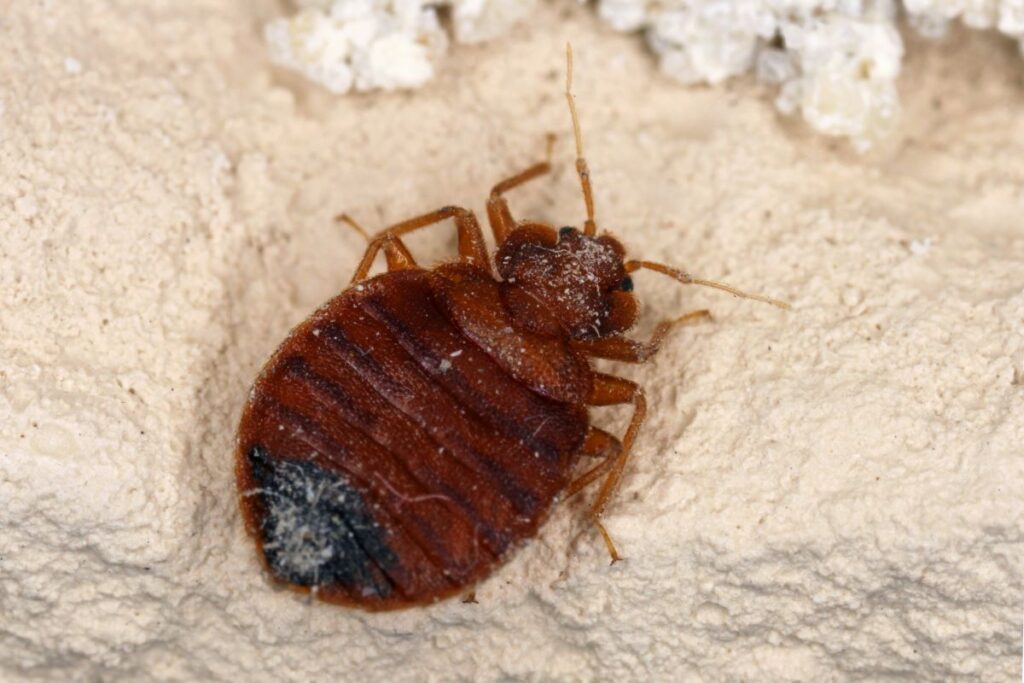
Bed bugs
Some species of beetle can resemble small black cockroaches.
Unlike cockroaches, their bodies are generally more rounded and their elytra (hard wings) are clearly visible.
👉 The most distinctive features of a cockroach are its flattened body, long antennae and ability to move very quickly.
How can I get rid of cockroaches in my home?
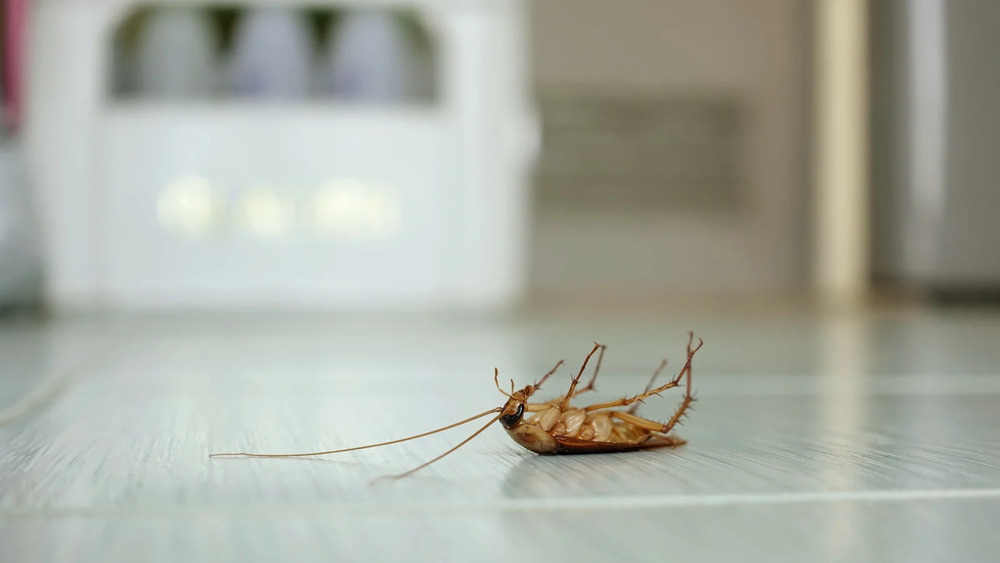
If you suspect an infestation, it is important to act quickly. Start by giving your home a thorough clean to remove any sources of food and water that attract cockroaches (and don’t leave dirty washing up lying around either!). Also remember to fix any leaks and store food in sealed containers.
⚠️You shouldn’t squash a cockroach. This can spread bacteria and, more importantly, scatter the eggs if it’s a female.
There are several ways to treat an infestation:
- anti-cockroach gels, which are particularly effective against colonies;
- monitoring or bait traps;
- suitable insecticides;
- calling in a professional in the event of a severe or recurring infestation.
👉 To find out about all the effective solutions and which treatment to choose, check out our guide:How to get rid of cockroaches for good?
FAQ
How can I tell if I have cockroaches in my home?
Does a single cockroach mean there’s an infestation?
What attracts cockroaches into a house?
Do cockroaches come out during the day?
How can you tell if it’s a cockroach dropping?
What is the difference between a baby cockroach and an adult?
Can cockroaches fly?
Are cockroaches dangerous to humans?
Where do cockroaches lay their eggs?
Should you squash a cockroach?
