



Have you found a wasp nest near your home? To avoid being stung and to prevent a colony from taking up residence, you need to take the right steps. Treatments and traps for nests, professionals to contact, advice on how to relieve and treat a sting, and preventative measures – here are the truly effective solutions for dealing with wasps.
In summary
➡️ If you discover an active nest, do not touch it and never block its entrance. Keep your distance and call in a professional if necessary.
➡️ Traps and repellents can temporarily reduce the number of wasps, but they cannot eliminate an established colony.
➡️ Removing a nest usually costs between €90 and €180 including VAT, or more if access is difficult or requires specialist equipment.
➡️ After being stung, clean the area, apply a cold compress and monitor how you feel. If you have difficulty breathing, feel unwell or experience a severe reaction, call 15 or 112 immediately.
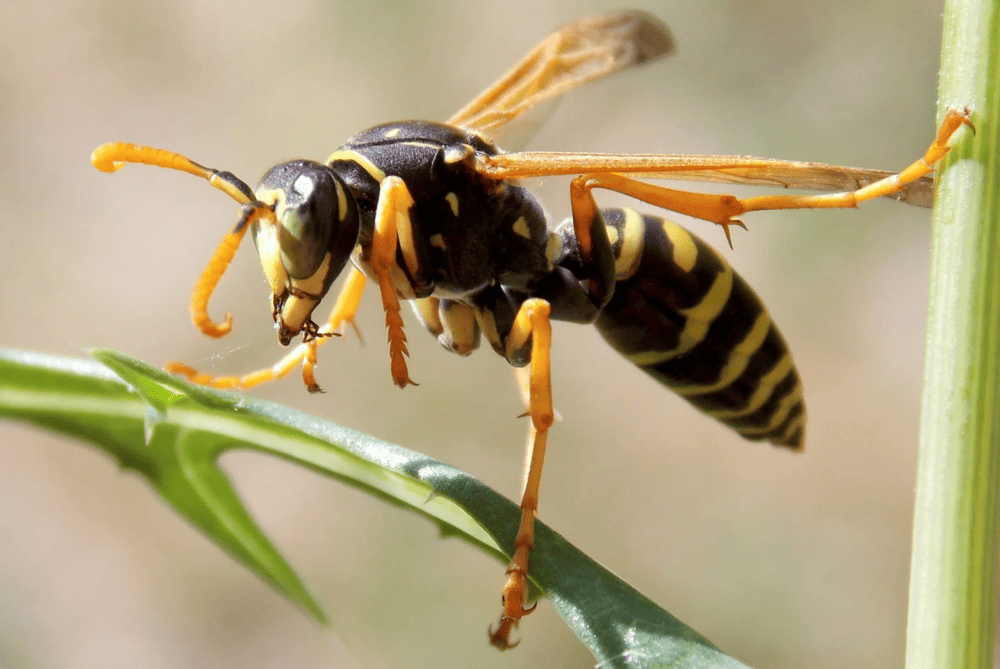
What should you do if you have wasps in your home?
Don’t worry – a few wasps flying around your patio or in your garden don’t necessarily mean there’s a nest nearby. They’re looking for food or water, especially in summer.
If wasps approach you, here’s how to react:
- pick up any ripe fruit that has fallen on the ground
- stay calm and avoid sudden movements
- cover food and sugary drinks
- clean up any leftover food quickly
- keep bin lids tightly closed
How can you keep wasps away from a patio?
👉 The simplest thing to do is to remove whatever attracts them. Clear the table quickly after a meal, wipe down any sticky surfaces and close any bottles or tins. Wasps love sugar.
Why do wasps always return to the same place?
Wasps return when they can easily find food. A bin that isn’t properly closed, fruit that has fallen on the ground, a compost heap or sugary drinks left outside are enough to attract them.
If you notice them following the same routes day after day, there’s probably a nest nearby.
See also: A practical guide to identifying different types of wasps.
What should you do if you discover a wasp nest?
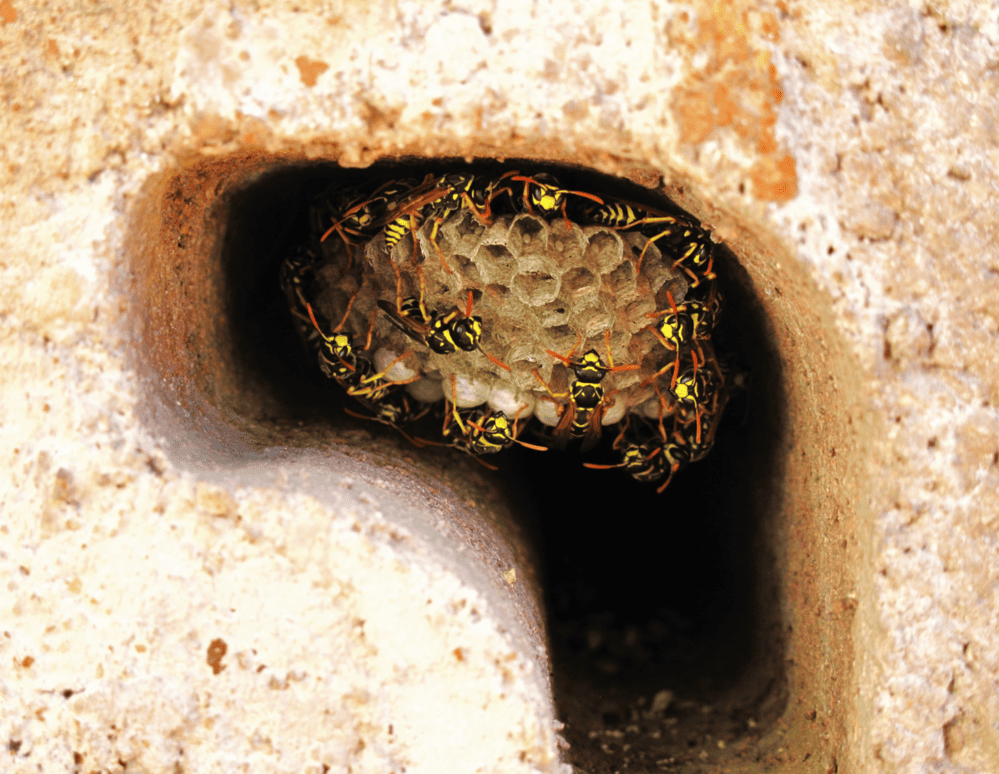
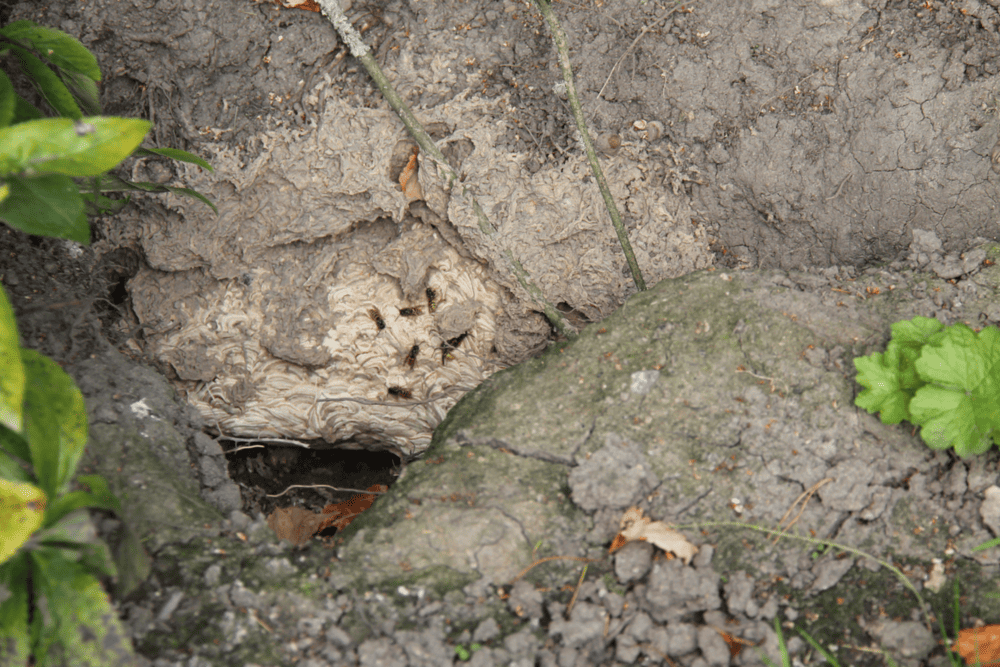
What does a wasp nest look like?
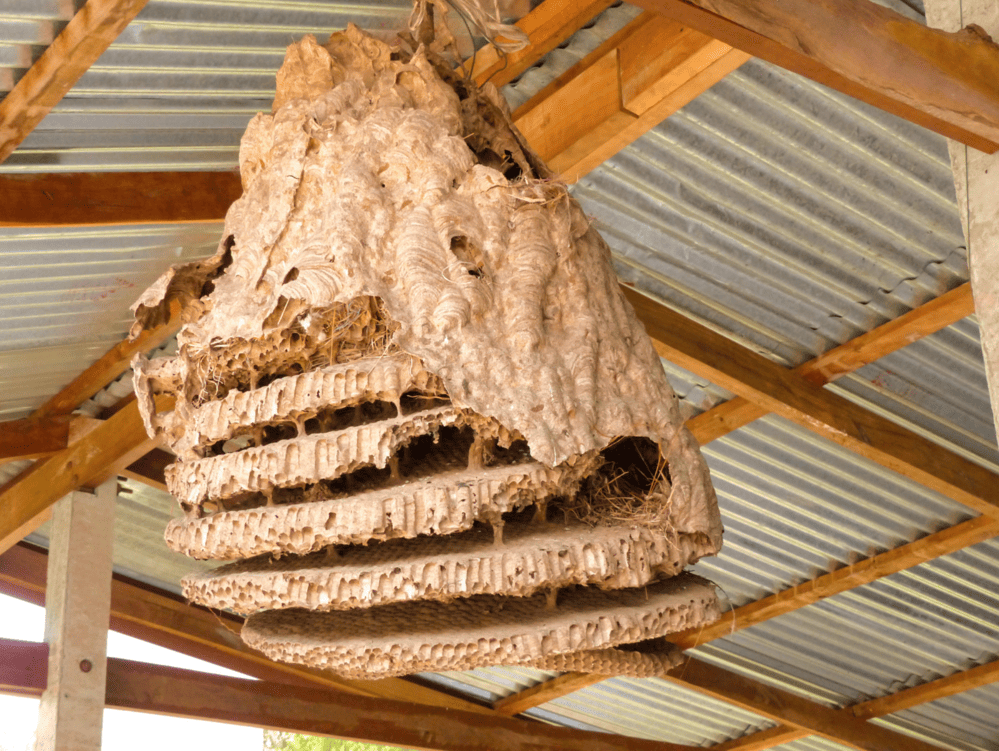
A wasp nest is made from wood fibres that the wasps chew and mix with their saliva. It therefore takes on the appearance of grey paper, sometimes compared to cardboard or papier mâché.
Its shape varies depending on the species. Social wasps build a closed nest, round or oval in shape, with a single opening through which the colony can come and go. Polist wasps, on the other hand, build a small open nest in which the individual cells remain visible.
Wasp nests can be found in many places:
- under a roof
- in an attic
- a cavity wall
- a tree
- a garden shed
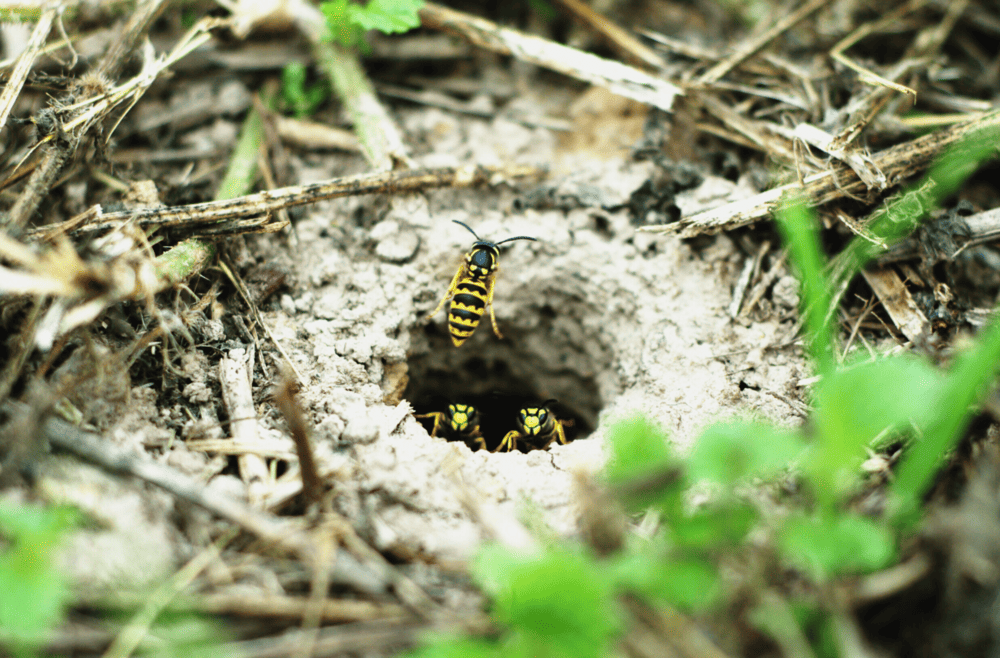
- directly in the ground for some species
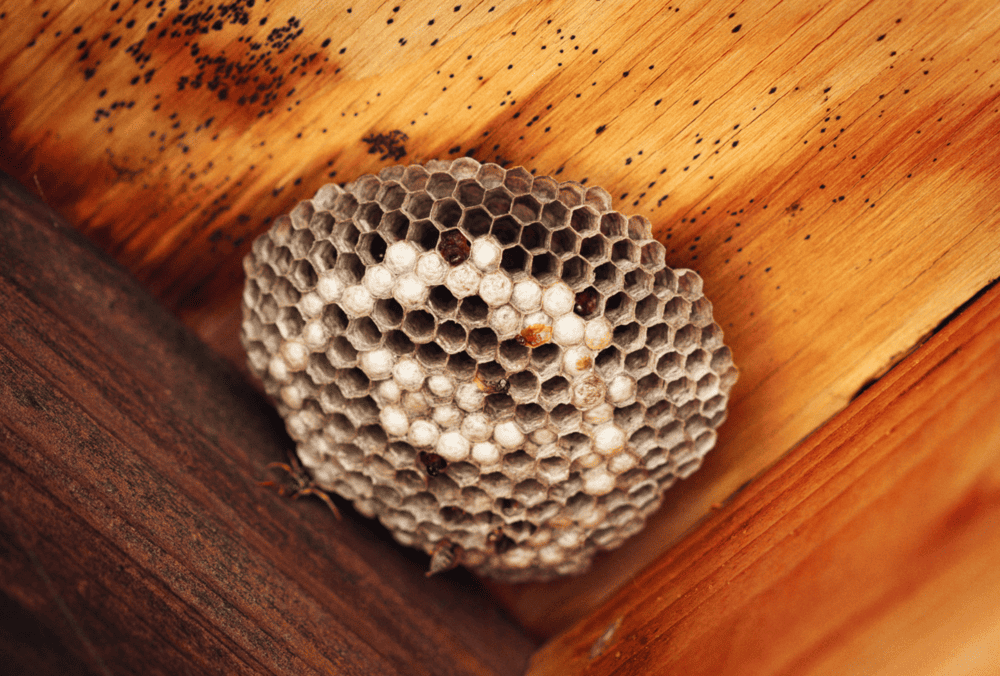
Photos of wasp nests
Precautions to take
Keep your distance and do not attempt to intervene yourself. A wasp colony can become very aggressive if it feels threatened.
Here are some precautions to take:
- do not touch the nest;
- never block its entrance;
- do not use a water jet or over-the-counter insecticide;
- avoid mowing the lawn or using tools that cause vibrations nearby;
- keep children and pets away;
Can a wasp nest be left in place?
Yes, in some cases. It all depends on its location, the species of wasp, the time of year and how frequently the area is used.
👉 It is worth noting that wasps are beneficial to the environment. Many species pollinate certain plants and help to control insect populations. Destroying a nest should only be considered if it poses a risk to people.
A small nest in a secluded, quiet spot is not usually a problem. However, if the nest is near a door, a patio, a footpath, or if someone with an allergy lives nearby, it is best to have it removed.
See also: Everything you need to know about hornet nests.
Can you remove or kill a nest yourself?
👉 We strongly advise against trying to remove a wasp nest or killing the wasps inside it whilst it is active. There is a high risk of being stung.
If you try to destroy a wasps’ nest without the right equipment, you risk being attacked by the whole colony. It is clearly better to call in a professional.
Who should you call about a wasps’ nest?
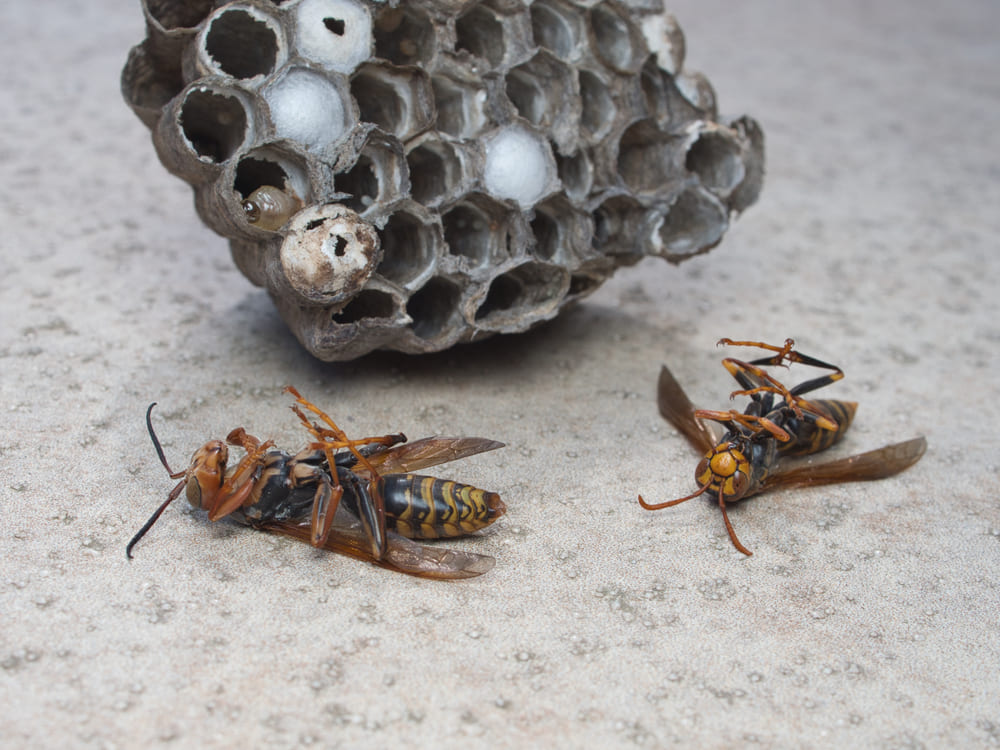
Hiring a pest control specialist
This is the most suitable solution when a nest is active or difficult to access. A professional will be able to:
- identify the species of wasp;
- assess the level of risk;
- select the most appropriate treatment;
- carry out the work safely, even at height;
- neutralise or remove the nest if necessary.
Before making your choice, ask for a detailed quote and check that the pest control operator is authorised to use professional biocidal products (Certibiocide ‘pests’). This certification specifically covers insecticides used against wasps and hornets.
Please note: the Certibiocide certificate is an individual qualification, not a certification awarded to the company as a whole. You should therefore check that the person carrying out or supervising the work does indeed hold a valid certificate.
Contact your local council
Some local authorities offer financial assistance, refer you to an approved service provider or take action if the nest is on public land. Others do not have any specific arrangements in place.
Please feel free to call your local council to find out more.


Notify the landlord or letting agent
If you are a tenant, inform your landlord or letting agency as soon as possible before any work is carried out. Who is responsible depends, in particular, on the location of the nest and the responsibilities set out in the tenancy agreement.
Contact the property manager
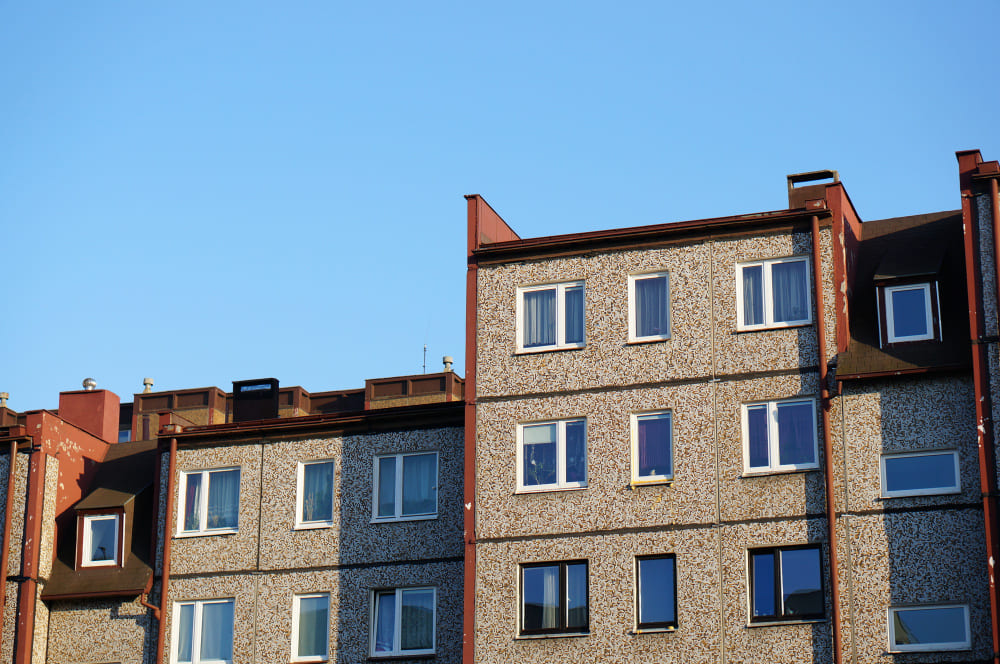
If the nest is located in the communal areas of a block of flats (facade, roof, communal courtyard, etc.), you must notify the property manager. In principle, it is the property manager who organises the work and contacts a specialist company.

Only call the emergency services in the event of immediate danger
The fire service generally no longer responds to wasp nests located on private property.
However, call 18 or 112 in an emergency, for example if:
- someone is suffering a severe allergic reaction;
- an attack is taking place;
- the nest poses an immediate danger in a public or busy area.
How much does it cost to remove a wasps’ nest?
In 2026, the cost of removing a wasp nest is generally between €90 and €180 (including VAT) for a standard job. For a nest that is difficult to access or requires the use of a cherry picker, the price can reach €250 to €300, or even more in the most complex situations.
Several factors affect the price:
- the height of the nest (on the ground, under the roof, in a tree, etc.);
- its accessibility (hollow wall, chimney, loft, roller shutter box, etc.);
- the location and the time taken for the professional to travel there;
- the equipment required (telescopic pole, ladder, aerial platform, etc.);
- the urgency of the call-out (evenings, weekends, public holidays);
- removal of the nest after it has been neutralised, where applicable.
Before choosing a wasp exterminator, always ask for a quote specifying:
- the total price including VAT;
- call-out charges;
- any additional charges (emergency call-out, aerial work platform, etc.);
- whether nest removal is included or whether only nest neutralisation is planned;
- the terms for a second visit should the wasps remain active.
Can home insurance cover the cost of destroying a wasp nest?
In principle, no. Comprehensive home insurance policies do not cover the treatment of pests such as wasps. This type of problem is regarded as routine maintenance rather than a sudden or accidental incident. However, some policies, such as that offered by Crédit Mutuel, may include cover for the removal of a nest.
Are wasp traps effective?
Yes, a wasp trap can reduce their numbers in the short term, but it won’t get rid of an established colony.
When placed near an active nest, a trap captures only some of the workers. The queen and the rest of the colony continue to live and produce new wasps.
Please note that many traps are not very selective and also catch bees, butterflies and other insects that are beneficial to biodiversity.
How do you make a homemade wasp trap?
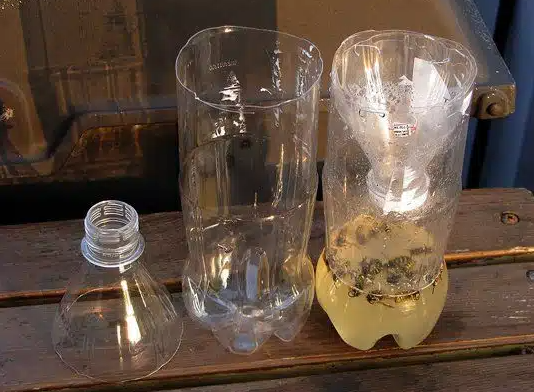
The best-known trap is the bottle trap.
You can cut a plastic bottle in half and turn the top part upside down to form a funnel. Place some syrup or a small piece of meat or fish at the bottom to attract them. The wasps fly easily into the trap, but find it harder to get out again.
What bait should you use in a wasp trap?
The bait depends on the time of year.
- In spring, wasps are looking for more protein: a small piece of meat or fish can be attractive.
- In summer and autumn, they are mainly attracted to sugary foods. A mixture of beer, syrup or fruit juice usually works well.
Avoid using only very sugary drinks if there are bees nearby, to minimise the capture of non-target insects.
Where should you set up the trap?
Place the trap several metres away from the area you wish to protect, so as to lure the wasps away from your patio or table. You could hang the trap from a tree branch, for example.
If you have spotted a nest, never place a trap directly in front of its entrance: this may increase wasp activity around the nest without solving the problem.
What repellents should you use against wasps?
Wasp repellents can keep a few insects at bay, but they cannot destroy a nest.
| Solution | Principle |
| Commercial repellents (spray, diffuser) | Create a temporary scent barrier to keep wasps away. |
| Insecticide sprays | Kills wasps on contact. |
| Insecticide powders | Distributed in certain cavities or nest entrances, mainly by professionals. |
| Natural remedies (plants, essential oils) | They try to repel wasps using certain smells. |
| False nests | They are intended to deter a new colony from settling nearby. |
Essential oils, such as lemongrass, peppermint or clove, are often used as natural repellents against wasps. Their effectiveness is limited, particularly outdoors.
Can a repellent replace professional treatment?
No. Whether it’s a repellent or a wasp insecticide, neither of these products can eliminate an established colony. If a nest is close to your home, the treatment must target it directly or be carried out by a professional when the situation warrants it.
Are wasps more aggressive in late summer?
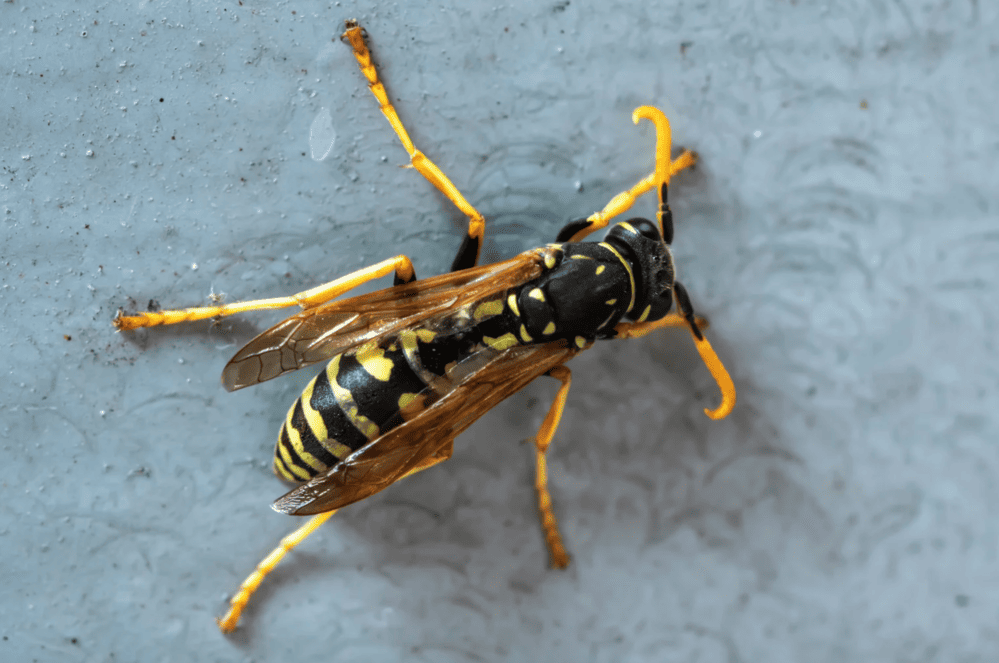
You’ve probably noticed that wasps are much more common around patios, bin bins and outdoor meals towards the end of summer. This behaviour is directly linked to the colony’s life cycle.
For much of the season, worker wasps hunt for insects to feed the larvae, which need protein. Adult wasps, on the other hand, feed mainly on sugary substances such as nectar, honeydew or ripe fruit.
Towards the end of summer, the colony gradually reaches the end of its life cycle and the number of larvae to feed decreases. The workers then spend more time searching for sources of sugar for their own needs. Ripe fruit, fizzy drinks, desserts or rubbish bins become particularly attractive. This is one of the reasons why we see more wasps around our dining tables at this time of year.
Why you shouldn’t swat a wasp
Social wasps also use alarm pheromones to organise their colony’s defence. When a wasp detects a threat, these chemical signals can alert its fellow wasps and trigger defensive behaviour.
This phenomenon has been demonstrated in particular in various species of Vespidae. Research on Vespula squamosa has shown that pheromones can recruit other workers and stimulate an attack when a nest is threatened.
So avoid squashing a wasp or making sudden movements to shoo it away, especially near a nest. Stay calm and walk away quietly.
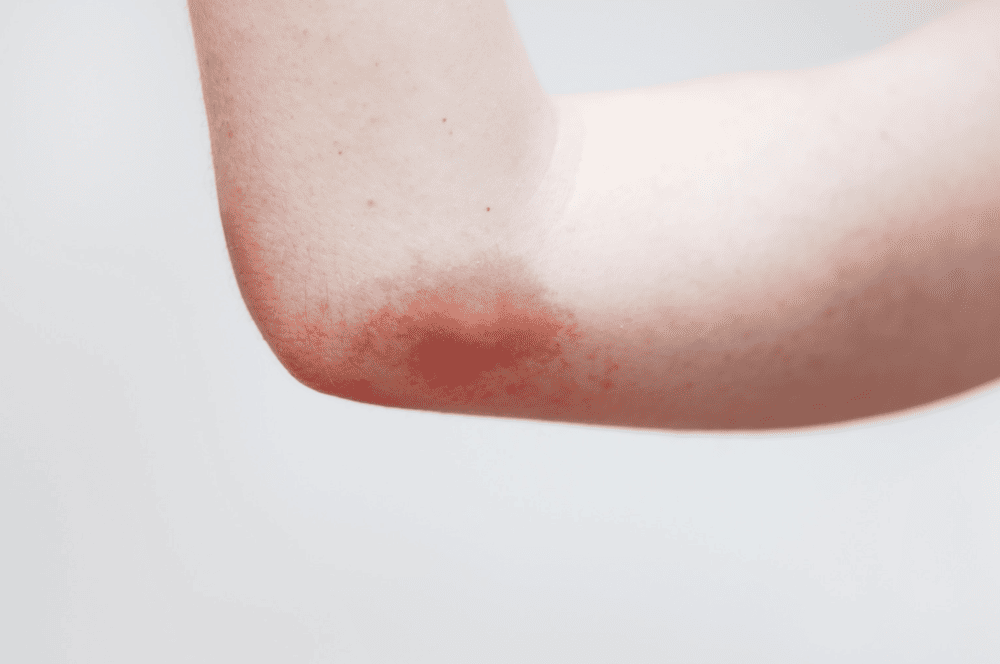
What should you do after a wasp sting?
A wasp sting is painful and causes localised redness and swelling, which gradually subside over a few days.
After a sting, follow these steps:
- clean the skin with soap and water;
- apply a cold pack wrapped in a cloth for a few minutes;
- remove any rings, bracelets or shoes if the stung area is likely to swell;
- gently remove the stinger if it is still in the skin;
- apply an antiseptic;
- monitor how the symptoms develop over the following hours;
- do not apply any irritating remedies (such as alcohol, undiluted vinegar or essential oils directly to the skin).
If the pain persists a few hours later, you can take a painkiller such as paracetamol.
What should you do if there are multiple stings?
If a child has more than 5 stings or an adult more than 20, the venom can cause vomiting, dizziness or feeling unwell.
In this situation, do not delay – call 15 or 112 immediately.
How can you relieve the pain of a wasp sting?
Cold is still the most effective way to relieve pain and reduce swelling. If necessary, your pharmacist can also recommend a soothing cream or a suitable treatment. Avoid scratching the bite to minimise the risk of infection.
How can you recognise an allergic reaction, and what should you do?
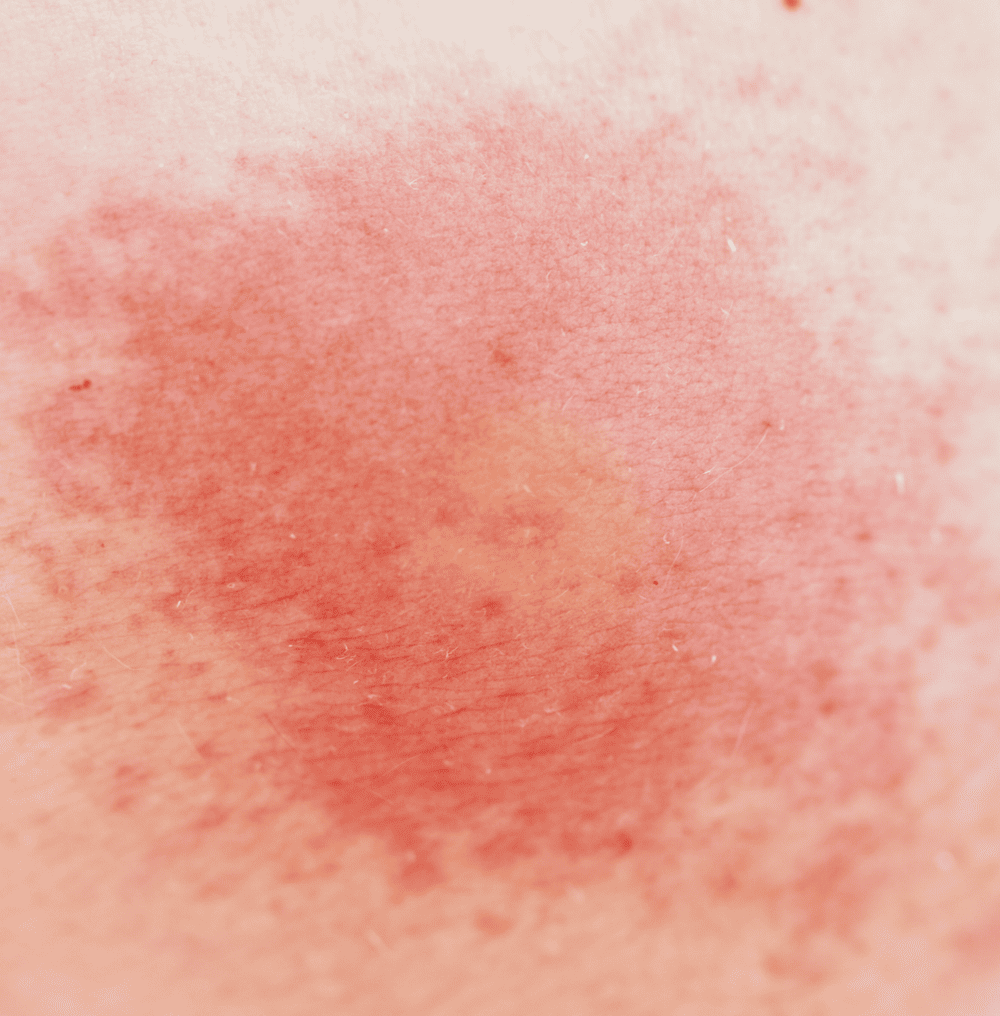
LThe symptoms of an allergic reaction are as follows:
- difficulty breathing;
- swelling of the face, lips, tongue or throat;
- feeling unwell or losing consciousness;
- a widespread rash;
- vomiting or abdominal pain.
In this case, call 15 or 112 immediately.
The EN National Health Insurance recommends laying the person in the recovery position. If the sting causes significant swelling of the airways, give the victim an ice cube to suck on and call 15 or 112 immediately.
What should you do if a dog or cat is stung?
If your pet is stung by a wasp, apply a cold compress wrapped in a cloth for a few minutes.
Contact your vet straight away in the following cases:
- the sting is in the mouth, throat or on the muzzle;
- the swelling becomes severe;
- your pet is having difficulty breathing;
- it has been stung several times;
- it seems listless, is vomiting or is behaving unusually.
Do not give your pet any medicine intended for human use without consulting a vet.

How can you prevent wasps from returning?
A few simple steps can help reduce the risk.
In spring, regularly check your loft, garden sheds, garages and eaves. This is when the queens start building their first nests, which are still very small.
You can also:
- repair any cracks and openings that allow wasps to settle;
- fit fly screens where possible;
- cover food and drink when eating outdoors;
- clean rubbish bins regularly and keep them tightly closed;
- pick up ripe fruit that has fallen to the ground;
- check roller shutter boxes, garden sheds and other rarely visited areas;
- watch out for the appearance of a small nest at the start of the season so that you can take action before the colony grows.
FAQ
Can you block the entrance to a wasps’ nest?
Is an old wasp nest reused?
Do the fire brigade respond to calls about wasp nests?
What smell do wasps hate?
Who pays for the repair work in a rental property?
Can a wasp sting more than once?
How can you tell the difference between a wasp sting and a bee sting?
