



There are nearly a thousand species of wasps in France, each with very different behaviours. Some live in colonies, others are solitary, and many are completely harmless. Here is a practical guide to identifying the main types of wasps in your local area. You’ll also learn how to tell them apart from bees and hornets, and how to recognise their nests so you know how to react.
In summary
➡️A wasp can be recognised by its smooth body, slender waist and yellow and black colouring.
➡️There are social wasps that live in colonies and solitary species.
➡️Nests may be made of paper or earth, or built directly into the ground, depending on the species.
➡️A wasp can sting several times.
➡️A solitary wasp is rarely dangerous. The risk increases particularly when near a nest of social wasps.
How can you recognise a wasp?
Here are the characteristics to look for when recognising a wasp:
- a slender waist between the thorax and the abdomen (the famous ‘wasp waist’);
- depending on the species, it is generally between 1 and 2 cm long;
- a smooth body, almost hairless;
- distinct yellow and black stripes, although some species are entirely black;
- two long, movable antennae;
- transparent wings folded along the body when at rest;
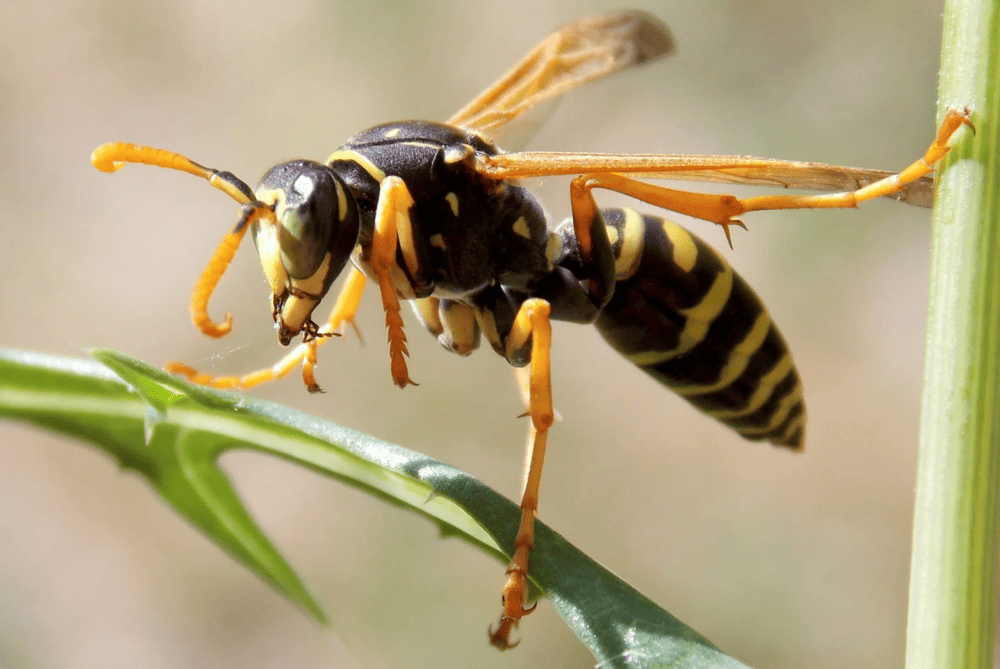
👉The term ‘wasp’ refers to several species of Hymenoptera insects, most commonly belonging to the genus Vespula. They do not all look the same. Some are very easy to recognise, such as the polist wasp with its long legs when in flight.
What are the main types of wasps?
The common wasp
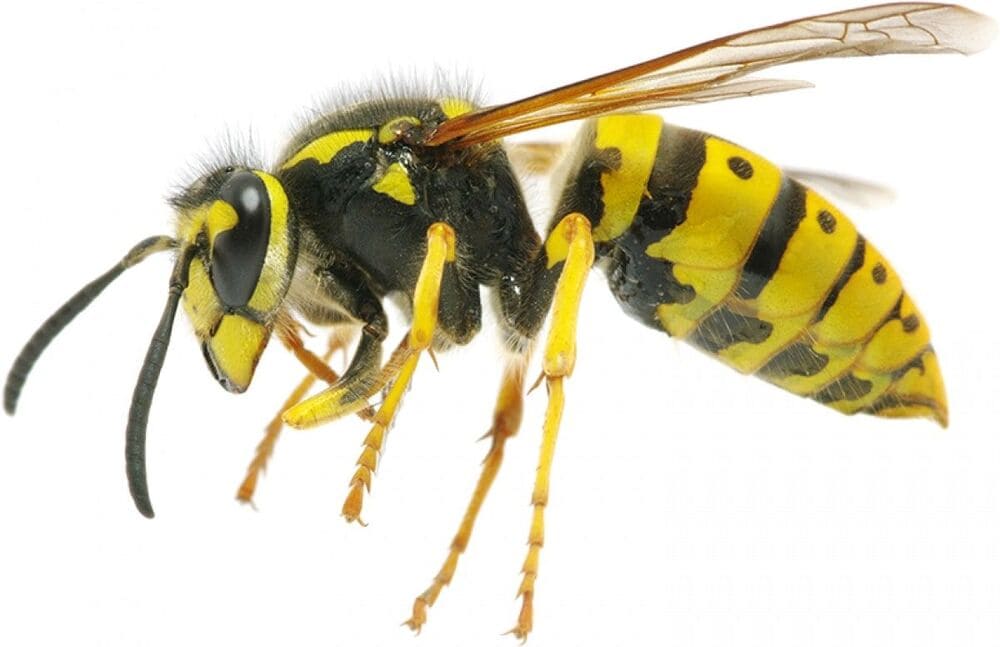
The common wasp (Vespula vulgaris) is one of the most widespread species. Yellow and black in colour, it measures between 12 and 17 mm and lives in colonies.
It usually builds its nest under a roof, in a wall, in a hollow tree or sometimes in the ground. It is particularly attracted to sugary foods in late summer.
The German wasp
Very similar to the common wasp, the German wasp (Vespula germanica) is slightly harder to recognise. Experts distinguish it, in particular, by the small black spots on its face.
Its behaviour is similar: it lives in colonies, builds a paper nest and is often found in gardens, on terraces and in picnic areas.
The house wasp
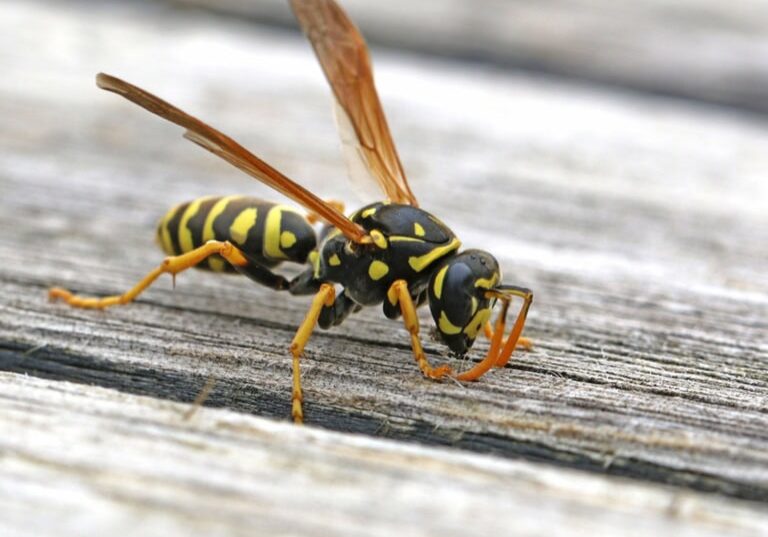
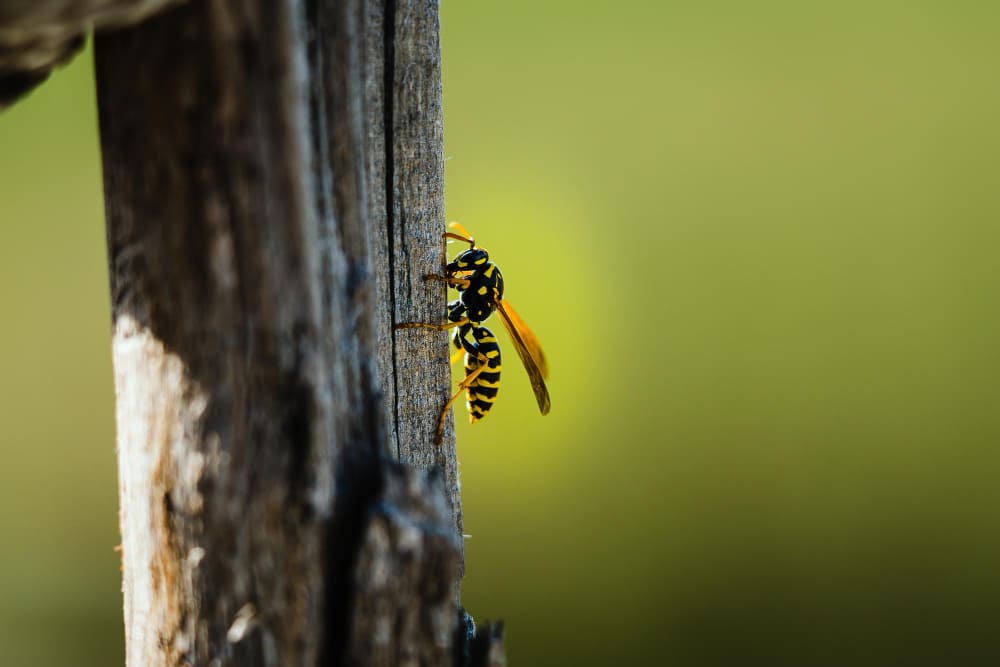
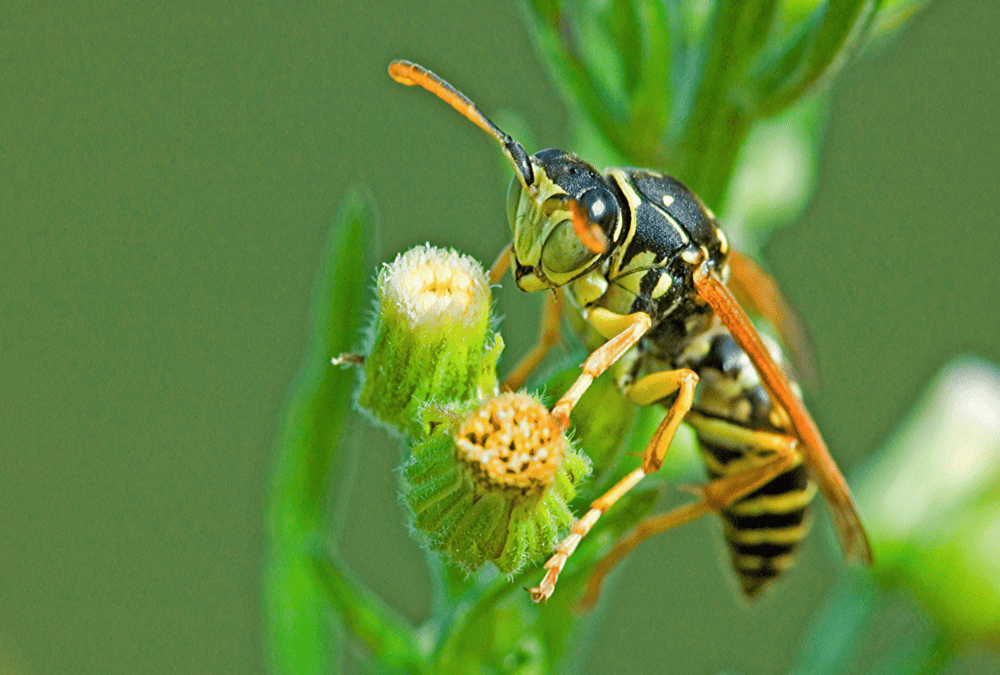
The house wasp (Polistes dominula) is slimmer than other social wasps. Its long legs remain visible when it flies.
Its nest is also very different: it is open, with no outer casing, and is often small in size. It can be found under a roof ledge, on a balcony, by a window or in a garden shed.
The Polistes wasp is less attracted to food than common wasps.
The mason wasp
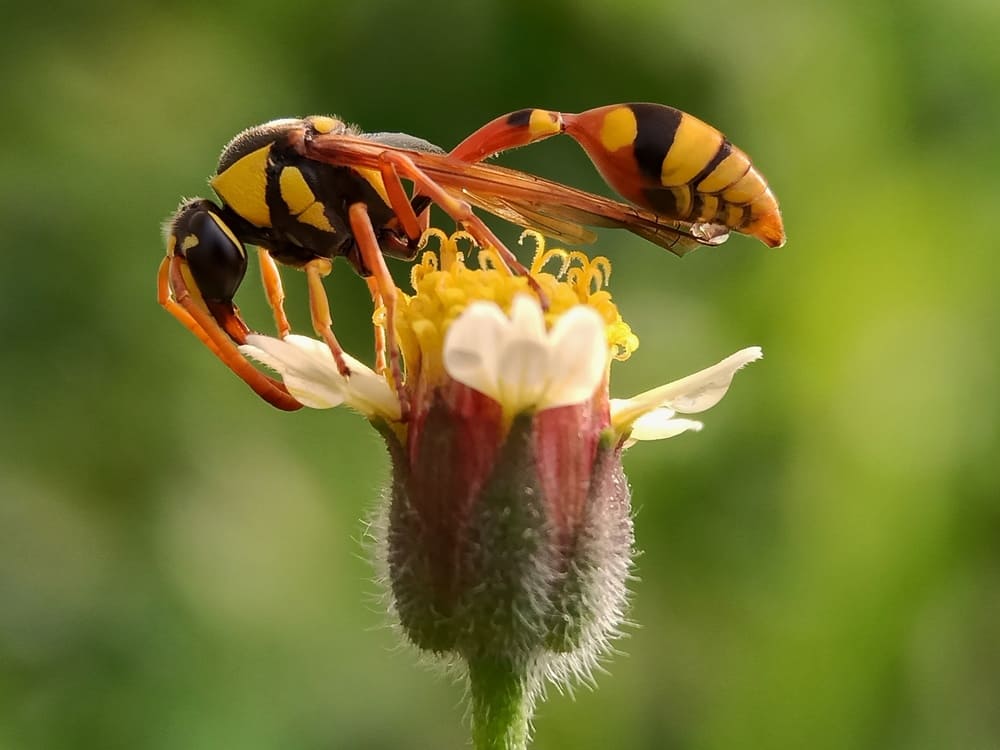
The mason wasp, also known as the potter wasp, lives alone and does not form colonies. It builds small nests out of earth or mud, often attached to a wall, a window or under a eaves. Very unobtrusive, it hunts caterpillars or spiders to feed its larvae and almost never stings humans.
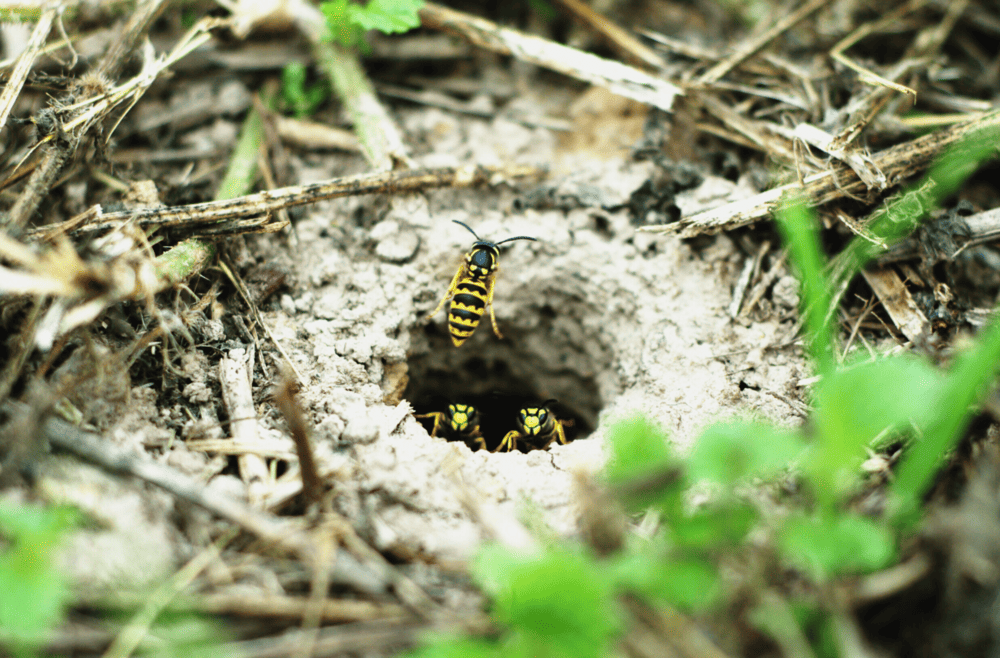
The ground wasp
The term ‘ground wasp’ refers to several species that build their nests directly in the ground, sometimes reusing an old burrow or a natural cavity. They are often spotted when they emerge in large numbers from the same hole.
The solitary wasp
As its name suggests, the solitary wasp lives alone and builds its own nest. It does not protect a colony and is generally very calm. Most species spend their time catching small insects or spiders to feed their larvae. They are invaluable allies for your garden!
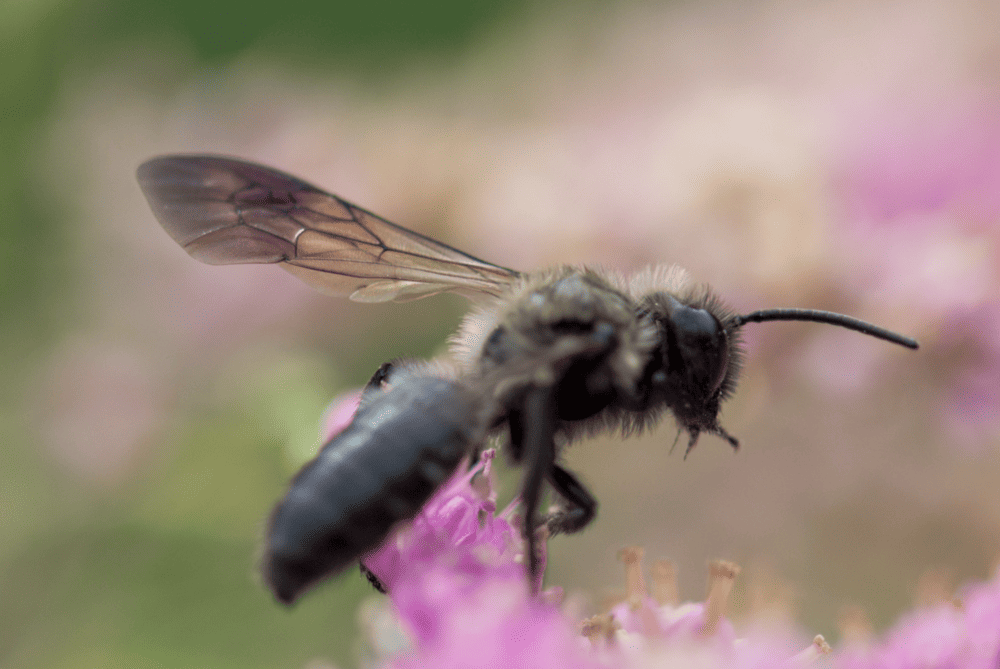
The black wasp
The term ‘black wasp’ does not refer to a single species, but to several species whose bodies are entirely or almost entirely black. Most are solitary species, not very aggressive and rarely seen in large numbers.
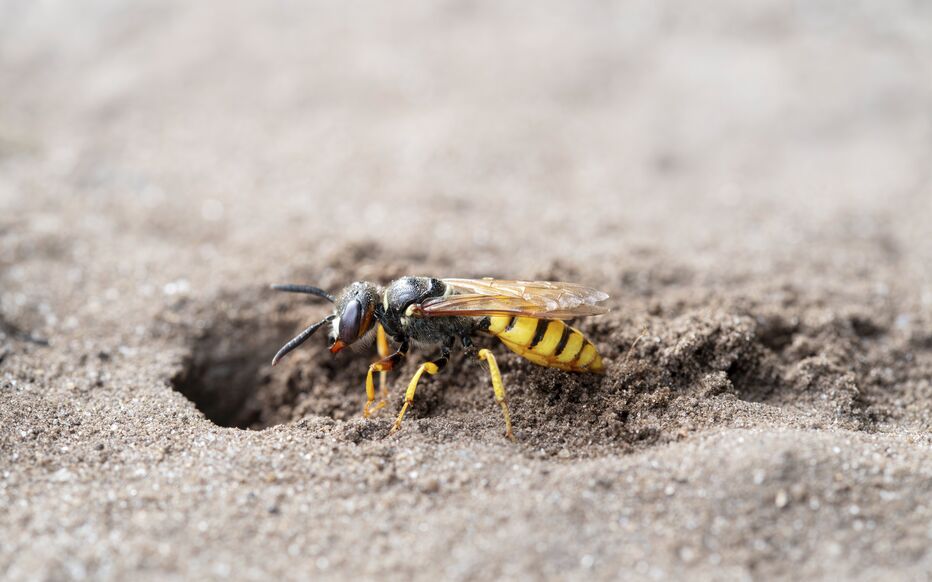
The digger wasp or carpenter wasp
Dug-nesting wasps dig their nests into the ground, whilst some species, sometimes known as ‘carpenter wasps’, make use of existing tunnels in dead wood or hollow stems. They live alone, do not build large nests and play a natural role in controlling the populations of many insects. Again, they very rarely sting.
How can you tell the difference between a wasp and a bee?
| Criterion | Wasp | Bee |
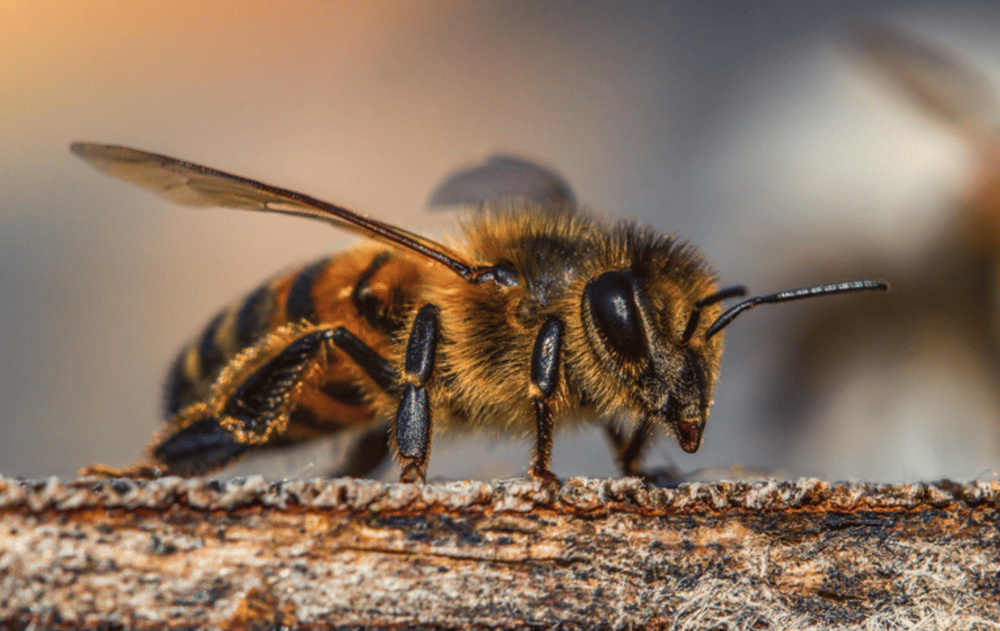
| Body | Smooth and not very hairy | More stocky and hairy |
| Colour | A striking contrast of yellow and black | Shades of brown, yellow or orange |
| Food | Omnivorous, depending on the species | Nectar and pollen |
| Sting | Can sting several times | The honeybee usually loses its stinger |
| Behaviour | Attracted to certain foods | Particularly drawn to flowers |
👉 If you’re not sure whether it’s a wasp or a bee, look at its body first. A bee looks rounder and hairier, whilst a wasp has a slimmer silhouette with a very pronounced waist.
What is the difference between a wasp sting and a bee sting?
A wasp can sting several times, whereas a honeybee loses its stinger after stinging and dies afterwards.
After a bee sting, the stinger often remains embedded in the skin. You can remove it quickly, without squeezing the venom sac.
In both cases, clean the area, apply a cold compress and watch out for any unusual symptoms. If you experience difficulty breathing, feel unwell, have multiple stings or an allergic reaction, call 15 or 112 immediately.
What is the difference between a wasp and a hornet?
Did you know? Hornets are also a type of wasp. They belong to the same group of insects, but are larger and more robust than the wasps usually found in gardens. In France, there are the Asian hornet (Vespa velutina) and the European hornet (Vespa crabro).
Here are the main differences between a wasp and a hornet:
| Criterion | Wasp | Hornet |
| Size | About 1 to 2 cm | Up to 3.5 cm, depending on the species |
| Color | A striking contrast of yellow and black | Darker, with brown, auburn or orange tones |
| Head | Slender and elongated | Wider and more substantial |
| Nest | Grey paper, found under a roof, in a wall, in a tree or on the ground, depending on the species | Spherical or slightly oval in shape. Its outer layer consists of thin layers of chewed wood fibres, giving it a ‘kraft paper’ appearance. |
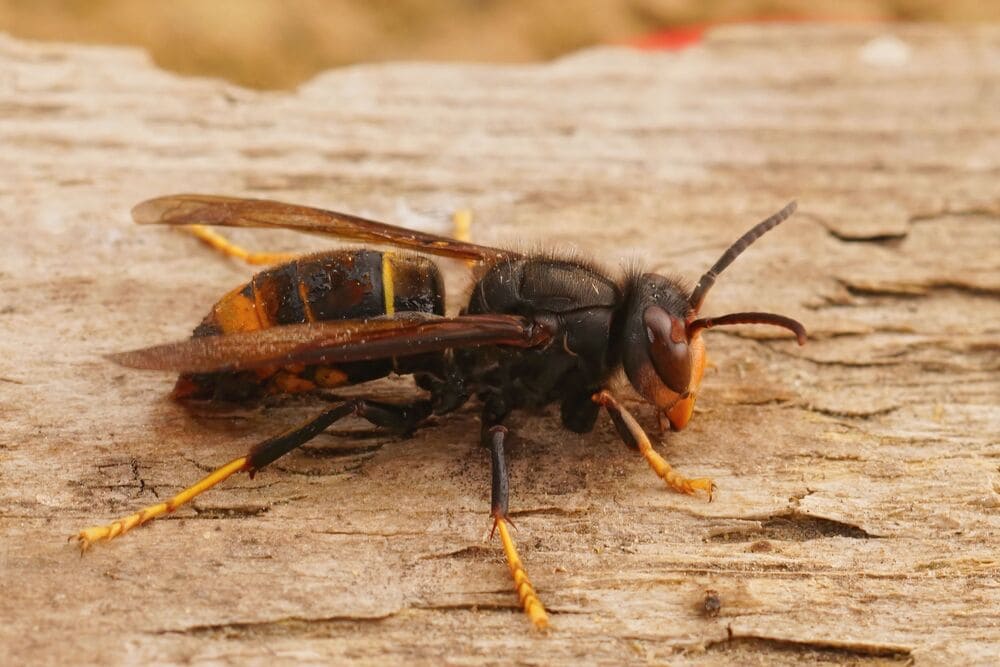
In principle, a single wasp or hornet does not attack. Stings usually occur when the insect feels threatened or when you get too close to its nest.
See also: What should you do if you find a hornet’s nest?
How can you recognise a wasp nest?
The type of nest depends on the species in question.
- Social wasps build nests from chewed wood fibres that resemble grey paper.
- Solitary wasps tend to use earth or mud.
- Earth wasps dig their tunnels directly into the ground.
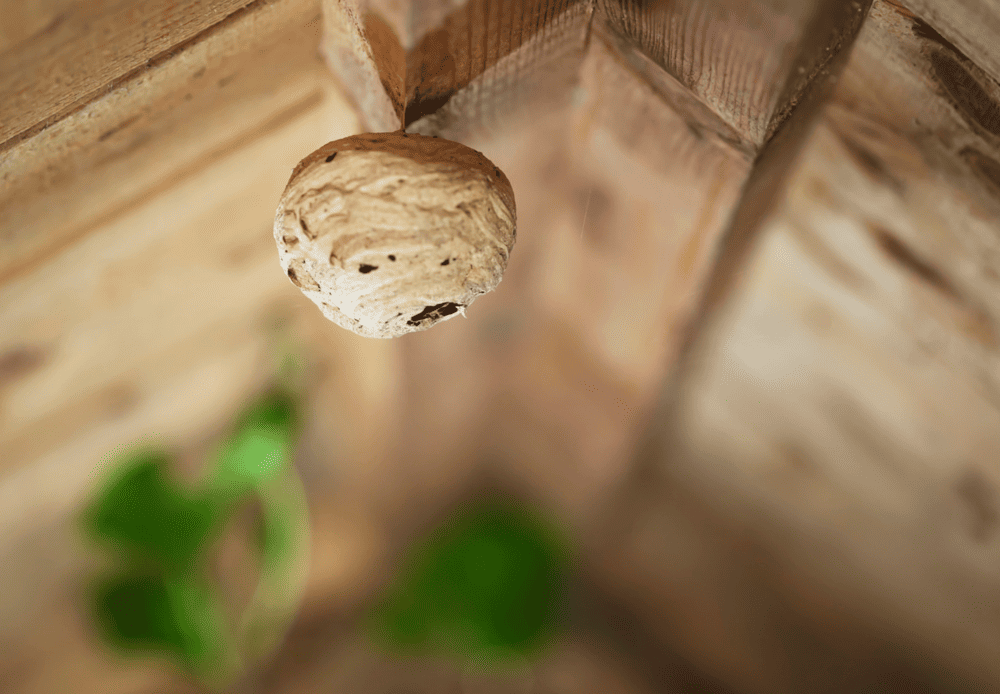
Wasp nests under the roof or inside a wall
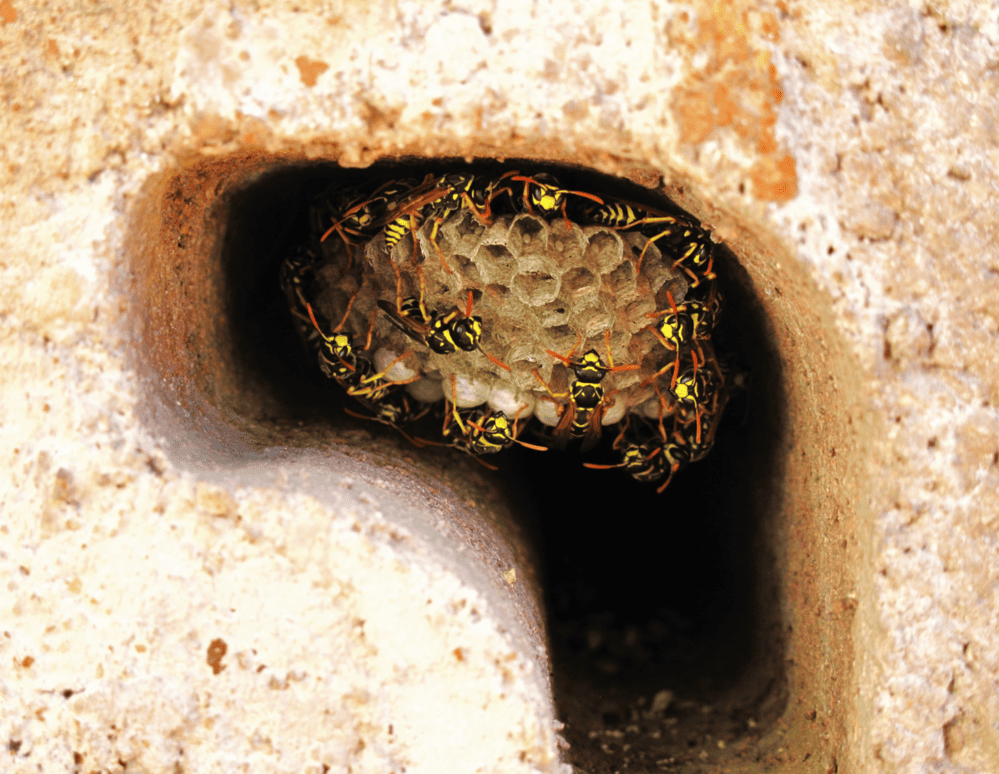
Under the roof, in an attic, or inside a cavity wall – these are the places where wasp nests are most commonly found. The nest is usually enclosed, round in shape and made of thin layers of grey paper.
Outside, only a few wasps are visible at any one time, flying in and out through a single opening.
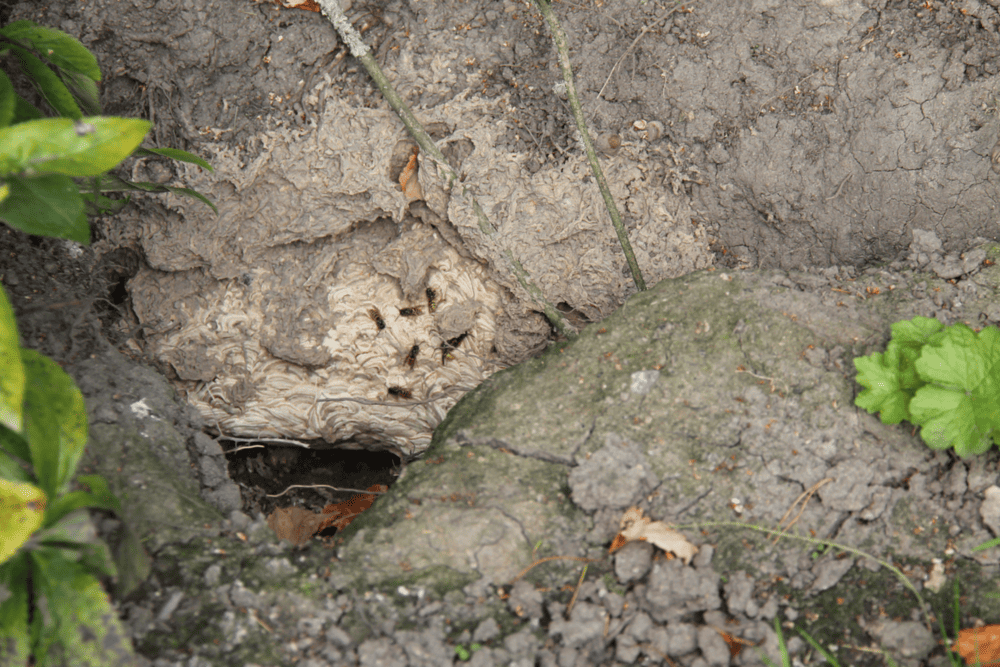
Wasp nest in the ground
In some species, the nest itself is not visible, as it is hidden in a hole in the ground where the wasps make numerous trips back and forth.
You may discover an underground wasp nest whilst mowing the lawn, for example.
A mason wasp nest on a window
This type of nest takes the form of small tubes or cells made of dried earth, often attached to a wall, a window frame, a shutter or under a eaves. They are small in size and contain a single larva per cell.
A small nest or a colony: how can you tell the difference?
In spring, a queen begins building a small wasp nest on her own, which is often only a few centimetres in size. At this stage, the colony consists of very few individuals.
Over the weeks, the first workers gradually expand the nest. In summer, a fully-grown colony can be home to several hundred, or even several thousand wasps, depending on the species.
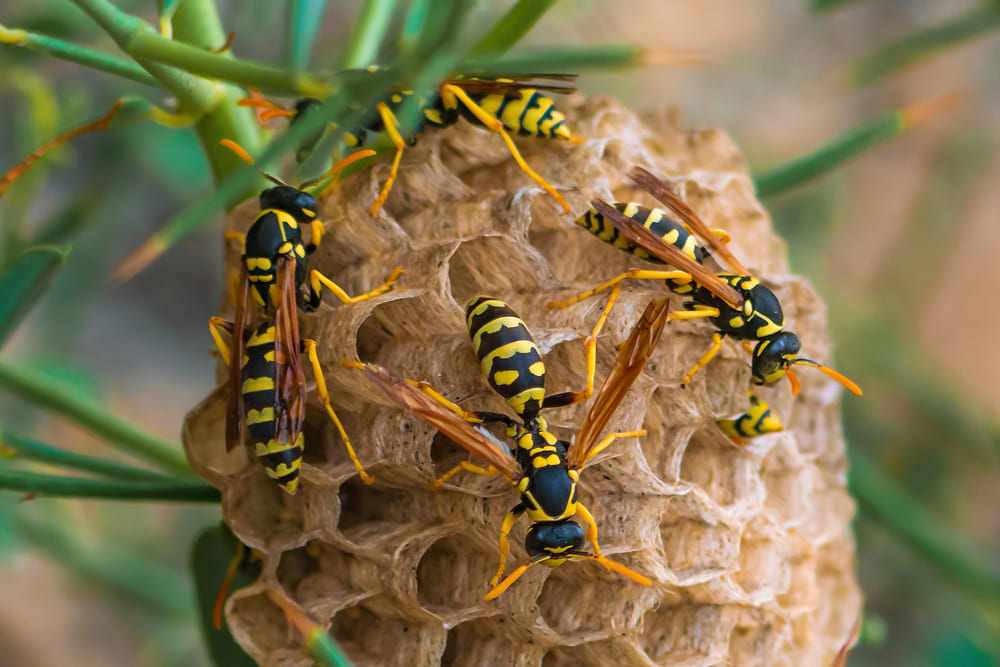
👉 If you notice a lot of wasps flying back and forth in the same spot, it is likely that the nest is already well established. In this case, avoid interfering and keep your distance.
See also: Wasp stings and nests: what should you do?
What is the life cycle of a wasp?
A wasp’s life generally lasts for one year. Only the future queens survive the winter to found a new colony the following spring.
1. In early spring
The wasp queen, having been fertilised the previous autumn, emerges from her shelter. She builds her first nest and lays the first eggs. After a few days, the eggs hatch into wasp larvae, which then develop into workers.
From this point onwards, the queen hardly ever leaves the nest. The workers take over: they expand the colony, feed the larvae and forage for food.
2. In summer
The population grows rapidly. The wasps capture numerous insects to feed the larvae. The adults feed mainly on sugary substances such as nectar, ripe fruit or honeydew. It is also at this time of year that they are most commonly found around meals.
3. In late summer and early autumn
Towards the end of summer, the eggs begin to produce fertile males and females, which can therefore be fertilised (source). After mating, the future queens seek shelter to spend the winter. The old queen, the workers and the males gradually die off as the cold weather sets in.
👉 A wasp’s lifespan depends on its role. A worker usually lives for a few weeks, whilst a queen can survive for several months thanks to her hibernation.
Are wasps useful?
Yes, although they are unloved and can sometimes be a nuisance, they help maintain the balance of an entire ecosystem. The Office for Insects and their Environment (Opie) points out that wasps are beneficial to the environment.
Social wasps regulate the populations of many insects, such as aphids and caterpillars. According to the association Initiatives and Actions for the Protection of the Environment and Forests, a nest can consume up to 80,000 prey items a day!
Solitary wasps also help to control insect pests; indeed, they are used as a form of biological control.
Finally, although they are less effective pollinators than bees, wasps also contribute to pollination whilst foraging for nectar.
FAQ
Can a wasp sting more than once?
Why are wasps attracted to food in the summer?
Which wasps sting?
Are all wasps dangerous?
