



House dust mite allergy disrupts the daily lives of many people, all year round. One study estimates that around 4 to 6 per cent of the world’s population is affected [1]. What are the typical symptoms? How can you be sure it is actually caused by house dust mites? What treatments and measures can you take to find relief? Let’s take a closer look.
N.B.: This article is for information purposes only and is not a substitute for the advice of a healthcare professional.
Key points to remember
➡️ An allergy to house dust mites can cause sneezing, a blocked or runny nose, itching, red eyes or even breathing difficulties.
➡️ House dust mites do not bite and do not live under the skin. It is mainly their allergens that trigger reactions.
➡️ Unlike pollen, dust mites are present in homes all year round.
➡️ An allergy assessment involving skin prick tests or specific IgE testing can help confirm a dust mite allergy.
➡️ Treatment involves reducing exposure, taking medication to relieve symptoms and, in some cases, desensitisation.
Why do dust mites cause allergies?
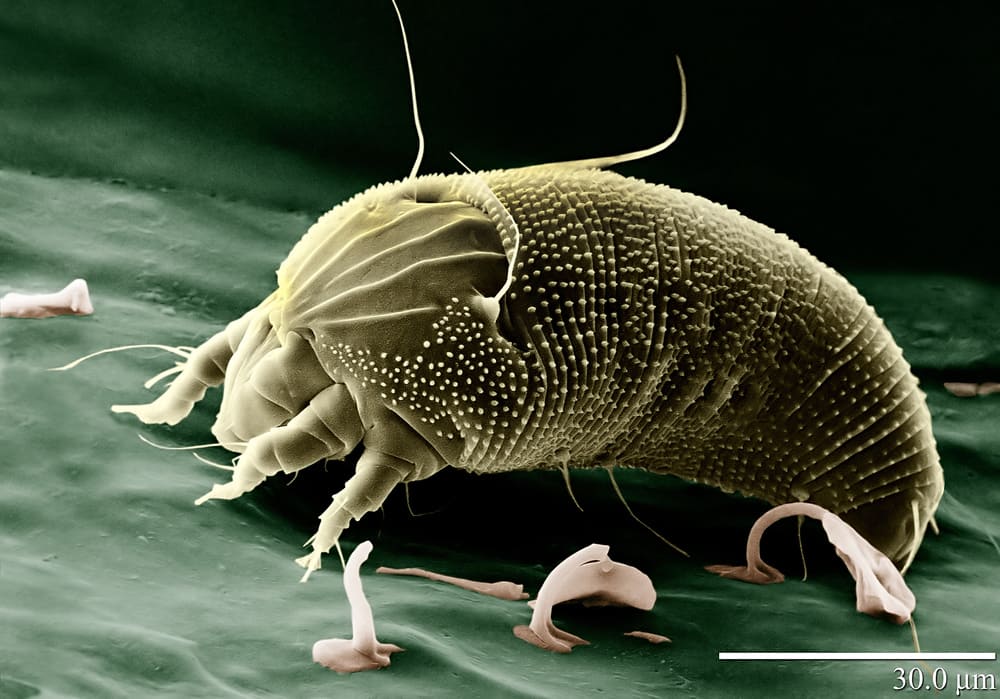
It is not only live dust mites that cause an allergic reaction. Their allergens – which are proteins found in their faeces and body debris – also play a part [2].
These microscopic particles accumulate in dust, mattresses and other textiles. When you change the bed linen, or whilst cleaning, for example, some of these particles may become airborne and be inhaled [2].
In a person with an allergy, the immune system regards some of these proteins as a threat and produces antibodies called IgE. This immune response from your body can trigger allergy symptoms [3].
Not everyone is therefore allergic to dust mites.
What are the symptoms of a dust mite allergy?
The symptoms of a dust mite allergy are similar to those of other respiratory allergies. They mainly affect the nose and eyes, but can also affect the throat, the airways and, occasionally, the skin [4].
| Affected area | Possible symptoms |
| Nose | Sneezing, a runny or blocked nose, itching |
| Eyes | Redness, itching, watery eyes |
| Throat | Irritation, itching, discomfort |
| Respiratory tract | Cough, wheezing, breathing difficulties |
| Skin | Itching; may exacerbate atopic dermatitis in some people |
Symptoms may be more pronounced at night or upon waking, particularly because dust mites are very common in bedding [4].
Key point: Unlike a seasonal allergy, a dust mite allergy can cause symptoms all year round. However, these symptoms alone are not enough to make a diagnosis: other allergens or respiratory problems can cause similar symptoms.
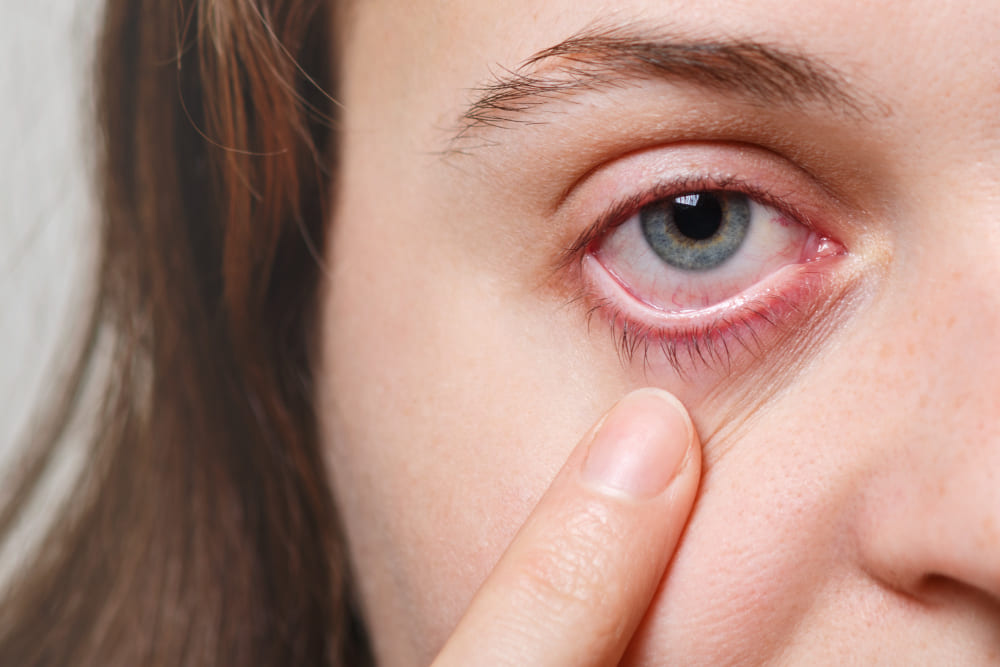
Eye symptoms
A dust mite allergy can cause allergic conjunctivitis, with the following symptoms:
- itching;
- red eyes;
- watery eyes;
- sometimes swollen eyelids.
These symptoms occur when airborne allergens come into contact with the surface of the eye [5].
Key point: dust mites do not live in your eyes or under your eyelids. However, other mites known as Demodex can live in the eyelash follicles and cause certain types of blepharitis [6].
If you experience severe pain, a loss of vision or any other unusual symptoms, see a doctor or an ophthalmologist as soon as possible.
Skin problems
House dust mite allergens may be linked to certain skin conditions, particularly in people with atopic dermatitis [7].
But be careful: itchy skin or spots are not necessarily caused by house dust mites.
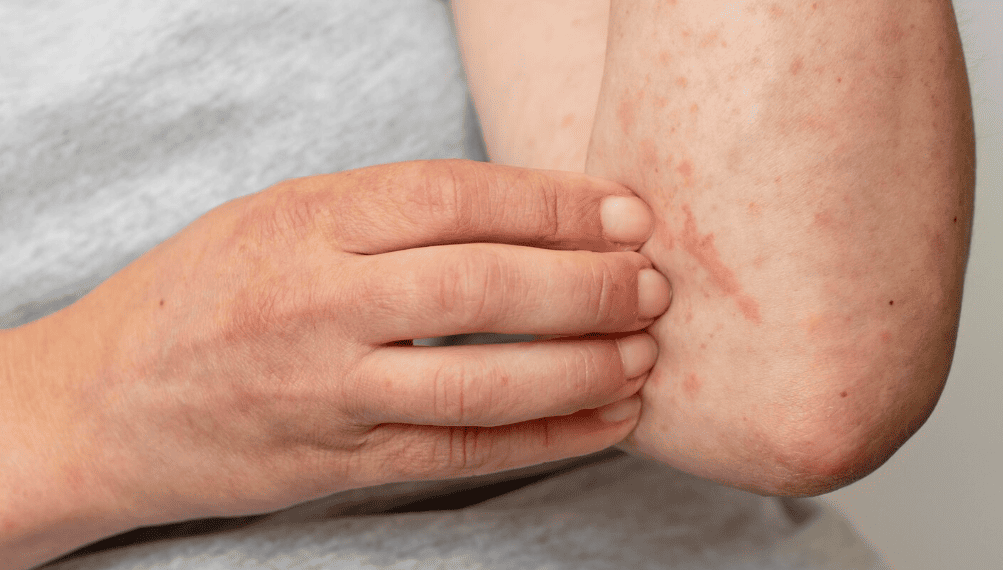
Is your skin itchy? It’s important to know that house dust mites do not bite or burrow tunnels under your skin (unlike the sarcoptic mite responsible for scabies). Itching may be a sign of an allergic reaction, but not necessarily to dust mites.
Dust mites, eczema and atopic dermatitis
The link is best established with atopic dermatitis, a chronic inflammatory skin condition. In particular, a study published in 2023 showed that the dust mite allergen Der p 2 could penetrate deeper into the skin of patients with atopic dermatitis who were sensitised to dust mites, with effects on inflammation and the skin barrier [8].
However, it should not be assumed that house dust mites always cause eczema. Atopic dermatitis is a multifactorial condition, and not all patients are sensitised to house dust mites.
Dust mites and hives
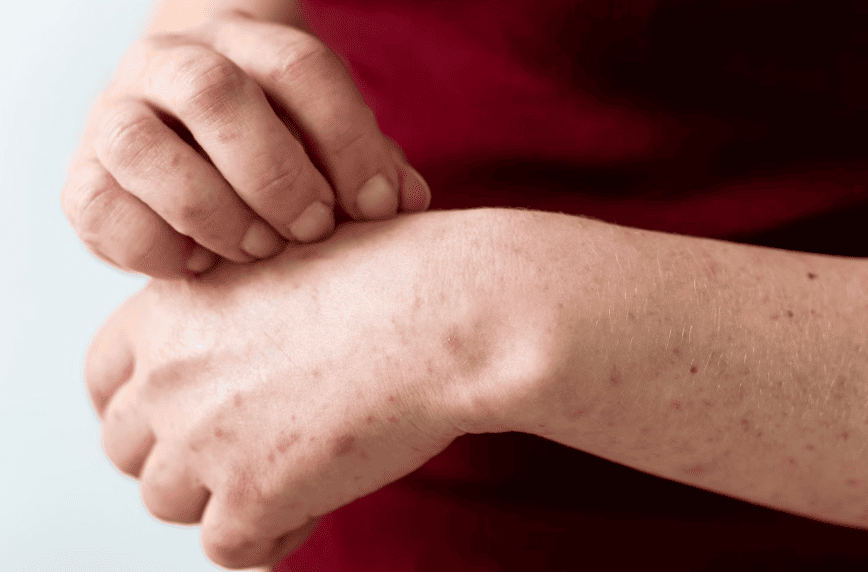
Hives can have many causes and, in some cases, no specific trigger is identified. It is difficult to link dust mites to episodes of hives.
Specialist medical advice is essential.
Mites on the face: what are we talking about?
Do you think you have mites on your face? These are not usually the Dermatophagoides house dust mites responsible for respiratory allergies.
However, our skin can harbour microscopic mites called Demodex, mainly Demodex folliculorum and Demodex brevis. They live primarily in the hair follicles and sebaceous glands and are commonly found in adults [9].
Do dust mites bite?
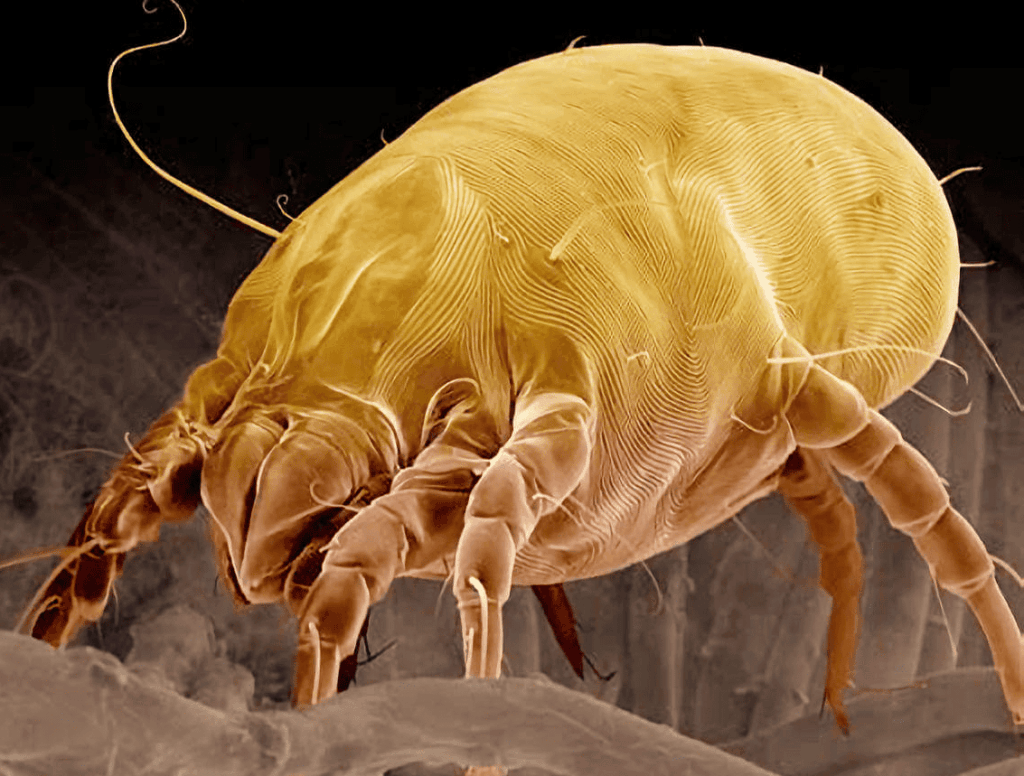
No, the house dust mites that cause allergies do not bite or sting humans. They feed mainly on skin flakes found in our environment.
Do you wake up with spots? These aren’t mite bites from your mattress. Other pests may be to blame, such as ticks, bed bugs or fleas.
When are dust mite allergies at their worst?
There isn’t really a ‘dust mite season’. Unlike pollen, they are present in our homes all year round.
Dust mites thrive in warm, humid conditions. If both these conditions are present, they will multiply in your home. This is why symptoms can be more troublesome in late summer and autumn.
And in winter? Heating can reduce their numbers when the air becomes drier, but the allergens already present in dust, mattresses and textiles do not disappear immediately. Spending more time indoors also contributes to continued exposure.
Key point: A dust mite allergy can cause problems at any time of year. The severity of your symptoms depends on your level of exposure and the conditions inside your home.
How can you tell if you’re allergic to dust mites?
There are certain signs that might point you in the right direction, but only a medical examination can confirm the diagnosis.
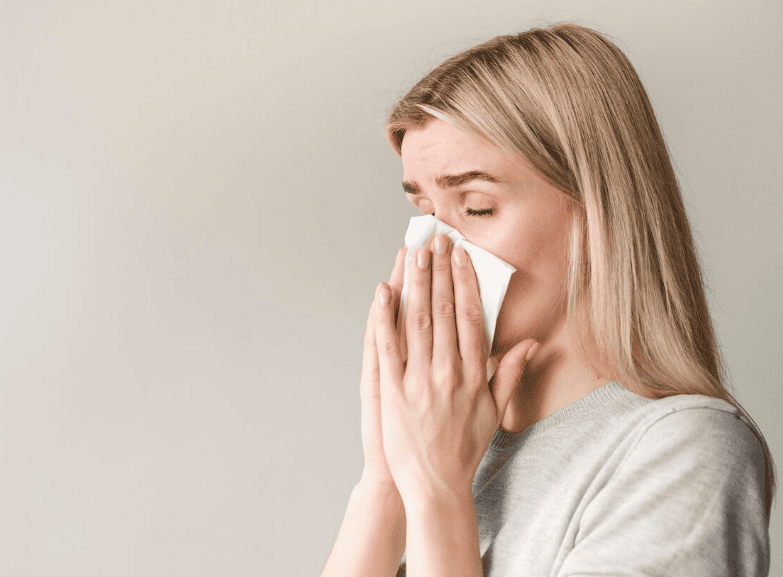
1. Identify when the symptoms appear
A dust mite allergy may be suspected when symptoms recur regularly, particularly:
- in the bedroom or upon waking;
- after cleaning or handling dusty textiles;
- throughout the year, unlike some pollen allergies.
However, these clues are not sufficient on their own to identify dust mites as the cause.
2. Consult your doctor
Your doctor will try to find out when, where and under what circumstances the symptoms occur. They may also investigate other possible causes before referring you, if necessary, to an allergist.


3. Have an allergy assessment
To confirm a suspected allergy, the allergist may, amongst other things, carry out prick tests. A small amount of allergen is placed on the skin, which is then pricked lightly to observe any reaction.
A blood test to measure specific IgE may also be requested in certain situations.
Key point: A positive test result does not automatically mean that your symptoms are caused by dust mites. It indicates that you are sensitised. Your doctor must consider the test result in conjunction with your symptoms and your exposure history to confirm the allergy.
House dust mite allergy in children: what are the symptoms and treatments?
Children can also develop a house dust mite allergy, sometimes from a very young age. The symptoms are similar to those in adults: sneezing, a blocked nose, itchy eyes or a persistent cough.
There are certain signs you should be aware of, particularly if your child:
- regularly wakes up with a blocked nose;
- sneezes frequently in their bedroom;
- coughs at night or has wheezing;
- suffers from symptoms that persist all year round.
If these symptoms recur, consult your paediatrician or GP. An allergy assessment may be recommended to identify the allergens responsible.
To minimise exposure, remember above all to wash bedding and soft toys regularly, air the bedroom and avoid excessive damp.
Finally, treatments must be tailored to the child’s age and symptoms. Desensitisation may be considered (not before the age of 5) in certain cases, following consultation with an allergist.
Allergies to dust mites or pollen: how can you tell the difference?
Allergies to dust mites and pollen cause quite similar symptoms. Here are a few clues to help you tell the difference.
| Allergy to house dust mites | Pollen allergy | |
| Period | Available all year round | January to October |
| Location | Mainly indoors | Exposure, mainly outdoors |
| Bedroom/bedding | Symptoms may worsen whilst in bed or upon waking | Less characteristic |
| Diagnosis | Allergy tests | Allergy tests |
These differences are merely indications. It is entirely possible to be allergic to both dust mites and pollen. An allergy test can identify more precisely which allergens you are sensitive to.
How is a dust mite allergy treated?
Treating a dust mite allergy involves adopting good daily habits as well as taking medication.
1. Reducing exposure to allergens
It is impossible to completely eliminate dust mites from your home. However, you can reduce their presence and the amount of allergens in your environment.
A few simple steps are particularly helpful:
- wash sheets and bed linen regularly;
- use an anti-dust mite cover where recommended;
- vacuum regularly;
- air out your home every day;
- avoid excessive humidity in rooms, ideally keeping it below 50% [10].
Further reading: How can you get rid of dust mites in the home?


2. Relieving symptoms
Antihistamines can, in particular, relieve certain symptoms of allergic rhinitis.
In the case of nasal symptoms, local treatments such as intranasal corticosteroids may be recommended. Eye treatments are also available when the allergy affects the eyes.
Finally, if the dust mite allergy is associated with asthma or atopic dermatitis, specific management may be required.
Ask your doctor or pharmacist for advice on choosing a treatment suited to your symptoms.
3. Dust mite desensitisation
If you have been suffering for some time and one-off treatments are not enough, dust mite desensitisation, also known as allergen immunotherapy, may be considered.
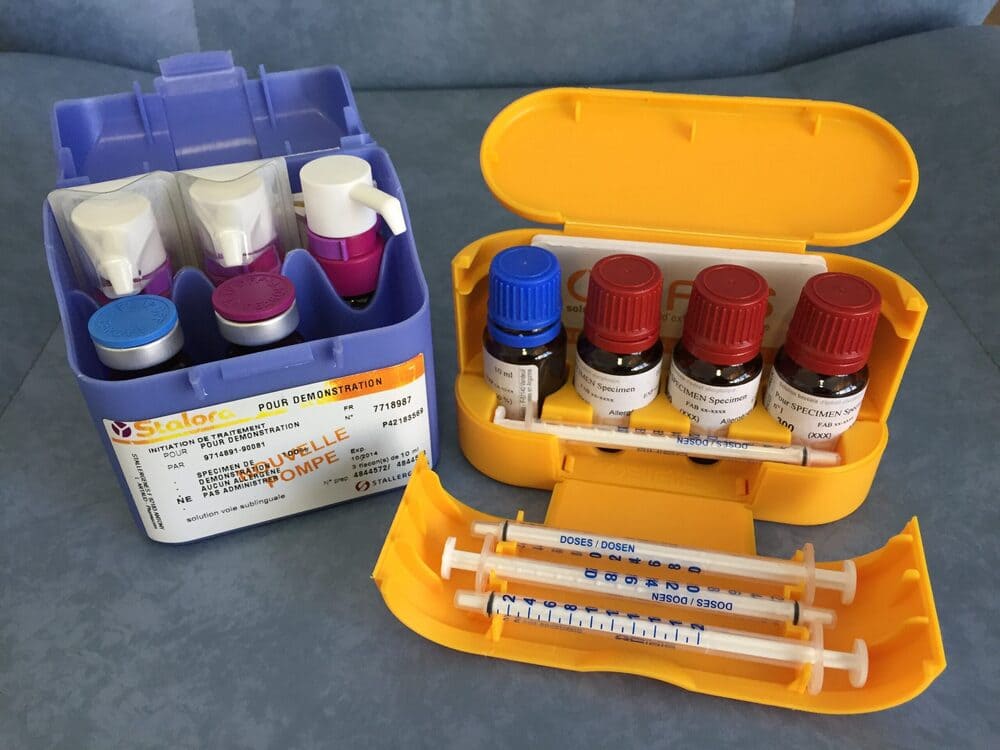
How does it work? Controlled doses of house dust mite allergens are administered regularly to gradually accustom your immune system and modify its response to these allergens.
The treatment is administered sublingually, either via tablets that you allow to dissolve or by placing a small dose under the tongue. It has been shown to be effective for certain forms of respiratory allergy to house dust mites, particularly allergic rhinitis and certain types of allergic asthma [11].
Only an allergist can prescribe desensitisation treatment.
Note: Desensitisation takes between 3 and 5 years. It takes at least 3 years to achieve a lasting effect [12].
Is there a natural treatment for house dust mite allergy?

There is no natural treatment capable of curing a dust mite allergy. The simplest way to naturally minimise reactions is, above all, to reduce your exposure to allergens.
Air your home daily, wash your bedding regularly and, if possible, keep the humidity level below 50 per cent. Rinsing your nose with a saline solution can help relieve certain nasal symptoms.
Be wary of essential oils, which are often marketed as natural anti-mite remedies. Their effectiveness against allergy symptoms has not been sufficiently proven, and some may themselves irritate the airways or cause allergic reactions.
Are anti-mite treatments reimbursed by health insurance providers?
Coverage depends on the type of treatment used and, in the case of supplementary health insurance, on the cover provided under your policy.
| Covered by the National Health Service | Coverage under supplementary health insurance | |
| Prescription antihistamines | Yes, at 30 per cent and 15 per cent (the final regulatory range being 5 to 15 per cent) from 1 January 2027 [13]. | May cover all or part of the excess, depending on the policy. |
| Over-the-counter antihistamines | No | This may be available with certain packages, depending on the contract. |
| Desensitisation treatments | Medicine with a ‘moderate’ level of medical benefit: 30 per cent of the basic price for sublingual drops and 30 per cent for tablets [14]. | May supplement the cover provided under the terms of the policy. |
| Anti-mite products for the home (covers, sprays, etc.) | No | Subject to the terms of the policy |
N.B : Le montant des remboursements est susceptible d’évoluer.
FAQ
Can a dust mite allergy cause itching?
Can a dust mite allergy affect the throat?
Can dust mites cause asthma?
Can a baby be allergic to dust mites?
Can you be allergic to dust mites all year round?
References
[2] Jacquet A. Characterization of Innate Immune Responses to House Dust Mite Allergens: Pitfalls and Limitations. Frontiers in Allergy, 2022.
[3] Inserm. Allergies : mécanismes, symptômes et traitements.
[4] Aggarwal P, Senthilkumaran S. Dust Mite Allergy. StatPearls Publishing, mise à jour 2023.
[7] Jung J, Enos CW, Lam KK, Han JK. The Role of Inhalant Allergens on the Clinical Manifestations of Atopic Dermatitis. American Journal of Rhinology & Allergy, 2024.
[12] Min JY, Jee H. The KAAACI Guidelines for Sublingual Immunotherapy, 2023.
[14] Assurance Maladie – Tableaux récapitulatifs des taux de remboursement.
[15] Inserm – Allergies : quand les acariens s’invitent à la table des nourrissons.
