



Ticks are very common in summer, but they also thrive in autumn, especially when the weather remains mild and damp. For both you and your pets, the risk of being bitten is always present during outdoor activities. Whether you’re hiking, jogging, cycling, gardening or doing other outdoor activities, these tiny blood-sucking mites can easily attach themselves to your body. Although mostly harmless, a tick bite can, however, transmit certain serious diseases. In Haute-Savoie, 13 cases of tick-borne encephalitis have already been reported since the start of 2026 [1] .
Here’s how to protect yourself from ticks during this autumnal period.
Key points to remember
➡️ Ticks remain active in autumn, especially when the weather is mild and damp.
➡️ They can transmit several diseases, including Lyme disease and, more rarely, tick-borne encephalitis.
➡️ After a walk, check your skin and that of your children carefully, paying particular attention to skin folds and the scalp.
➡️ If you find a tick attached, remove it quickly using a tick remover, then disinfect the area.
➡️ Dogs and cats are also at risk: check their coats and ensure they are protected with a suitable anti-parasite treatment.
Why are ticks still active in autumn?
In France, Ixodes ricinus, the species of tick primarily associated with Lyme disease, remains active from April to November. In regions with a milder climate, it may even seek out a host all year round [2].
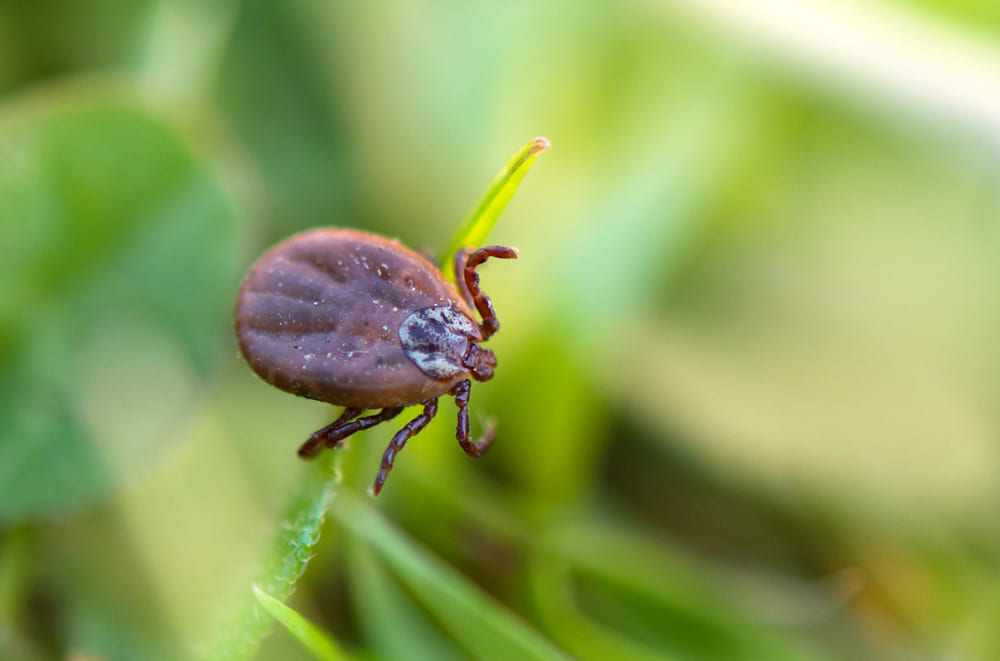
Ticks love the autumn damp
Ticks do not cope well with dry conditions. They therefore seek out damp, sheltered spots, such as the undergrowth, tall grass or layers of dead leaves.
Autumn’s rain, dew and damp vegetation create precisely the conditions they need to survive. Conversely, very hot and dry spells in summer can make them less active.
Key point: Ticks require a minimum level of humidity to survive (80 per cent) [2]. After feeding on blood, larvae and nymphs can remain in the environment for several months before progressing to the next stage of their life cycle. Adult females, on the other hand, lay their eggs after their final meal.
Temperatures are still mild
You don’t need it to be as hot as in summer to come across a tick. The mild days of September, October and sometimes November suit them very well.
This year, autumn began with very high temperatures. September 2026 was the second-warmest September on record in France since 1900, with an average temperature 3.1 °C above normal [3]. The start of October has also remained very mild and has been accompanied by heavy rainfall in several regions.
In regions with an oceanic climate, such as Brittany, Normandy and part of the Atlantic coast down to the south-west, winters are historically milder and wetter. These conditions can allow ticks to remain active for longer.
Key point: as long as the weather hasn’t turned consistently cold and dry, tick season isn’t over.
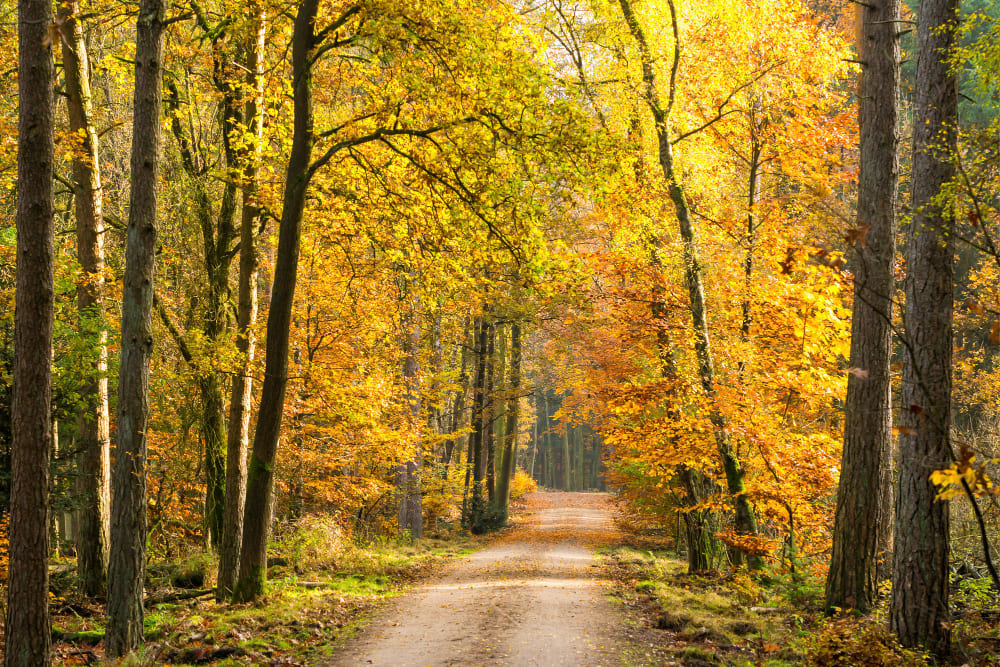
In Switzerland, ticks are also becoming more widespread

Caution is also advised in Switzerland. Ticks are no longer found solely in forests and low-altitude areas. The Swiss Snow and Avalanche Research Institute (SLF) has received more than 900 reports, with ticks observed at altitudes of up to 2,300 metres in some cases [4].
Global warming is likely contributing to this spread to higher altitudes. Milder temperatures allow ticks to remain active for longer and to colonise areas where the cold previously limited their presence.
Key point: The Federal Office of Public Health has designated the whole of Switzerland as a tick-risk area, with the exception of the cantons of Geneva and Ticino
The risk is not limited to a simple bite. According to the Federal Office of Public Health, the three main tick-borne diseases in Switzerland are Lyme borreliosis, spring-summer meningoencephalitis (SSME) and tularemia [5].
Particular attention is being paid to TBE: 435 cases were reported in 2020. Vaccination is recommended for all adults and children aged 3 and over who live in a risk area [5].
Do you live in Switzerland or are you planning a hike? Don’t let your guard down just because summer is over. Undergrowth, tall grass, fallen leaves and hiking trails remain high-risk areas in autumn, including in the mountains.
Since January 2026, 13 cases of tick-borne encephalitis have been reported in Haute-Savoie. The department was already the worst-affected in France in 2025, with 19 cases recorded [6].
Tick-borne encephalitis is a viral disease transmitted by the bite of an infected tick. It remains rare in France, with an average of around 35 cases diagnosed each year, but it can lead to serious complications [7].
After an incubation period of one to two weeks, the initial symptoms resemble those of flu: fever, headaches and muscle or joint pain.
In 20 to 30 per cent of patients, the virus can then reach the nervous system and cause, in particular, encephalitis, impaired consciousness, convulsions or paralysis [5]. Neurological sequelae may persist for several years.
There is currently no specific antiviral treatment for tick-borne encephalitis. Management therefore consists mainly of treating the symptoms [7].
Is there a vaccine?
Yes, in France, vaccination is currently recommended mainly for adults and children travelling to areas where the disease is common and who are at risk of exposure to ticks [7]. However, it is not recommended for the general population living in France [8].
Key point: This vaccine protects against tick-borne encephalitis, but not against Lyme disease or other tick-borne infections.
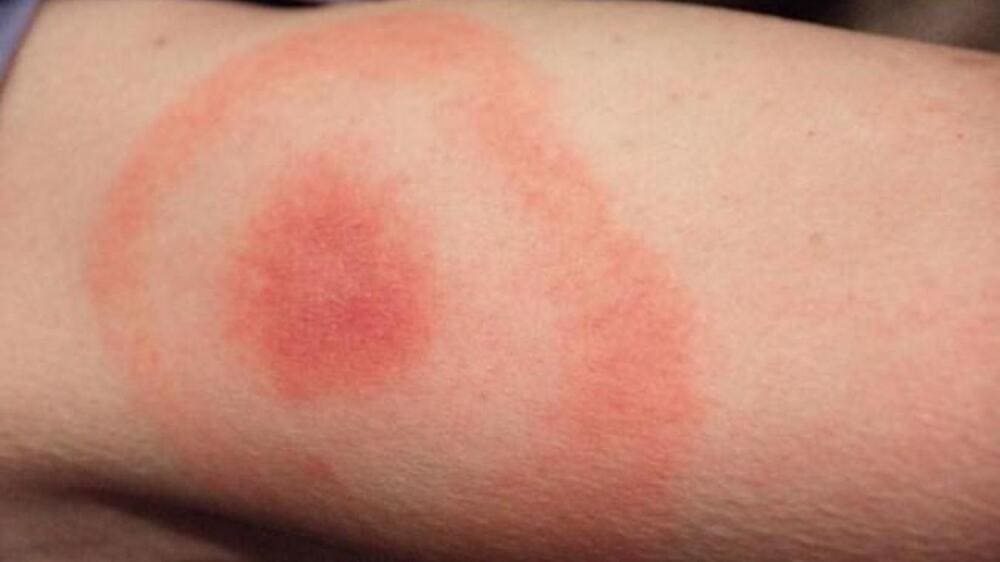
Lyme disease remains the main tick-borne risk in France
Santé publique France estimates that around 40,000 cases are diagnosed each year in general practice [9].
Lyme disease is caused by bacteria of the Borrelia burgdorferi complex, transmitted by certain infected ticks of the genus Ixodes. Not all ticks carry the bacteria: in France, the proportion of infected ticks varies significantly depending on the region and the season.
The main symptom to watch out for is erythema migrans: a red patch that appears around the bite site and gradually spreads [9]. See a doctor promptly so that they can confirm the diagnosis and prescribe appropriate treatment.
How can you avoid tick bites this autumn?
You may come across ticks in the woods, but also in meadows, parks, gardens or areas with tall grass [10].
Before and during a walk
A few simple steps can help reduce the risk of being bitten:
- wear long clothing and closed-toe shoes;
- tuck the bottoms of your trousers into your shoes or socks;
- avoid tall grass, ferns and undergrowth;
- stay on clear paths as much as possible;
- use a tick repellent, following the instructions for use.
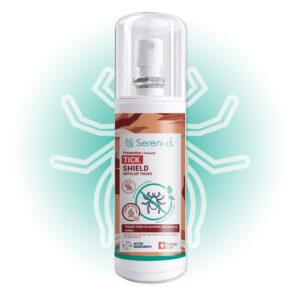
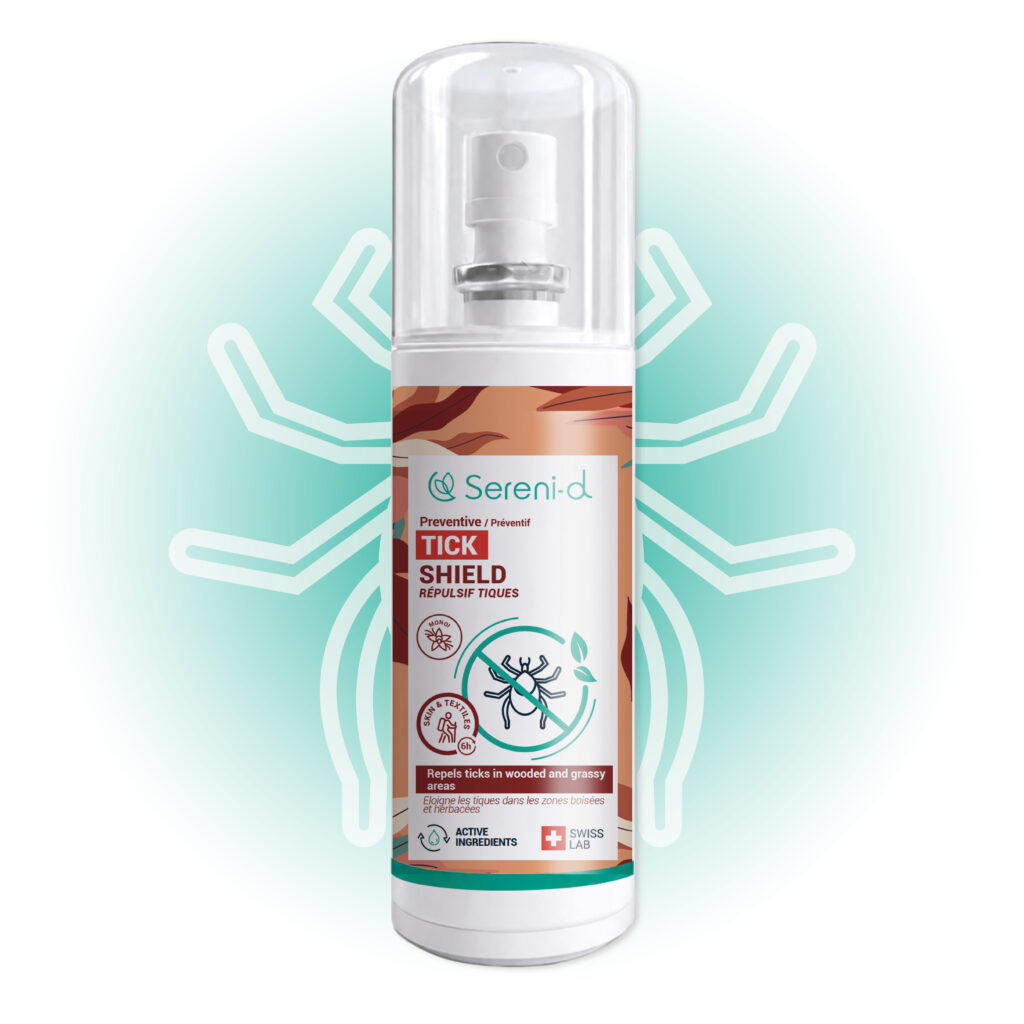
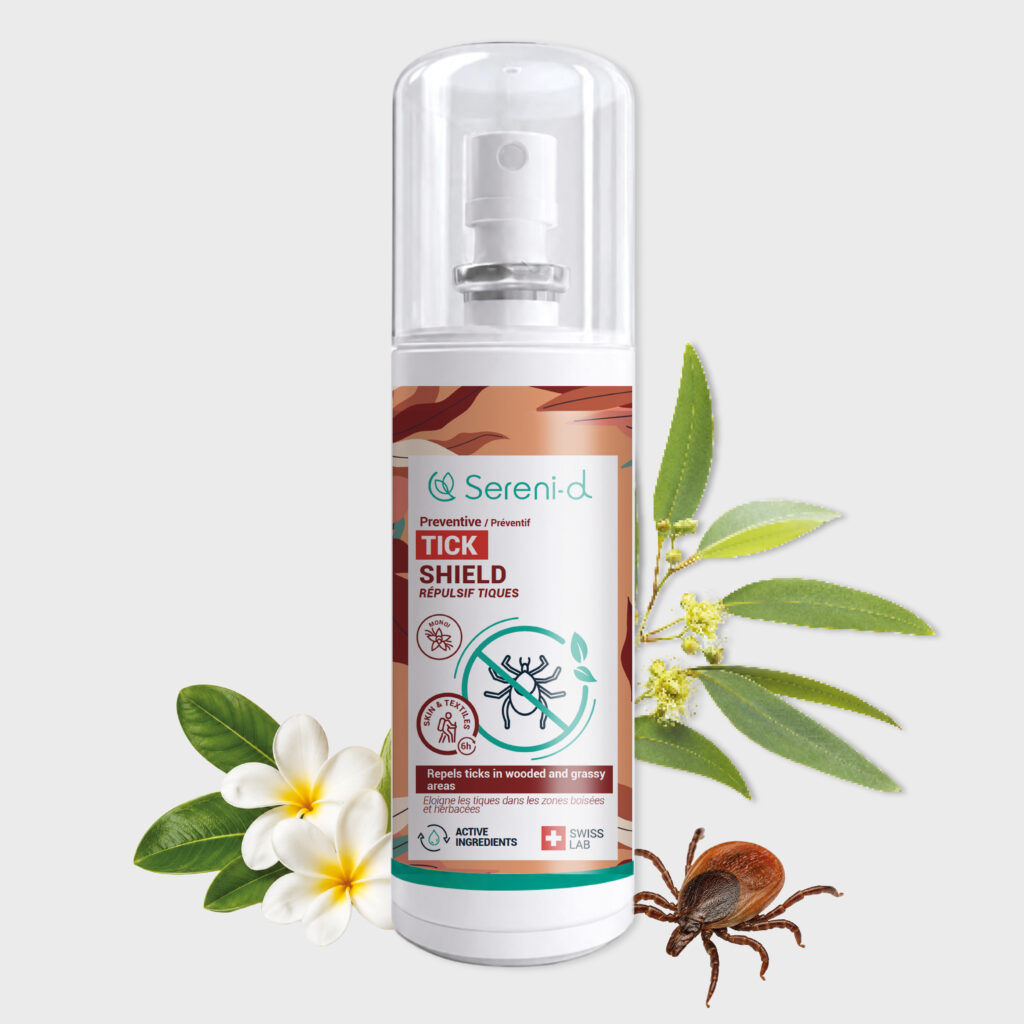
ANTI-TICK MONOÏ / Body & Fabric Repellent
- Natural protective barrier with eucalyptus citriodora, selected for its powerful anti-tick repellent properties
- High-efficacy protection up to 6h — skin & clothing — wooded and grassy areas
- Suitable for the whole family from 6 months
- Over 250,000 satisfied Sereni-d® customers
CONCENTRATED FORMULA – MAXIMUM RESULT
In stock
When you get home: check your skin carefully
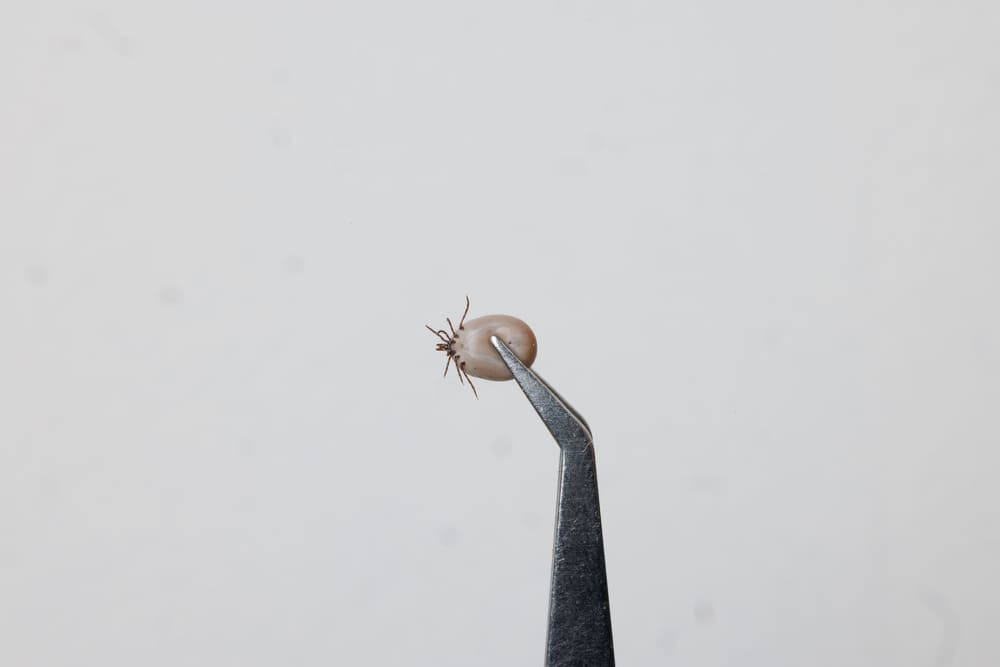
Once you’re back home, take a moment to examine your whole body. Be thorough – ticks are small, and some nymphs are only a few millimetres long.
Pay particular attention to:
- the scalp and behind the ears;
- the armpits;
- the groin;
- the navel;
- the creases of the knees.
For children, this check must be carried out by an adult.
What should you do if you find a tick on your skin?
Have you spotted a tick attached to your skin? You must remove it as quickly as possible. The longer it remains attached, the greater the risk of transmission of certain infectious agents.
Use a tick remover, available from pharmacies:
- slide the tool as close to the skin as possible, under the tick;
- grip it without crushing it;
- gently remove it using a twisting motion;
- then disinfect the area with an antiseptic;
- wash your hands thoroughly.
Do not apply ether, alcohol, oil or any other substance to the tick before removing it.
You should then monitor the bite site for a month.
See your doctor if you notice:
- a red patch that gradually spreads around the bite;
- a fever;
- unusual tiredness;
- joint pain;
- neurological symptoms or any other unusual signs.
Further reading: Tick bites in humans: risks, treatment and prevention.
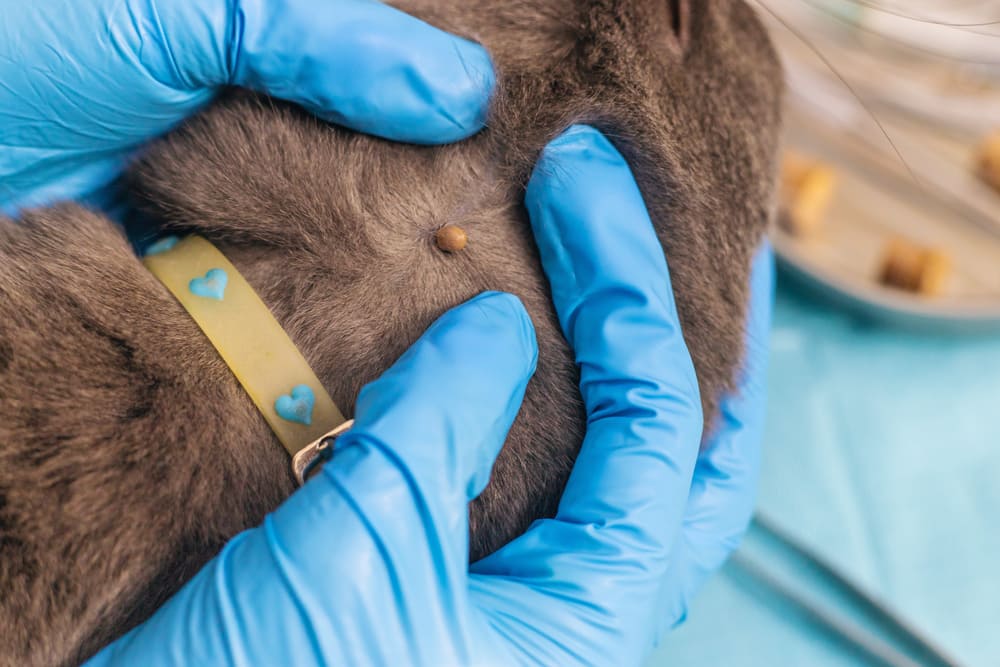
Be vigilant with dogs and cats too
We need to remain very vigilant with our four-legged friends, who are very often bitten by ticks in autumn.
After a walk, quickly check your dog or cat’s coat, particularly around the ears, neck, between the paws and under the armpits.
Pest control must be tailored to the animal’s lifestyle, weight and species. Ask your vet for advice on choosing the most suitable treatment.
Warning: never use a dog flea and tick treatment containing permethrin on a cat. ANSES points out that this substance can cause serious, even fatal, poisoning in cats [11].
Further reading: Ticks in dogs and cats: treatment and prevention.
References
[1] ARS Auvergne – Rhone Alpes. Tiques : restez vigilants lors de vos activités en pleine nature. 2026.
[2] Santé publique France. Borréliose de Lyme : la maladie.
[4] RTS. Tiques en altitude : une présence jusqu’à 2 300 mètres, 2026.
[5] Office fédéral de la santé publique (OFSP). Maladies transmises par les tiques.
[6] Préfecture de la Haute-Savoie. Tique : prévention et encéphalite à tiques, 2026.
[7] Santé publique France. Encéphalite à tiques : la maladie, mise à jour le 12 mai 2026.
[9] Santé publique France. Borréliose de Lyme : la maladie, mise à jour le 20 février 2026.
[11] ANSES. Ne traitez pas votre chat avec un antiparasitaire pour chien, 20 juin 2023.
